What Boutique Indie Labels Actually Check Before Handing You a Distribution Deal
Let’s be honest: the days of sliding a USB drive across a desk or emailing a random Soundcloud link and landing a boutique label deal are pretty much gone.
Independent record labels aren’t just looking for a cool track anymore. They’re running a business, which means they act a lot more like investors and project managers. When a boutique label is deciding whether to take a chance on your music, they aren’t just listening for a vibe—they’re auditing your entire operation.
If you’re reaching out to labels right now, you need to realize you aren’t just pitching songs. You’re pitching your readiness to be a professional partner.
Here is what they are actually digging into before they reply to your email.
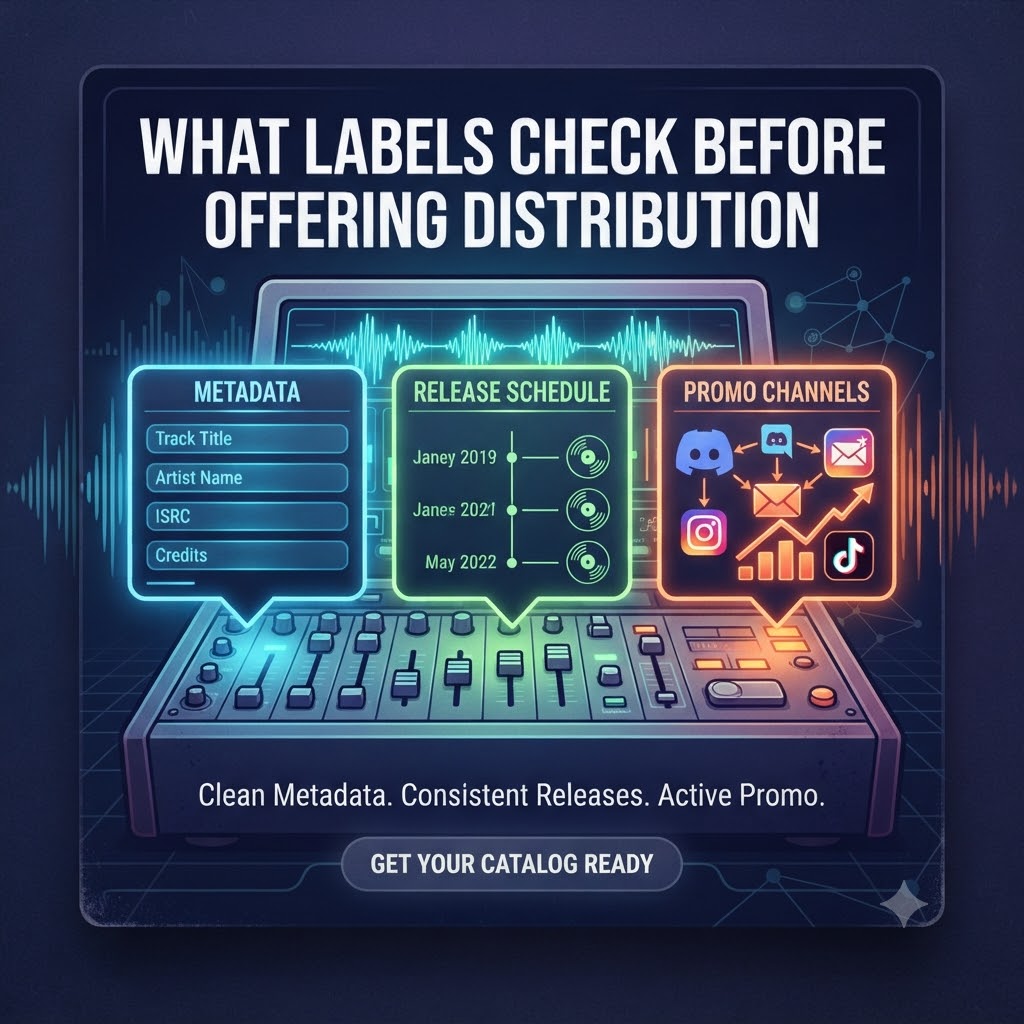
1. Your Metadata Is Actually Clean
It sounds boring, but in today’s streaming landscape, messy metadata is an immediate red flag. If your backend is a mess, labels know it’s going to cause a logistical nightmare for distribution.
When they check out your catalog, they’re looking for:
-
Zero Typos or Variations: Is your artist name spelled the exact same way on Spotify, Apple Music, and your socials? (You’d be amazed how often this is messed up.)
-
The Right Digits: Are your ISRC codes, primary artist credits, and songwriter splits locked in correctly from day one?
-
Searchability: Are your releases easy to find when someone types your name into Google or an AI search tool? Labels want to know you aren’t getting lost in a sea of artists with the same name.
2. You Have a Real Release Rhythm
Labels have release schedules to hit, and they need partners who understand how to keep momentum going. Dropping one great song and then disappearing for two years doesn’t work for a boutique indie trying to build a sustainable roster.
When they look at your Spotify profile or your distributor dashboard, they want to see that:
-
You have a realistic, repeatable workflow (whether that’s a single every six weeks or a quarterly EP).
-
You know how to sustain a rollout without burning out.
-
You aren’t expecting the label to do 100% of the heavy lifting to keep your name alive between projects.
3. You Already Have Some Skin in the Game
Perhaps the biggest thing they look for: Are you already building your own house?
Boutique labels don’t want to start from absolute zero. They want to amplify momentum that’s already there, not manufacture it from scratch. Before they sign off on a distribution partnership, they want to see:
-
An active direct-to-fan hub—like an engaged Discord server or a mailing list you actually send things to.
-
Real community engagement (not just bought followers, but real people in your comments talking to each other).
-
Proof that you know how to run a grassroots campaign. When you show label executives that your brand is actively growing. Secure an all-in-one campaign through our [Link to Service/Page], you prove that you aren’t just waiting to be rescued—you’re already moving the needle.
The Bottom Line
At the end of the day, boutique labels are looking for collaborators who make their jobs easier, not harder. Clean up your backend, set a release schedule you can actually stick to, and build your own momentum. Do that, and you stop looking like a gamble and start looking like a no-brainer.
CTA BOX
Ready to get your releases taken seriously? Don’t let your music get lost in the shuffle because your digital house isn’t in order. Make your catalog attractive to boutique indie labels. Apply via our [Link to Application/Service].