The Tragic Death of BloodHound Q50 and the Harsh Reality of Chicago Drill Safety
The hip-hop world was dealt another devastating blow following the violent murder of rising Chicago drill artist BloodHound Q50. Born Mikquale T. Cooper, the 22-year-old rapper was gunned down in a calculated ambush on Chicago’s South Side.
His passing has done much more than silence a promising voice in modern street rap; it has reignited a heavy, uncomfortable conversation across the internet. From viral social media speculation to deep-seated worries about the safety of artists embedded in the “Chiraq” drill scene, Q50’s death highlights a terrifying loop that many young creators find themselves trapped inside.
The Fuller Park Ambush: What Went Down
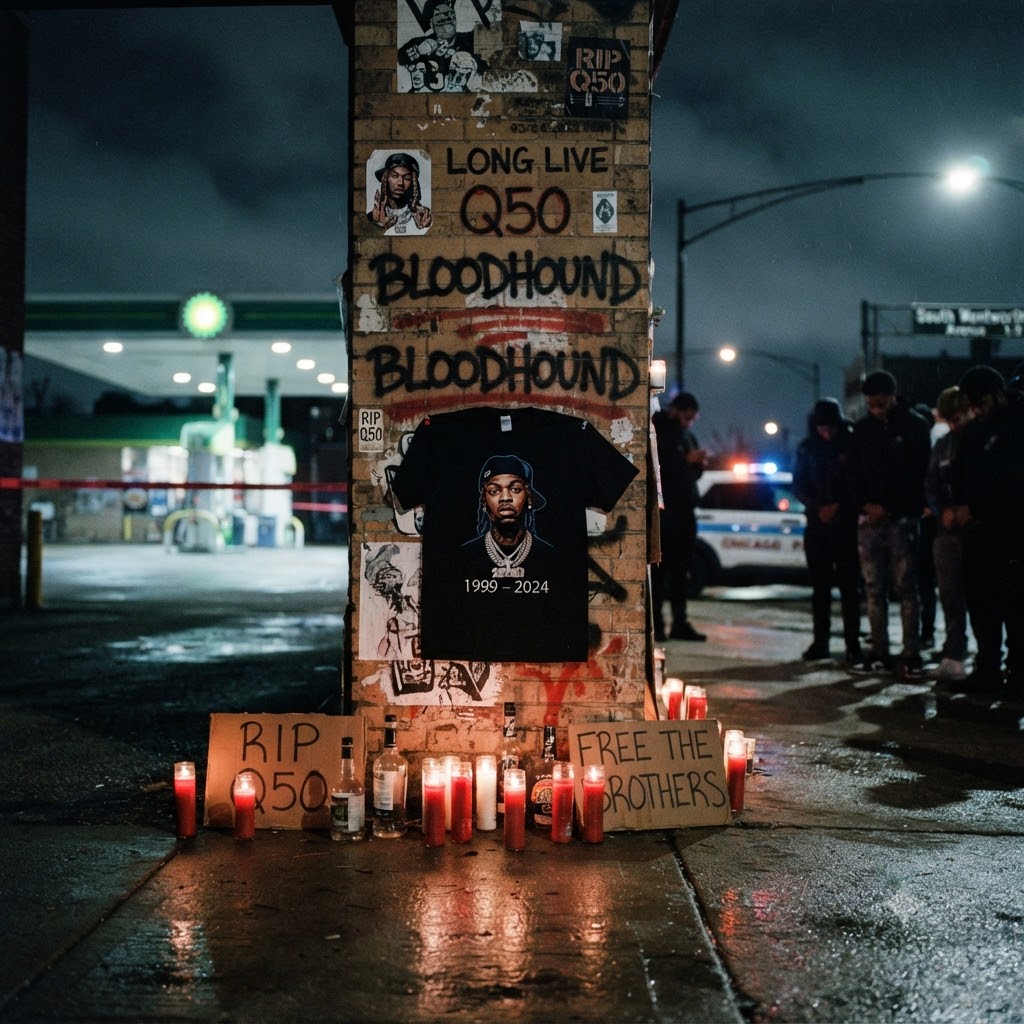
According to reports from the Chicago Police Department and local news sources, the fatal incident unfolded in the early morning hours, just before 4:00 a.m., in Chicago’s Fuller Park neighborhood.
BloodHound Q50 was sitting in the driver’s seat of his white Tesla parked at a BP gas station along South Wentworth Avenue. Out of nowhere, multiple vehicles pulled up alongside him, trapping his car. Several gunmen emerged from the vehicles and opened fire, unloading a devastating number of rounds into the vehicle.
Cooper suffered severe gunshot wounds to the chest and shoulder. First responders pronounced him dead at the scene. Within hours, surveillance and cell phone footage of the aftermath began flooding platforms like X, TikTok, and Instagram, turning a horrific real-life tragedy into an instant digital spectacle. The explicit nature of the footage drew swift public condemnation from figures across the entertainment industry, including superstar Meek Mill, who admitted that seeing the circulation of the video left him feeling completely “haunted”.
Tracing the Rise of BloodHound Q50 in the Drill Scene
To truly grasp why Q50’s murder shook the underground rap community so deeply, you have to look at how fast his career was moving. Rising to prominence around 2023 and 2024, he became a staple name tied closely to the legacy of the late Chicago rapper Bloodhound Lil Jeff.
With raw, unfiltered delivery and aggressive street anthems, Q50 captured a massive digital audience. He dropped projects like Long Live My Brudda He Prolly Kilt Yo Brudda and followed up with his 2026 album, Get Back or Die Trying, which was released right around his 22nd birthday. Having recently taken the stage at major platforms like Rolling Loud, he was widely considered one of the definitive leaders of the new generation of Chicago drill—artists who managed to bridge the gap between regional underground buzz and mainstream label interest.
Internet Culture, Digital Taunts, and the Cycle of Retaliation
One of the ugliest elements surrounding modern drill music is the way internet culture interacts with real-world violence. Following Q50’s death, social media didn’t just mourn—it erupted into toxic speculation, digital posturing, and virtual war rooms.
-
The Spectator Sport of Violence: Rival factions and online commentators immediately took to comment sections to pick apart the tragedy, treating real-life bloodshed like a live-streamed video game.
-
The Dangerous Ripple Effect: This cyber-mockery rarely stays online. The deep-seated animosity often translates back to the streets, fueling subsequent tragedies and keeping the cycle of retaliatory violence spinning at a dizzying pace.
-
A Mother’s Plea: Amidst the digital noise, Q50’s mother, Machetta Dudley, publicly fired back at internet trolls, calling out the callousness of people online who poke fun at a mother losing her youngest son.
Industry veterans and media personalities—including DJ Vlad, who had previously interviewed Q50—have continuously pointed out how uniquely dangerous this era is. Artists are often hyper-exposed, media-trained to a degree, yet entirely vulnerable to the physical realities of the environments they rap about.
Where Does the Chiraq Drill Scene Go From Here?
The murder of BloodHound Q50 leaves behind a grim question that the hip-hop community has been asking for over a decade: Can the cycle ever actually be broken?
Right now, Area One detectives are actively investigating leads, searching for answers, and trying to track down those responsible for the Fuller Park ambush. But criminal investigations only treat a symptom, not the root cause.
As long as the underground economy rewards fatal posturing and social media platforms incentivize engagement built around shock value and beef, young artists will continue to walk a razor’s edge. The tragic end of Mikquale Cooper’s journey serves as a sobering reminder that behind every hard-hitting drill track and viral internet debate is a human life cut short far too soon.