How Blog Citations Help Rappers Secure Google Knowledge Panels & Wikipedia Verification
For any rising rapper, the ultimate digital flex isn’t just dropping a viral track—it’s seeing that official info-box populate on the right side of a Google search. That blue-chip status symbol—the Google Knowledge Panel—is what separates hobbyists from legitimate, industry-recognized artists.
But how does Google’s algorithm actually decide that an independent artist is notable enough to warrant a panel, or that they meet the rigorous verifiability threshold for a Wikipedia page?
It all comes down to authoritative digital indexing, structured data, and most importantly: high-quality blog citations.
The Reality of Artist Notability in Search Engines
Google and Wikipedia don’t just guess who is important; they look for receipts. Algorithms rely on a concept called entity resolution—connecting a rapper’s name, hometown, discography, and social footprint into a single verified entity across the web.
To build that confidence, search engines look for corroboration across trusted data silos like MusicBrainz, Wikidata, and streaming metadata. However, before you can live comfortably in those databases, you need a trail of independent, third-party validation.
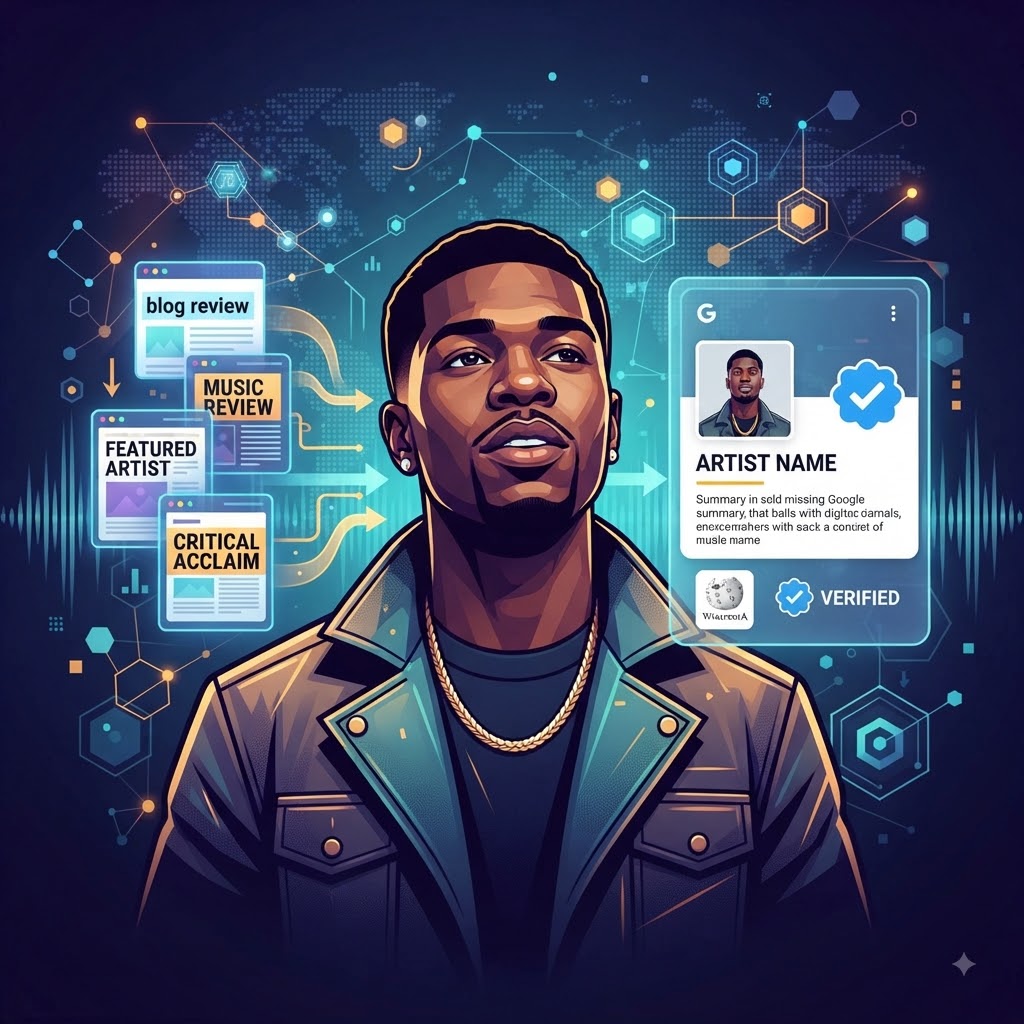
This is where authoritative music reviews and blog write-ups act as the primary catalyst.
Why Blog Citations Move the Needle
-
Independent Validation: Wikipedia editors and Google’s Knowledge Graph algorithms automatically reject self-published content like press releases or social media bios. They look for secondary sources—reputable music blogs, culture publications, and deep-dive album reviews—that prove the artist exists outside of their own ecosystem.
-
Contextual Metadata: A quality review doesn’t just name-drop an artist; it anchors them in time and space. Mentioning your producer, your regional scene, your lyrical style, or your release dates gives Google the semantic keywords it needs to map your career accurately.
-
The Sourcing Chain: To build a Wikipedia page or trigger a robust Knowledge Graph update, every core fact (birth name, release years, critical reception) has to be backed by a reliable inline citation. Music blogs provide those exact URLs.
Constructing the Verifiable Source Trail
Search engines don’t index hype; they index evidence. If your digital footprint consists solely of Instagram reels and SoundCloud links, the algorithm has no structural backbone to anchor a profile to.
To bridge the gap, artists must deliberately build the verifiable digital source trail required for search indexing with high-quality music blog reviews.
When web crawlers scan the web, they look for cross-references. If Blog A reviews your tape, Blog B interviews you, and your official artist website ties those pieces together using structured Schema markup, Google builds a high-confidence profile. Once that confidence threshold is crossed, the Knowledge Panel triggers naturally, paving the way for you to claim it.
From Blog Posts to Wikipedia: The Ultimate Pipeline
Getting a Wikipedia page is famously difficult for independent musicians due to strict notability guidelines. Editors will flag and delete pages that read like promotional bios.
To survive the deletion process, your page has to be built on a foundation of independent, third-party media coverage. Every major claim on a Wikipedia or Wikidata entry requires a citation from a recognized publisher. Accumulating deep, analytical reviews from established music curation sites gives Wikipedia editors the objective sourcing they require to approve your page—which in turn permanently locks in your Google Knowledge Panel.
Pro-Tip for Artists: Never let your press coverage sit idle. Maintain a dedicated “Press” or “Media” page on your official website, linking directly out to every blog review and interview that mentions you. This creates a centralized hub that search engine bots crawl to instantly verify your career timeline.