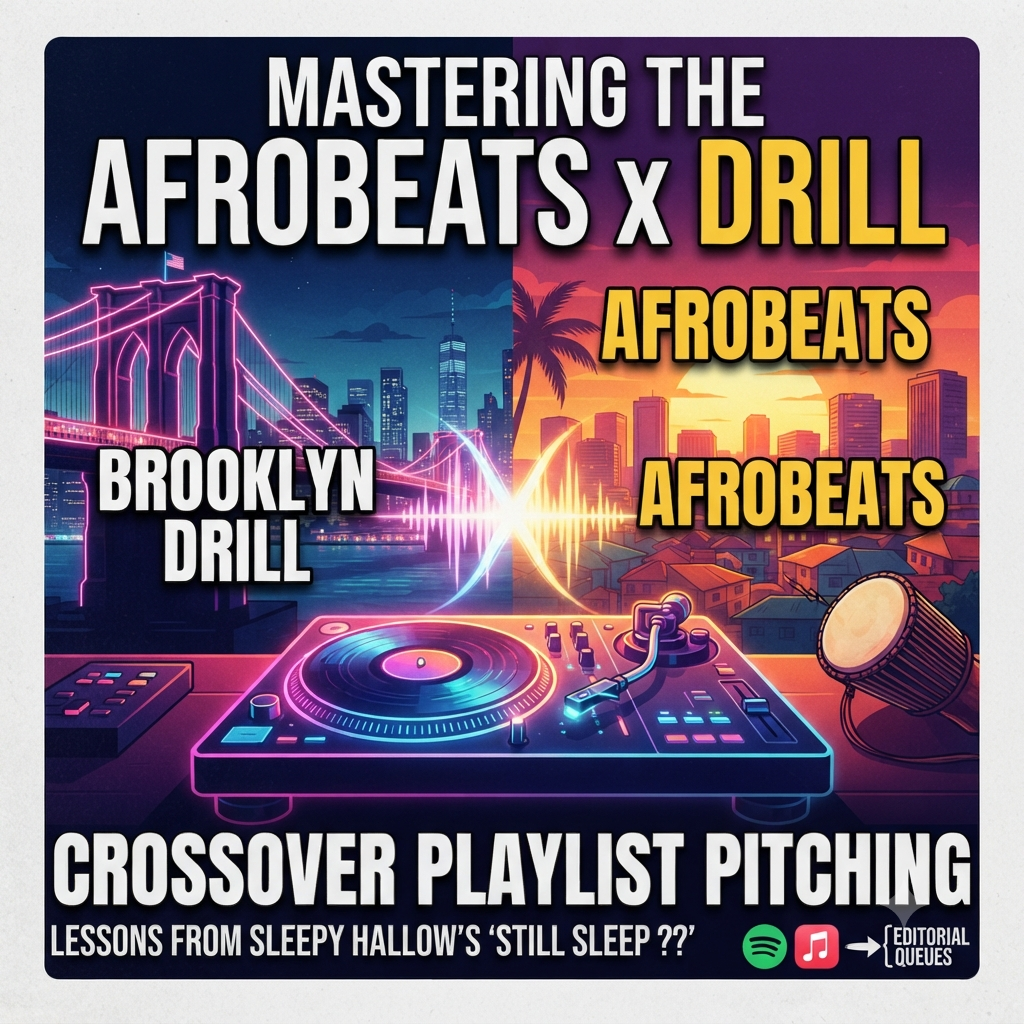
Mastering Afrobeats Drill Crossover Playlist Pitching: What Sleepy Hallow’s STILL SLEEP ?? Teaches Independent Artists
Brooklyn drill has always been a sponge for international sounds. From the jump, New York producers took the skeletal, sliding 808s of UK drill and twisted them with gritty hometown samples and heavy basslines. Now, with the release of STILL SLEEP ??, Sleepy Hallow is pushing that global exchange into its next logical phase. By linking up with Nigerian Afrobeats giant Davido on “Sad Face” and Florida’s melody-heavy standout Loe Shimmy on “Fallin’,” Sleepy Hallow shows just how natural the bridge between New York street rap and West African rhythm really is.
For independent MCs making cross-continental records, though, cooking up a fire hybrid track in the studio is only half the work. Once you upload that record to streaming platforms, you run straight into a technical wall: most DSP algorithms still like putting music into neat little boxes. If your record sits squarely between Flatbush and Lagos, sloppy metadata can leave your song stranded in algorithmic no-man’s-land. Getting your afrobeats drill crossover playlist pitching right is what separates a track that stalls at 2,000 streams from a record that triggers both US urban rap queues and global Afropop editorial playlists at the same time.
Why STILL SLEEP ?? Works as a Real-World Crossover Blueprint
Sleepy Hallow never relied on loud, aggressive screaming to carry a drill beat. His lane has always been about pocket, vulnerability, and vocal melodies that float right over ominous percussion. On STILL SLEEP ??, that exact approach becomes the glue holding two massive global streaming audiences together.
Look at how “Sad Face” featuring Davido is put together. Instead of forcing Davido to rap over a cold, stripped-back NY drill instrumental, the beat meets both artists halfway. It keeps the crisp snares and sliding sub-bass that Brooklyn fans expect, while letting warm, syncopated Afro-swing percussion breathe underneath. Davido brings an effortless, stadium-ready hook, and Sleepy Hallow slides right into the groove without losing an ounce of his New York identity. The result sounds equally at home booming out of speakers in Lagos, London, or East New York.
Then you have “Fallin'” with Loe Shimmy, which takes a slightly different angle on the crossover formula. Loe Shimmy’s raspy, South Florida melodic cadence adds a humid, late-night R&B texture to Sleepy Hallow’s drill bounce. Even though “Fallin'” isn’t a straight Afrobeats record, it shares the exact same DNA that makes Afro-fusion work: hypnotic rhythm, emotional vocal phrasing, and zero wasted energy.
When independent artists release records built like this, Spotify, Apple Music, and Amazon Music don’t just listen to the audio file—they read the data signals attached to it. If you want editorial curators on both sides of the Atlantic to actually hear your pitch, you have to speak their system’s language.
How to Tag Cross-Continental Fusions so DSPs Actually Get It
When you’re sitting in your distributor’s dashboard—whether you use DistroKid, TuneCore, Symphonic, or CD Baby—it’s tempting to rush through the genre dropdowns just to lock in your release date. On a crossover single, that mistake will cost you months of algorithmic traction.
Here is how you should structure your metadata and pitch tags when dropping a drill and Afrobeats fusion:
| Metadata Field | How to Set It Up | What It Does Behind the Scenes |
| Primary Genre | Hip-Hop / Rap | Anchors your track in core rap algorithmic radio and US/UK urban editorial pools. |
| Secondary Genre | Afrobeats or World | Flags international curators and opens up Afro-fusion discovery feeds without stripping your rap credibility. |
| Spotify Sub-Genres | Drill, Melodic Rap, Afropop | Pick up to three that honestly reflect the dominant bounce and vocal style of your song. |
| Mood & Style Tags | Melodic, Chill, Late Night, Confident | Connects your track to vibe-driven editorial lists rather than strict regional rap playlists. |
| Instrumentation | 808 Bass, Percussion, Guitar, Synth | Helps audio-scanning tools pair your song with both drill and Afrobeats listener habits. |
1. Don’t Waste Your Secondary Genre Slot
A lot of independent rappers list “Hip-Hop/Rap” as their primary genre and then leave the secondary slot blank or pick “Rap” again. If your beat has log drums, shaker patterns, rimshots, or an Afrobeats-style chorus riding over drill 808s, put Hip-Hop/Rap first and Afrobeats (or World / International, depending on what your distributor offers) second. That dual tag tells the DSP ingestion system to test your record with two distinct listener groups during the crucial first 72 hours after release.
2. Write a Pitch Note That Speaks to Two Different Editorial Rooms
When you submit your song through Spotify for Artists at least two to three weeks before release day, remember that hip-hop editors and global Afropop editors are looking at the same 500-character box. Don’t waste space with generic hype like “this is the biggest song of the summer.” Be specific about the sonic bridge you built:
-
Spell out the production blend: Mention the tempo, the drum pattern, and the vocal style right away (for example: “Melodic Brooklyn drill cadences layered over bouncy West African percussion and warm acoustic guitar loops”).
-
Name-drop your collaborator markets: If you featured a singer or producer from Nigeria, Ghana, South Africa, or the UK, mention where they are based and where their core fanbase streams from.
-
Use clear reference points: Pointing to records like Sleepy Hallow and Davido’s “Sad Face” immediately tells an editor which playlists your song sits next to without making them guess.
3. Build Multi-Market Proof Before Release Friday
Editorial curators rarely take a blind gamble on a brand-new sound unless they see early proof that real people are connecting with it. Before your single drops, run small, targeted short-form video clips on TikTok and Instagram Reels aimed at two distinct regions—say, the New York tri-state area alongside Lagos or London.
When streaming platforms notice listeners in North America and West Africa or Europe saving the track, replaying it, and adding it to personal playlists during release week, the algorithm connects those dots fast. That cross-border engagement is what pushes an independent single out of local release radar pools and onto international editorial playlists.
Turning Off-Platform Buzz Into Real Streaming Velocity
Clean metadata sets the table, but outside momentum is what brings curators to the meal. DSP algorithms reward tracks that pull active listeners in from outside the app, especially when that traffic comes from niche music communities that already champion hip-hop and global sounds. Independent MCs blending drill with international rhythms can tap into expanding international streaming demographics by submitting your crossover singles to our hip-hop music promotion channels. Combining targeted editorial coverage and social seeding with sharp DSP tagging gives your single the multi-market push it needs to break through.
🚀 Cross Over Into Global Streaming Feeds: Put your drill and global fusion tracks in front of active listeners. Submit your single through our Music Submission Portal.