De La Soul & Nas’s 2027 Grammy Nod for “Run It Back!!”: How to Optimize Legacy Hip-Hop Collaborations on Spotify
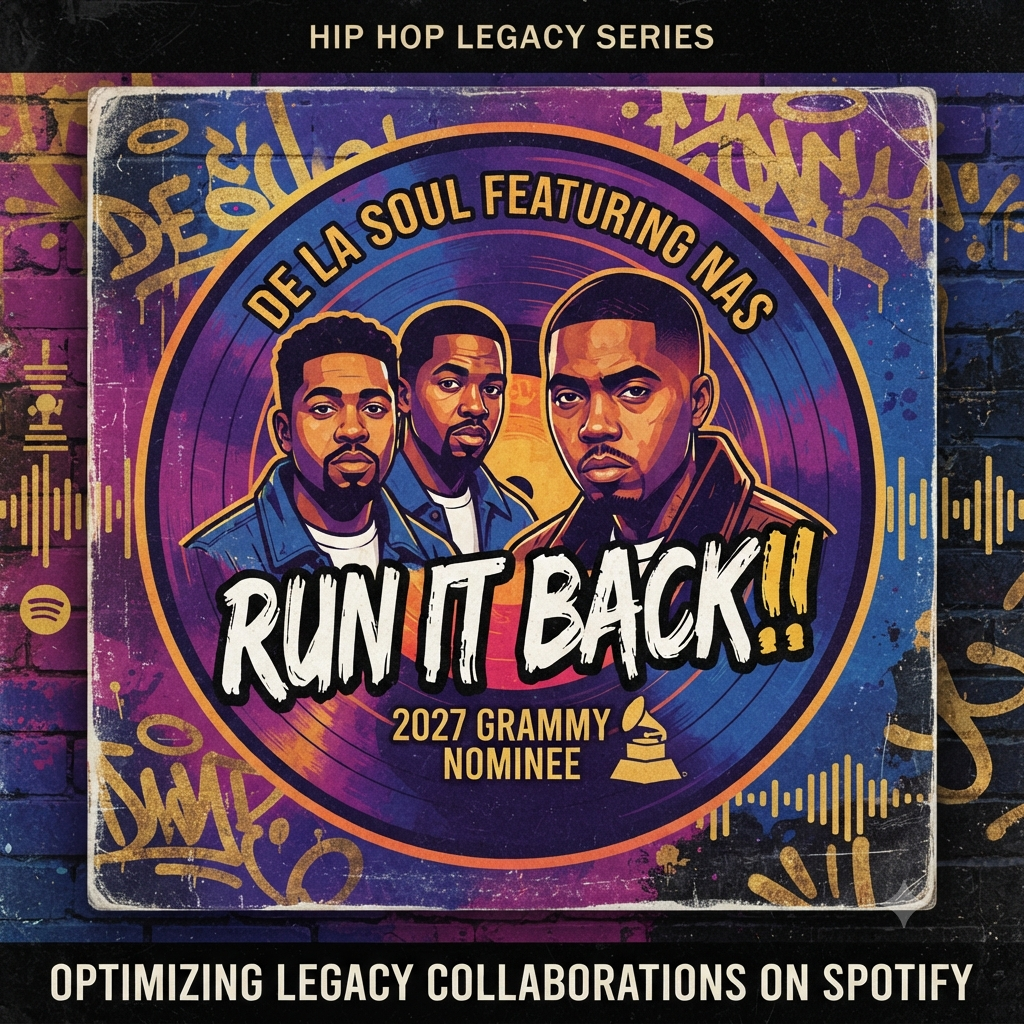
When the 69th Annual Grammy nominations dropped, plenty of categories felt predictable—until Best Rap Performance flashed across the screen. Seeing De La Soul featuring Nas — “Run It Back!!” in the 2027 lineup hit differently for anyone who actually grew up on golden-era hip-hop.
Put out through Mass Appeal’s Legend Has It… series off De La Soul’s tenth studio album, Cabin in the Sky, “Run It Back!!” isn’t just a feel-good victory lap for two New York heavyweights. If you’re an independent label, a catalog manager, or a veteran MC trying to figure out streaming in the late 2020s, this record is basically a live case study on how to optimize legacy hip-hop collaborations on Spotify.
Done right, pairing two respected eras or camps doesn’t just give fans a great record—it forces Spotify’s algorithm to connect two separate listener graphs and breathe real life back into decades-old discographies.
Why Legacy Hip-Hop Gets Stuck in an Algorithmic Loop
Let’s be honest about how Spotify treats older hip-hop catalogs. Even after De La Soul finally cleared their classic six-album run for streaming in 2023—and despite Nas going on one of the sharpest late-career streaks in rap history—veteran artists constantly run into an invisible ceiling.
Listeners love the classics, so the algorithm keeps feeding them the exact same five songs on 90s throwback playlists. When a legacy artist drops new music solo, Spotify often struggles to push it past passive nostalgia listeners.
“Run It Back!!” broke out of that box for three very specific reasons:
-
It bridged two separate follow graphs. De La Soul fans and Nas fans overlap, sure, but they aren’t identical. By linking both artists properly on the backend, the track landed directly in the Release Radar feeds of both camps at the exact same time.
-
It gave the algorithm fresh behavioral data. Between the August 2026 music video drop and the November 2026 Grammy nod, fans weren’t just passively letting the song play in the background—they were searching for it, saving it, and dropping it into personal playlists. That spikes what Spotify cares about most: active intent.
-
It triggered a catalog halo effect. Every time someone clicked from “Run It Back!!” onto De La Soul’s or Nas’s profile, Spotify’s “Popular” tracks and “Fans Also Like” carousels funneled that fresh traffic straight back into Stakes Is High, 3 Feet High and Rising, and Illmatic.
How to Optimize Legacy Hip-Hop Collaborations on Spotify
You don’t need a Mass Appeal budget or a Grammy campaign to apply the exact same mechanics to your own releases. Whether you’re pairing two 90s underground vets or connecting a seasoned lyricist with a newer boom-bap producer, the backend setup matters just as much as the verses.
1. Fix Your Track-Level Artist URIs Before Upload
This is the number one mistake older acts and indie distributors still make. Somebody uploads a track titled “Track Name (feat. Legendary MC)”, types the guest’s name into the title box, and never actually maps the featured artist’s official Spotify URI in the metadata fields.
If you don’t link both URIs cleanly at the distributor level, Spotify treats the guest like plain text. You lose out on the track appearing on both artists’ profiles, and worse, you completely miss out on the guest artist’s Release Radar audience. Make sure both artists are tagged properly as Primary or Featured artists with verified profile IDs before the release goes live.
2. Pitch to Spotify Editorial at Least Three Weeks Out
Spotify for Artists only lets one primary team submit the official editorial pitch, which means both camps need to get on the same page early. Don’t wait until the Tuesday before release week. Submit your pitch 14 to 21 days ahead of schedule.
When you write that pitch, give the editors real cultural context—not generic hype. Mention if it’s the first time two MCs have shared a track since 1996, reference the specific producer lineage, and dial in your sub-genres (Boom Bap, East Coast Hip-Hop, Conscious Rap). Editors and algorithmic seed models rely heavily on accurate historical framing to place legacy records alongside current lyric-driven playlists.
3. Build a Bridge Between the New Single and the Back Catalog
When a collaboration starts catching fire—especially around a video premiere or press cycle—people naturally click over to the artists’ main profiles to see what else they have out. If your profile still has a two-year-old single pinned at the top, you’re wasting free traffic.
Update the Artist Pick on both artists’ profiles on day one so the collaboration sits front and center. Right alongside that, put together a joint playlist—something like a shared setlist or “Essentials” mix—that sequences the new single right between deep cuts from both artists. A good rule of thumb is four classic tracks for every new cut. Listeners stay for the familiar records, let the new single play through, and boost your completion and save rates without feeling forced.
4. Use Spotify Canvas to Turn Passive Listeners into Sharers
Older hip-hop heads love sharing a dope verse in the group chat or on Instagram Stories when two legends finally link up. Give them something visual to share.
Uploading an 8-second looping Spotify Canvas—ideally raw studio footage or a clean loop from the official video—consistently pushes up share-to-stream ratios. Spotify’s recommendation engine pays close attention to off-platform shares during the first 28 days of a release. Every time someone shares that Canvas to their story and a friend taps through to listen, it sends a strong external traffic signal back to the algorithm.
5. Drive Early Off-Platform Momentum
Spotify’s algorithm doesn’t operate in a vacuum; it reacts to spikes happening outside the app. If a track drops on Friday and sits in silence until Monday, Release Radar fizzles out fast.
To get Discover Weekly and Spotify Radio to pick up the record in weeks two and three, you need real listeners searching, saving, and adding the song within the first 72 hours. Teams looking to maximize dual-fanbase discovery on collaborative singles through our multi-platform rap promotion packages often combine hip-hop blog coverage, social clips, and targeted playlist pitching right at launch so the algorithm sees immediate, genuine engagement from day one.
Quick-Reference Rollout Checklist
What “Run It Back!!” Really Proves
De La Soul and Nas earning a 2027 Grammy nomination isn’t a fluke, and it isn’t just industry respect for two icons. It’s proof that golden-era hip-hop doesn’t have to sit in a museum collecting dust. When veteran artists treat streaming metadata, visual storytelling, and cross-fanbase promotion with the same care they put into their bars, Spotify’s algorithm stops treating their music like a throwback—and starts treating it like a current event.
Amplify your collaborative hip-hop records across active feeds. Pitch your single via our Music Submission Page.