Rapper Merch That Actually Sells: Heavyweight Boxy Tees, Ski Masks, and Custom Lighters
Walk into almost any local hip-hop showcase and take a look at the merch table near the back wall. Nine times out of ten, you are going to see the exact same thing: a stack of paper-thin, 150gsm Gildan blanks with an oversized album cover slapped across the chest in stiff, plasticky ink. Nobody buys them—or if a loyal friend buys one out of obligation, it immediately gets demoted to a pajama shirt or a gym rag.
The problem isn’t that underground rap fans don’t want to buy merch. The problem is that today’s hip-hop audience is deeply tapped into streetwear culture. They know what a good garment feels like. They pay attention to shoulder seams, collar thickness, and fabric drape. If you want to move units at shows and online, you have to stop treating merch like a cheap promotional flyer and start running it like an actual clothing label.
When breaking down the best merch items for underground rappers to sell, the real winners aren’t gimmicks. They are durable, everyday pieces with high perceived value—the kind of stuff people wear out to kickbacks, studio sessions, and shows because it genuinely looks good, not just because they want to do you a favor.
Why Cheap Blanks Kill Your Merch Margins
Before getting into specific products, it helps to understand the math behind apparel sourcing. Many indie MCs try to save money upfront by buying the cheapest blanks possible—usually spending $3 to $4 per shirt—hoping to sell them for $25.
The issue is that a flimsy shirt feels cheap the second someone touches it. Buyers hesitate, haggle, or walk away. On the flip side, when you spend $9 to $13 per blank for heavy, structured cotton, you can comfortably price that tee at $45 or $50. Your profit margin per shirt actually increases, your brand earns real street credibility, and your fans get a piece of clothing that lasts for years instead of shrinking into a belly shirt after two washes.
1. 280gsm+ Heavyweight Boxy Streetwear Tees
If you only invest real money into one apparel piece for your next rollout, make it a heavyweight boxy tee. In underground hip-hop—from boom-bap revivalists to rage and plugg scenes—the slim-fit t-shirt is completely dead. Fans want a silhouette that mirrors brands like Cole Buxton, Entire Studios, or vintage 90s Pro Club tees.
What to Look For When Sourcing Blanks
-
Fabric Weight (280gsm to 320gsm): GSM stands for grams per square meter. Anything at 280gsm or higher has that substantial, armor-like drape that hangs off the body cleanly without clinging to your chest or stomach.
-
The Collar: Look closely at the neck ribbing. A great streetwear blank has a thick, high-ribbed collar—usually between 1 inch and 1.25 inches wide—that hugs the base of the neck tightly. A skinny, bacon-neck collar instantly ruins an otherwise solid shirt.
-
Drop Shoulders & Cropped Length: True boxy tees are cut wider across the chest with shoulder seams that sit slightly down the upper arm, paired with a torso length that hits right around the beltline rather than hanging down to mid-thigh.
-
Print Method: Skip standard heat-press vinyl. Pair heavy cotton with puff print for raised texture, water-based discharge ink for a soft vintage feel, or clean chest embroidery that won’t crack over time.
Pro Tip on Sizing: Because boxy tees already fit wide, tell your buyers at the merch booth or on your product page that they fit true-to-size for a relaxed look, and to size down only if they want a tighter fit. Clear sizing notes cut down on online return headaches.
2. Embroidered Ski Masks and Knit Balaclavas
Headwear is a goldmine for independent artists because you never have to stress about size runs. You don’t get stuck with 30 unsold Smalls and zero Larges at the end of a tour—one size fits everybody.
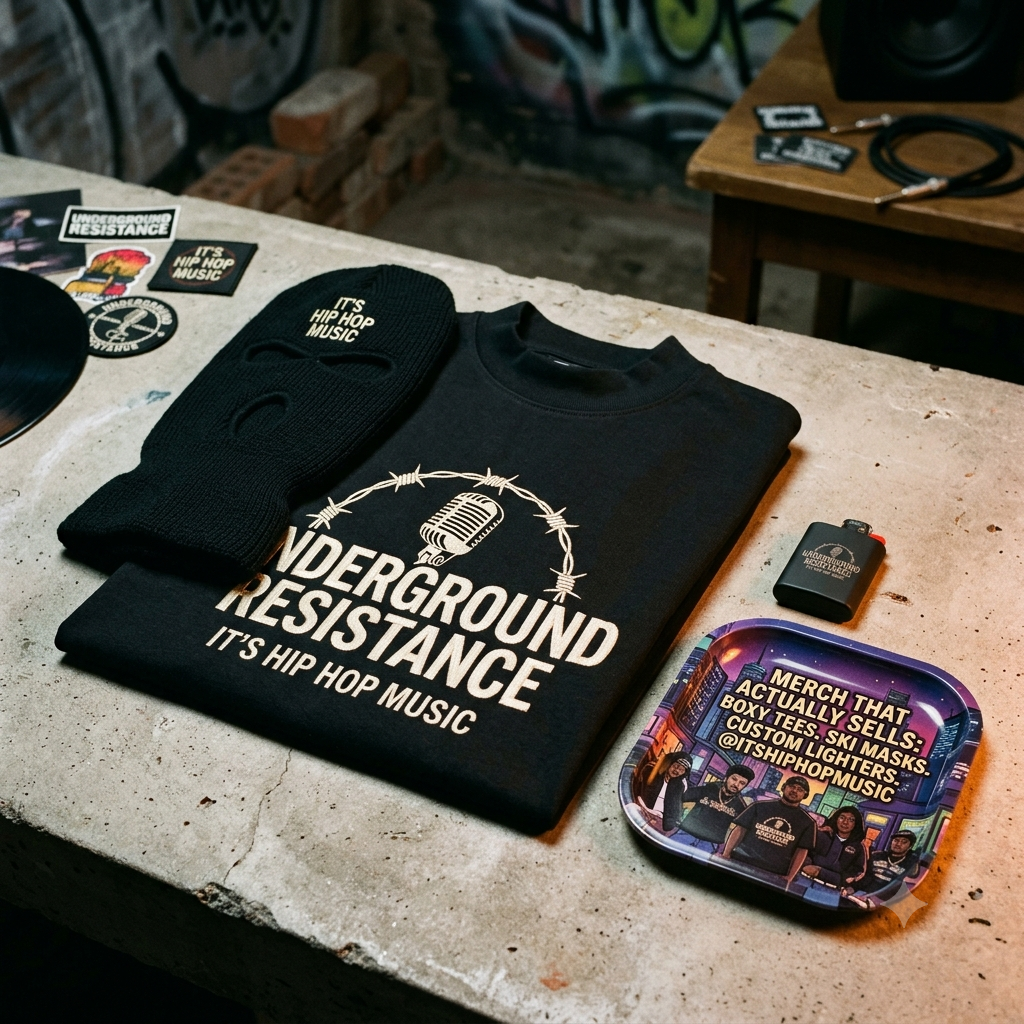
While standard dad hats and beanies still move, embroidered ski masks and distressed balaclavas have become massive cultural staples in underground rap. They photograph well for social media, turn your crowd into a walking visual at live shows, and carry serious identity.
Sourcing and Customization Tips
-
Always Embroider—Never Screen Print: Ink sits poorly on stretchy knitwear and cracks the first time someone pulls the mask over their head. Use dense flat embroidery, 3D puff stitching, or a custom woven patch stitched directly onto the forehead or cheek area.
-
Watch the Fabric Blend: Scratchy wool blends will sit unsold once people feel them. Source soft, combed cotton knits or high-grade, anti-pill acrylic yarns that feel comfortable against skin.
-
Keep the Branding Subtle: Instead of plastering your full artist name in giant letters across the face, use a minimalist symbol, a small gothic initial, a record label crest, or subtle tonal stitching (like black thread on a washed-black knit). Fans are far more likely to wear something in public when it looks like a designer piece rather than a walking billboard.
3. Custom Lighters and Metal Rolling Trays
Not everyone walking past your merch table has $50 or $60 to drop on a t-shirt—especially after paying $20 at the door and buying drinks at the venue. If your cheapest item is a $45 shirt, you are leaving cash on the table every single night.
That is where functional, everyday lifestyle accessories come in. Custom lighters and metal rolling trays are inexpensive to manufacture in bulk, take up almost zero space in a backpack or tour van, and act as daily cultural status symbols inside your fans’ inner circles.
Think about the psychology of a lighter or a rolling tray: a t-shirt gets worn once every week or two, whereas a lighter or tray gets pulled out multiple times a day in front of friends, producers, and new listeners.
How to Execute Accessories Properly
-
Custom Lighters: You have two smart routes here. For a budget impulse buy ($3 to $5 at the merch table), order wholesale matte-black disposable lighters wrapped in custom high-tack vinyl sleeves—your unit cost usually lands under $0.85 each. For a higher-tier collector piece ($15 to $20), source engraved metal lighter cases that fit standard BIC lighters, or refillable windproof jet lighters with laser-etched logos.
-
Mini Metal Rolling Trays: Stick to the compact 7″ x 5.5″ size. They fit easily inside a jacket pocket or crossbody bag, resist bending in transit, and give you a clean canvas for full-bleed album artwork, tracklists, or comic-style illustrations. Sell them solo for $15 to $20.
-
The “Session Bundle” Upsell: Group a physical CD or cassette, a custom rolling tray, and a branded lighter together for $25 or $30. Bundles feel like a steal to the buyer while dramatically increasing your average order value.
Putting Your Rollout Together
You don’t need a massive budget or fifty different SKUs to look like an established brand. Start tight and intentional: one heavyweight 300gsm tee in a single versatile colorway (washed black or vintage cream), one embroidered balaclava, and a batch of custom lighters and trays at the counter. Shoot real lookbook photos on film or high-contrast digital with your friends wearing the pieces in natural settings—not sterile white-background mockups.
Once your visual identity, apparel quality, and music all hit at the same professional level, getting eyeballs on your storefront becomes much easier. You can drive high-intent streetwear and music fans to your merch store using our artist submission networks to put your catalog and brand in front of active listeners.
Ready to take your rollout seriously? Make your brand attractive to streetwear buyers and labels. Apply via our Full Artist Submission Form.