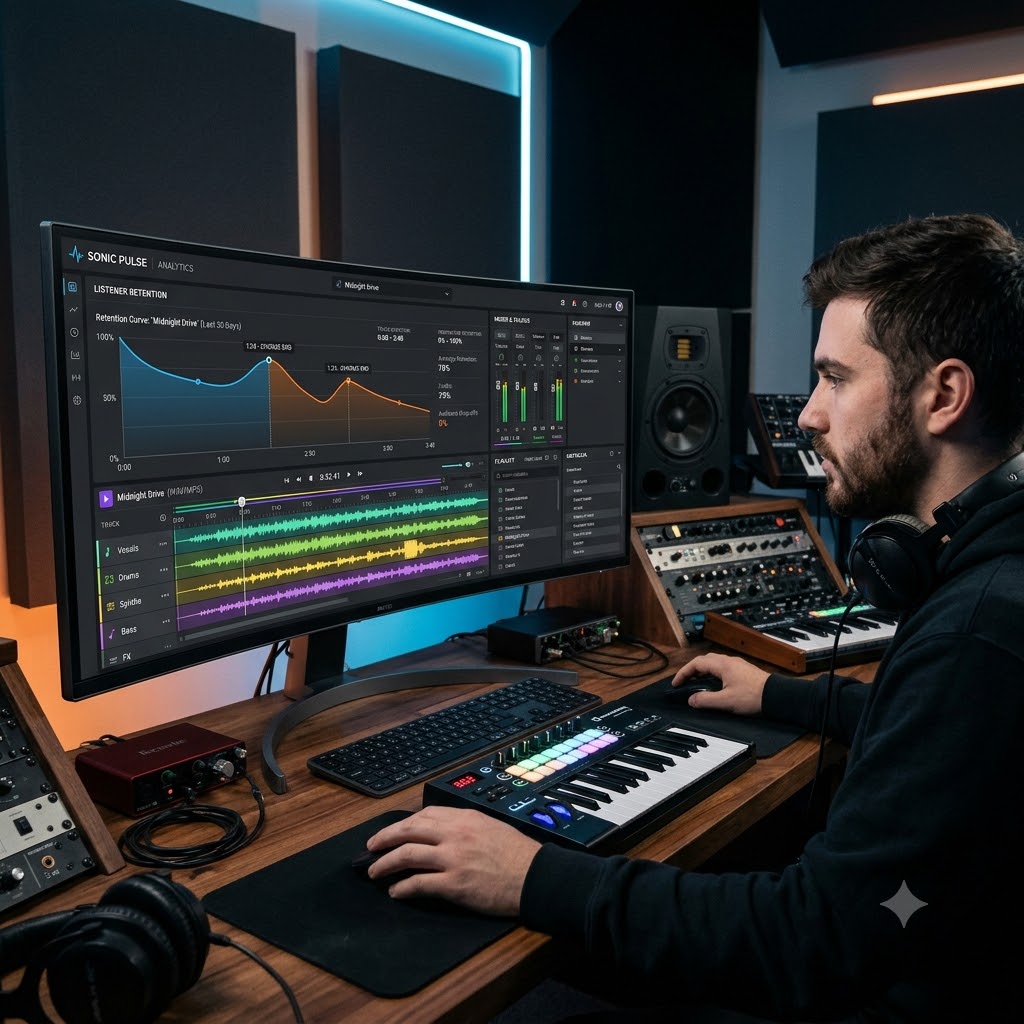
The “Skip-Rate Decay Curve”: What the First 15 Seconds Reveal to Algorithms
If you ask most independent rappers why their latest single didn’t pop, they’ll usually blame the playlist curators, a lack of budget, or “the algorithm being rigged.” But if you actually open Spotify for Artists and look under the hood, the real culprit is usually hiding in plain sight within the first 15 seconds of the song.
It’s a brutal metric called the Skip-Rate Decay Curve, and it’s quietly killing great rap releases before they ever get a fair shot.
If 40% of the people who hear your track hit skip in the first 15 seconds, the algorithm doesn’t just pass on your track—it actively caps your reach. Here is a breakdown of how streaming telemetry actually works, why your track structure is burning your Release Radar numbers, and how to fix it before your next drop.
What Is the Skip-Rate Decay Curve?
We tend to think of streaming success in terms of total stream count. Hits look like big numbers, and flops look like small ones. But recommendation engines like Spotify, Apple Music, and YouTube Music don’t look at total streams first—they look at user retention behavior over time.
The Skip-Rate Decay Curve is a visual graph of every millisecond a user interacts with your track. It logs every time someone presses play, and more importantly, the exact second they decide to bail.
Think of it like a YouTube retention graph. If everyone drops off two seconds into a video, YouTube stops recommending it. Streaming algorithms operate on the exact same logic. When a user skips your song, the platform registers that action as a negative signal. Collect enough negative signals during your initial release window, and the algorithm assumes listeners simply don’t like what you’re serving.
The Critical 15-Second Window
Why does the algorithm care so much about the first 15 seconds? Because that’s where human decision-making happens.
While a track needs to hit 30 seconds to count as an official “stream” for payout purposes, the recommendation engine starts making decisions about your song long before that payout counter ticks over. The engine breaks down the opening of your song into distinct emotional checkpoints:
-
0 to 5 Seconds (The First Impression): The listener’s brain registers the sound profile, mixing quality, and immediate vibe. If the intro is too quiet, muffled, or jarring, they skip instantly.
-
5 to 15 Seconds (The Hook/Pacing): The listener decides if the song is going anywhere worth waiting for. If there’s no melody, vocal, or drum groove taking shape by now, casual listeners move on.
-
15 to 30 Seconds (The Commitment): If a listener makes it past 15 seconds, their odds of listening past the 30-second payout mark jump significantly.
If your song loses people in those middle ten seconds, you are feeding poison to the recommendation system.
Why a 40% Skip Rate Hard-Caps Your Single
When you release a new single, platforms give it a test run. They push your track to a small batch of listeners through personalized feeds like Release Radar or automated radio queues. This is your initial “testing pool.”
If 40% or more of those test listeners hit the skip button before the 15-second mark, an automated flag gets triggered.
The system isn’t angry at you; it’s just trying to keep users on its platform. If 4 out of 10 people skip your track instantly, recommending your song to 100,000 more people means creating 40,000 bad user experiences. So, the platform protects itself by placing a soft cap on your algorithmic reach.
Here is what happens when that ceiling gets lowered:
1. Release Radar Death
Your song gets sent to fewer followers and almost no cold listeners. Instead of staying in user feeds for weeks, it gets buried in a single Friday update and disappears.
2. Autoplay Exclusion
When someone finishes listening to a major artist like Travis Scott or 21 Savage, the platform’s radio feature plays similar tracks automatically. If your skip rate is too high, you get blacklisted from these autoplay queues entirely.
3. The Discover Weekly Wall
Discover Weekly relies on lookalike profiling. If the algorithm sees that even your core audience is skipping your intros, it will never test your music on broader audiences who like similar artists.
Why Hip-Hop Artists Struggle with This the Most
Hip-hop fans are some of the most ruthless listeners on the internet. They consume music at high speeds, skip fast, and have zero patience for slow-building tracks when millions of other songs are a tap away.
Unfortunately, many indie rap releases are structured in ways that practically force people to skip early:
-
Movie Sample Intros: Opening your track with a 20-second dialogue snippet from a gangster film might feel cinematic in the studio, but to a casual listener on a gym playlist, it feels like dead air.
-
Overly Long Producer Tags: Having three different producer tags layered over an extended ambient beat before the drums come in gives listeners way too much time to lose interest.
-
Delayed 808s and Beats: If your beat doesn’t drop or your main vocal doesn’t hit until second 25, you’ve already lost half your audience.
-
Poor Mix Balance: If your vocal drops in at a drastically different volume than the intro beat, or if the low end is overly distorted on phone speakers, people will skip out of sheer auditory discomfort.
How to Engineer Your Tracks for Maximum Retention
Fixing your Skip-Rate Decay Curve doesn’t mean changing your artistic identity—it just means structuring your music to respect how modern audiences listen.
Start with High Energy
Don’t hide your best melody or vocal line in the middle of the track. Consider starting the song with a catchy vocal chop, a truncated version of the chorus, or a striking one-liner right at second zero.
Cut the Intro Length in Half
If your intro beat runs for 16 bars before the vocals start, try cutting it down to 4 or 8 bars. Get to the core of the song within 6 to 8 seconds max.
Test Your Master on Mobile Speakers
A massive percentage of early skips happen because a mix sounds muddy or quiet on mobile phones or cheap earbuds. Make sure your vocal cuts through clearly right out of the gate.
Run Targeted Playback Testing
Before dumping all your budget into ad campaigns, make sure you’re sending real, active hip-hop fans to a properly optimized track.
Once you restructure your track for high retention, then test your playback against active audiences with our multi-platform rap promotion packages.
Final Thoughts: Data Over Ego
The algorithm isn’t a gatekeeper standing in your way; it’s a mirror reflecting how listeners react to your music in real-time. If your streams are stalling out every time you drop, stop blaming bad luck. Take a hard look at your audience retention stats, tighten up your intros, and give the algorithm a reason to keep pushing your music.
💡 Maximize Your Streaming Retention Stats
Stop letting poor intro retention throttle your reach. Push your releases to active hip-hop listeners who actually stay tuned for the full track.
👉 Pitch your single via our Music Submission Page.