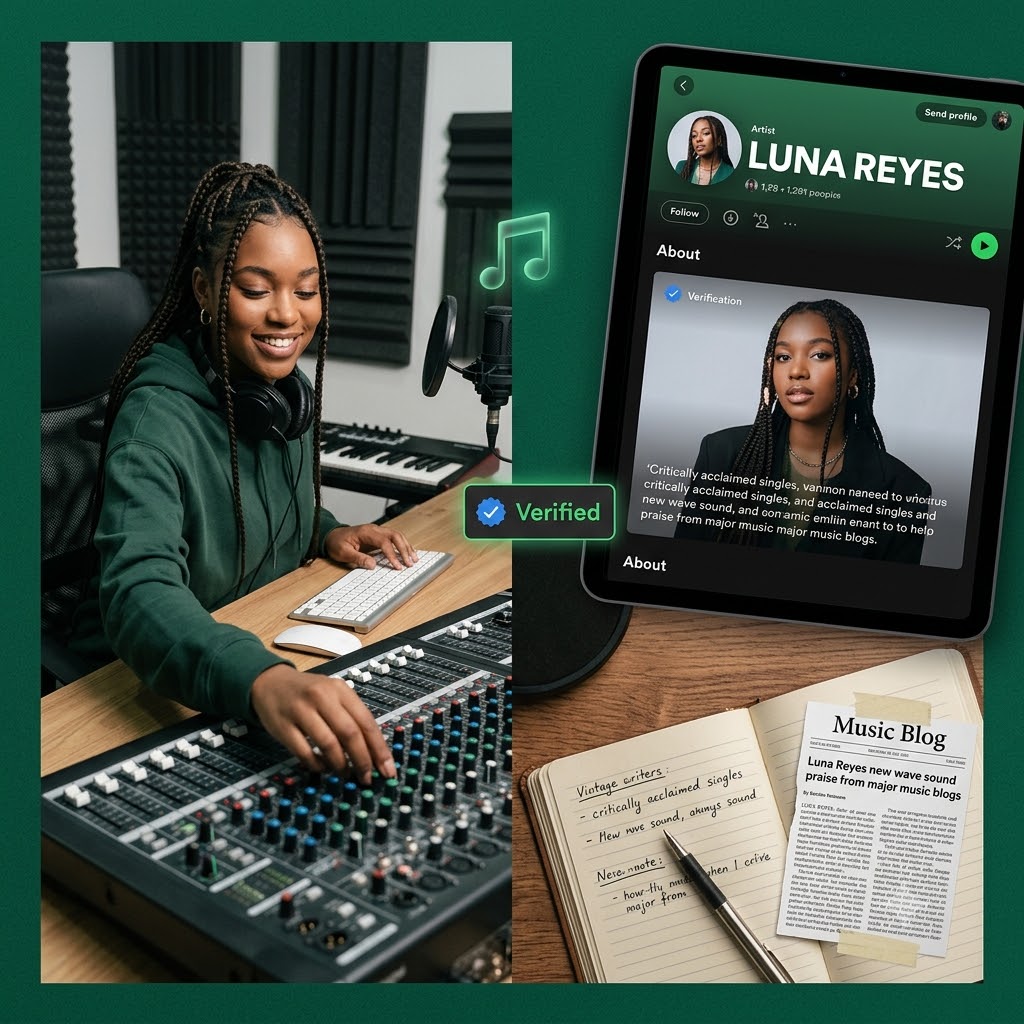
The Unspoken Secret Behind Spotify “About” Bios: Why Written Press Hits Differently
If you’ve spent any time looking at established artists on Spotify, you’ve probably noticed how polished their “About” sections look. They read like actual journalism—packed with career milestones, signature sound descriptions, and accolades.
Most independent artists assume there’s a secret button inside Spotify for Artists where you type in your bio and hit save. While you can edit your artist bio directly, the real magic—the updates that stick, show up across global databases, and catch the eye of Spotify’s internal curators—actually happens off the platform entirely.
The secret? Indexed third-party press coverage.
Spotify’s editorial team and automated discovery systems rely on a network of external data sources to verify who you are, what you sound like, and why your music matters. If you want a profile that looks authoritative and gets noticed by Spotify’s algorithm, you need a strategy for securing real, written web citations.
Here is a deep dive into how Spotify uses music blogs to update artist bios, why third-party links carry so much weight, and how you can use this to build a stronger digital footprint for your music.
How Spotify Actually Pulls Data for Artist Profiles
To understand why music blogs matter so much, you first have to understand how Spotify structures artist data. Spotify isn’t just an audio player; it’s a massive search engine and metadata engine built on web scrapers, data aggregators, and human editorial teams.
When Spotify needs to verify information about an artist, its systems cross-reference multiple web platforms. They don’t just take an artist’s self-submitted bio at face value because, let’s be honest, every artist claims they are the next big thing.
The Verification Engine
Spotify looks for third-party validation to confirm the facts. When an artist achieves a milestone—like dropping a groundbreaking album, landing a major feature, or hitting a tour circuit—Spotify’s curators look for external proof before incorporating those details into official playlist pitches or artist highlights.
They check:
-
Licensed Music Databases: Sites like AllMusic, Wikidata, and MusicBrainz that store structured biographical information.
-
Indexed Music Publications: Music blogs, online magazines, and review portals that publish long-form, searchable articles.
-
Search Engine Entities: Google’s Knowledge Graph, which relies heavily on indexed blog posts and news coverage to connect an artist’s name to their genre, location, and discography.
Without written articles circulating on the web, search crawlers have nothing to pull from. As a result, your profile remains static, and your music struggles to build the contextual authority required for algorithmic discovery.
Why Algorithms and Curators Love Written Web Citations
Why does a written review on an independent hip-hop blog hold more weight with Spotify than a viral post on social media?
It comes down to indexation and context.
Social media posts are ephemeral. They disappear down a feed within hours, and search engine crawlers often can’t index their text as structured data. On the flip side, an article published on a dedicated music site stays online, gets indexed by Google, and creates a permanent digital paper trail.
1. Third-Party Proof Over Self-Promotion
Anybody can write a glowing bio about themselves. Spotify’s editorial team relies on independent journalists, critics, and bloggers to act as filters. When a trusted publication covers your release, it signals that your music has met a certain bar of quality.
2. Rich Keyword Context
Algorithms don’t listen to music the way humans do; they process text around the music. When a blog post describes your sound using terms like “hard-hitting 90s boom-bap,” “melodic trap,” or “conscious storytelling,” those keywords get tied to your artist entity online. This helps Spotify’s recommendation engine place your tracks in front of listeners who like similar styles.
3. Geographic and Cultural Context
Music blogs often highlight where an artist is based, who they’ve collaborated with, and what local scenes they belong to. Spotify uses these details to organize local playlists, regional spotlights, and genre-specific hubs.
Building a Press Strategy That Gets Results
Getting covered by music blogs isn’t just about showing off a quote on Instagram—it’s a fundamental step in building search engine authority for your brand. If you want your press coverage to actively feed into your Spotify presence, keep these tactical guidelines in mind:
Focus on Indexed Outlets
Not all music websites are created equal. You want to pitch outlets that are regularly indexed by Google. A deep-dive review on a site with strong domain authority will do far more for your digital footprint than a brief mention on an inactive site.
Keep Your Metadata Consistent
When pitching your project, make sure your artist name, song titles, producer credits, and release dates match across all channels. If a blog spells your name differently or mislabels your project, search crawlers won’t link the article to your official Spotify entity.
Pitch Long Before Release Day
Web crawlers take time to index new content. Securing coverage in the weeks leading up to or immediately following your release gives search engines time to process the articles before Spotify updates its editorial playlists or data feeds.
Before submitting your music anywhere, make sure your project is presented professionally. Take time to ensure your submission meets media verification standards, then pitch your project through our music review portal.
The Long-Term Impact on Your Artist Career
Investing in written press does more than just tweak your bio section—it establishes a lasting history for your brand. Five years from now, a social media video might be long forgotten, but a well-written album review will still pop up when record labels, booking agents, and playlist curators google your name.
Every review, feature, and interview acts as a brick in your digital foundation. By prioritizing real press coverage today, you give Spotify’s team and algorithms everything they need to take your music seriously tomorrow.