Beat Clearance Agreements: Clearing Uncleared Elements in Indie Production
If you spend any time in indie studio sessions, you know how fast production moves. A producer opens a project, flips an obscure 1970s soul record, layers a vocal chop from a subscription loop kit, and lays down heavy drums. Within an hour, you have a hit. But when you are ready to hit upload on DistroKid, pitch to Spotify editorial playlists, or land a placement on Netflix, those quick studio moves can derail your entire release.
Uncleared samples are time bombs in independent music. A single unlicensed loop can halt distribution, trigger takedown notices, lock up your streaming revenue, or trigger a copyright lawsuit.
Sorting out sample rights after a song goes viral is brutal—it turns what should be your breakout moment into a legal nightmare. The fix isn’t to stop sampling; it’s to handle potential liabilities upfront by integrating clear, plain-English beat clearance addendums into every producer contract you sign.
The Problem with Standard Beat Contracts
Most standard beat leases or basic “exclusive rights” contracts rely on generic template language. You will usually see a short clause stating that the producer warrants their work is “100% original” and that they will hold you harmless if anyone sues.
When you are dealing with independent producers who sample freely, that clause is practically useless.
If a major publishing company flags a horn line or vocal loop in your track, shifting blame to a producer who doesn’t have the money to cover legal fees won’t save your music. Streaming platforms won’t wait for a judge to decide who is right—they will take your track down first and ask questions later.
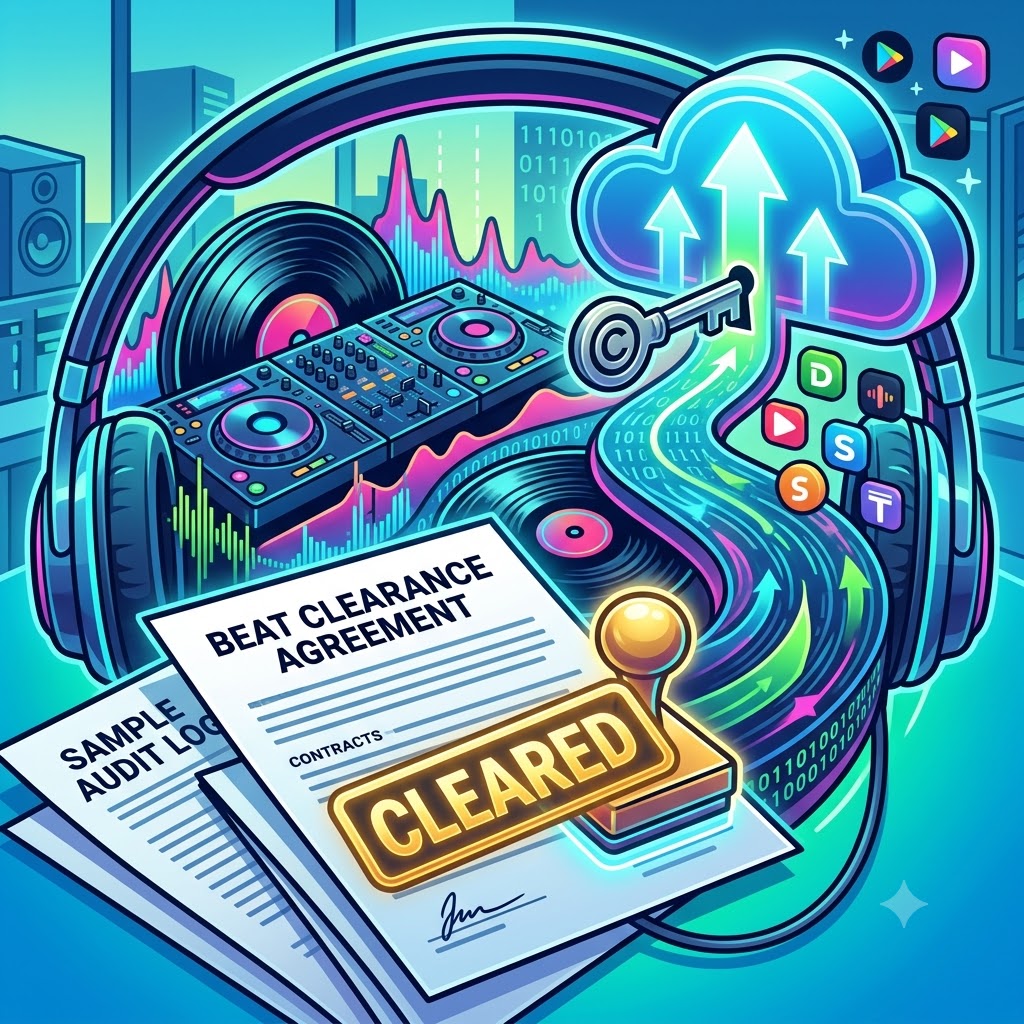
A beat clearance addendum bridges the gap between creative freedom and legal realities. Instead of setting up a legal battle after the fact, it creates clear guidelines for sample transparency, splits, and clear rights before your music goes live.
4 Must-Have Clauses in a Beat Clearance Addendum
When working with indie producers who use third-party material—whether that’s old vinyl records, obscure YouTube rips, or third-party sample packs—your contract addendum needs four specific protections:
1. The Mandatory Sample Audit Log
Never accept a final beat pack with just a high-res WAV and stems. Require your producer to fill out a detailed Sample Audit Log as an official attachment to your contract.
This document should specify:
-
Exact Source Details: Song title, original recording artist, record label, and year of release.
-
Usage Markers: The exact timestamp and duration where the sample appears in your track.
-
Source Type: Whether the element was sampled directly from a commercial record, a subscription library (like Splice or Tracklib), an royalty-free library, or a public domain archive.
Having this information mapped out in advance saves thousands of dollars in legal fees if you need to hire a clearance broker later.
2. Explicit Clearance Responsibilities and Expense Splits
Clearances involve two distinct rights: the Master Recording (owned by the record label) and the Underlying Composition/Publishing (owned by the songwriters and publishers). Your addendum must answer two critical questions:
-
Who is doing the legwork to clear the sample?
-
Who is paying the upfront fee or giving up royalties?
Typically, if a sample clearance requires a non-refundable upfront clearance fee, the recording artist or label covers it as a recoupable project expense. However, if the copyright holder demands a percentage of the master royalties or publishing splits, the addendum should state how those splits come out of the producer’s share versus the artist’s share.
3. Verification and Financial Accountability
If a producer guarantees that a loop is 100% original, synthesized from scratch, or fully cleared via a royalty-free license, hold them to that statement.
Your addendum should state that if an undisclosed sample triggers a third-party claim or copyright strike, you have the right to hold back royalty payouts until the issue is resolved, or use those funds to cover the costs of securing the proper licenses.
4. The “Re-Play or Interpolation” Escape Clause
Clearing master recordings from legacy labels is notoriously difficult and expensive. Publishing clearances, on the other hand, are often far easier to negotiate.
Include an escape clause that gives you the right to hire session musicians or interpolation teams to re-record, re-play, or re-sing the sampled elements. Re-creating the sample bypasses the need for a master license entirely—leaving you with only the composition clearance to secure.
Step-by-Step: How to Clear a Sample as an Indie Artist
If your audit log reveals a commercial sample that needs clearance, here is the realistic path to getting it cleared without burning through your entire release budget:
-
Identify the Rights Holders: Use databases like ASCAP, BMI, SESAC, or Songview to track down who owns the publishing rights. Use Discogs or AllMusic to identify the record label that owns the master.
-
Prepare Your Clearance Pitch: Rights holders rarely respond to vague emails. Send a clean package containing the finished track, the exact sample timestamps, a brief bio, and your projected release date.
-
Propose Terms: Be prepared to offer a combination of an upfront advance fee and an ongoing royalty percentage (both for streaming masters and publishing splits).
-
Consider Clearing Hubs: If contacting major publishers directly yields no response, consider using sample clearance services or sourcing beats created from pre-cleared libraries like Tracklib, where clearance terms are pre-negotiated based on track usage.
Why Packaging and Metadata Matter Just as Much as Contracts
Clearing your samples is only half the battle. When you pitch tracks to sync licensing agencies, label A&Rs, or major playlist curators, they expect your entire operation to run professionally.
Inaccurate metadata, missing split sheets, or a disorganized online presence flag you as a liability to industry professionals. If a supervisor loves your track but senses your paperwork or branding isn’t tight, they will pass on your release and pick a safer option.
To stand out in today’s crowded market and build the baseline digital presence required for cleared releases using our artist packaging packages, you need to align your legal foundation with a clean, cohesive visual identity and digital distribution footprint.
The Bottom Line
Sampling is one of the most powerful creative forces in modern music, but turning a sample-heavy beat into a commercial asset requires preparation. Don’t wait until a song starts trending on TikTok to think about sample clearances.
Drafting straightforward, transparent addendums with your producers protects your royalties, keeps your catalog safe on streaming platforms, and prepares your music for long-term commercial success.