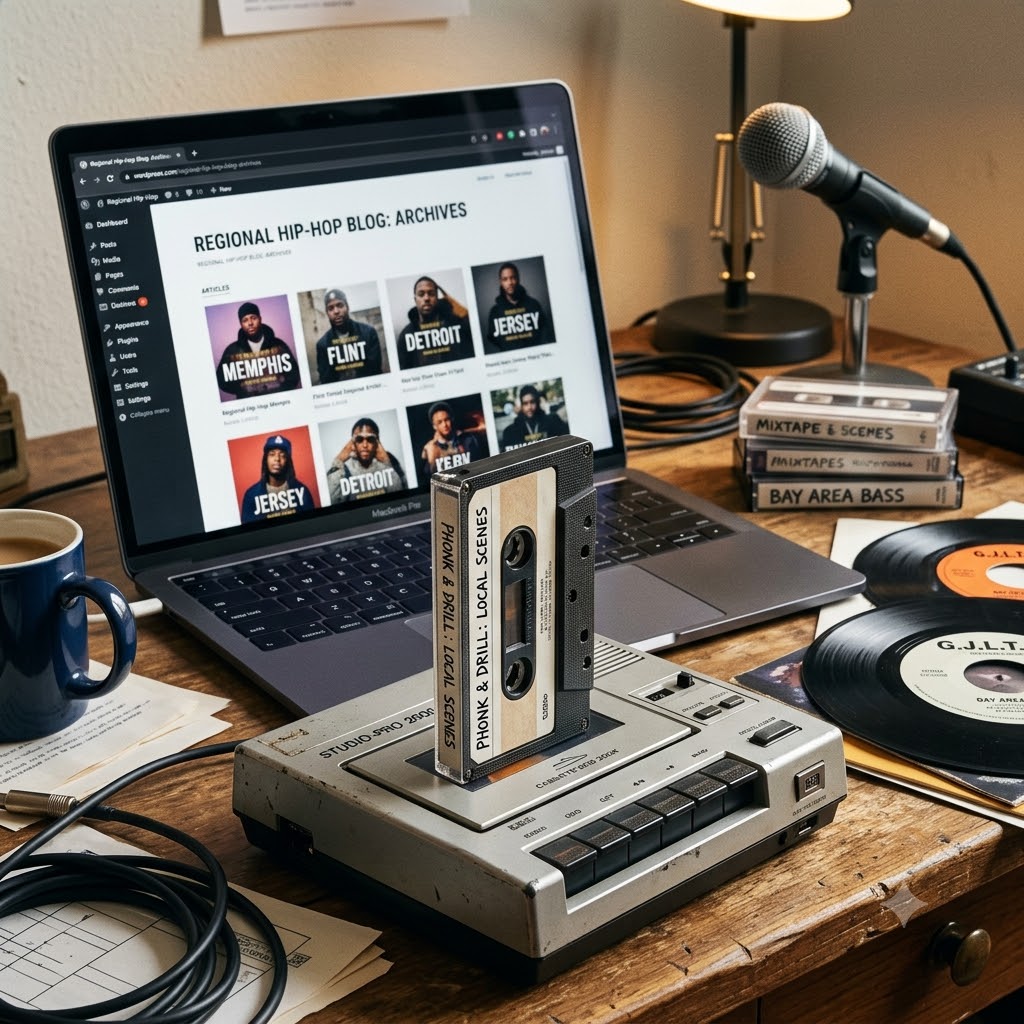
The Digital Tapes: How Niche Rap Blogs Save Underground Hip-Hop History
When critics write about hip-hop history, they usually stick to the obvious milestones. They talk about peak-era New York boom-bap, West Coast G-funk dominating radio waves, or late-2000s Atlanta trapping its way onto global charts. But if you only look at mainstream milestones, you miss about 80% of what actually makes the culture move.
Long before a regional sound hits Spotify editorial playlists or goes viral on TikTok, it brews quietly in specific neighborhoods. It lives in dusty basement setups, regional mixtape swaps, and localized streaming pockets.
More importantly, it survives because of independent rap blogs.
While massive media outlets chase trending celebrity drama and major-label rollouts, small, passionate music blogs sit on the front lines. They document micro-scenes, preserve lost files, and index localized rap movements that corporate media ignores.
Without these independent archivists, entire chapters of hip-hop subculture would disappear overnight.
The Mainstream Media Blindspot
To understand why small blogs matter so much, you have to look at how major music media operates today. Big publications aren’t designed to cover underground rap—they simply can’t afford to.
1. The Churn of Algorithm Chasing
Corporate music sites run on ad revenue, which means every article needs massive page views. To hit those numbers, writers are forced to focus on artists who already have millions of followers. If a rapper in Milwaukee or a producer in Jacksonville is making groundbreaking music but only has 2,000 monthly listeners, major publications won’t touch it.
2. A Lack of Regional Context
National writers sitting in major newsrooms often lack the local context needed to understand regional subgenres. They don’t know the local slang, the specific sampling traditions, or the regional dance styles that shape a track. When big outlets finally attempt to cover a regional scene, they often flatten it, missing the nuances that make the sound special in the first place.
3. The “Trend-and-Abandon” Cycle
When a regional subgenre occasionally breaks through to the mainstream—like Chicago drill, Memphis phonk, or Jersey club—major outlets jump on it for a few months. But as soon as the hype dies down, they move on to the next viral trend, abandoning the artists who built the foundation.
How Niche Rap Blogs Serve as Living Cultural Archives
This is where niche blogs step in. Run by obsessive music heads, local writers, and community insiders, independent blogs aren’t chasing millions of clicks. They care about the music, the culture, and the lineage.
1. Documenting Lost Digital Media
Think about how much music lives on fragile platforms. Dead file-hosting links, deleted SoundCloud accounts, and forgotten Bandcamp pages are lost every day. Niche blogs act as a permanent paper trail. They track tracklists, review obscure mixtapes, interview teenage producers, and write long-form breakdowns that get indexed by search engines. When a platform goes dark, the blog post remains as historical proof that a movement existed.
2. Spotlighting the Unsung Architecture
Hip-hop subgenres are built by more than just MCs. They are defined by bedroom beatmakers, local sound engineers, cover artists, and event organizers. Major outlets rarely credit the producer who flipped a local sample in their bedroom, but niche blogs regularly run Q&As and track breakdowns with these behind-the-scenes architects.
3. Creating Cross-Regional Bridges
An independent blog post isn’t just for local readers; it’s a beacon for artists across the globe. A producer in London might discover a niche Detroit rap blog, fall in love with the fast-tempo synth baselines, and start collaborating with artists across the Atlantic. Niche blogs connect underground artists who share similar sonic sensibilities, driving the evolutionary wheel of underground rap.
Why Media Coverage Matters for Independent Artists
If you are an artist or producer crafting a distinct regional sound, getting covered by music publications isn’t just an ego boost. It’s an essential step in building a long-term, sustainable career.
Here is why press coverage on dedicated review sites is critical:
-
Search Engine Visibility: Social media posts disappear into a feed within hours. A structured review on a dedicated domain ranks on search engines permanently. When fans, managers, or booking agents search your name, press coverage shows you are serious.
-
Music Industry Credibility: A strong press quote or written feature gives you immediate leverage. It adds weight to your EPK (Electronic Press Kit) and shows potential collaborators that industry tastemakers co-sign your work.
-
Archival Preservation: By putting your project into a formal music review database, you ensure your catalog remains documented in hip-hop history, no matter how the algorithms change.
If you want to document your regional sound in hip-hop history by securing a feature on our music review portal, getting your music critically analyzed by dedicated writers is the best place to start.
Preserving the Sound of Tomorrow
Hip-hop has always been a localized, bottom-up art form. It starts in neighborhood parks, local basements, and tight-knit regional scenes before it ever reaches a stadium stage.
Without independent rap blogs doing the unglamorous work of listening, writing, and archiving, the history of underground hip-hop would be written entirely by corporate algorithms. By supporting independent music press—and submitting your own work to be featured—you help keep the true culture of hip-hop alive, well-documented, and accessible for generations to come.
Make Your Music Catalog Attractive to Media Outlets
Don’t let your project get buried beneath the noise of daily streaming dumps. Stand out from the crowd, build lasting authority, and get your music reviewed by passionate hip-hop journalists who respect the craft.