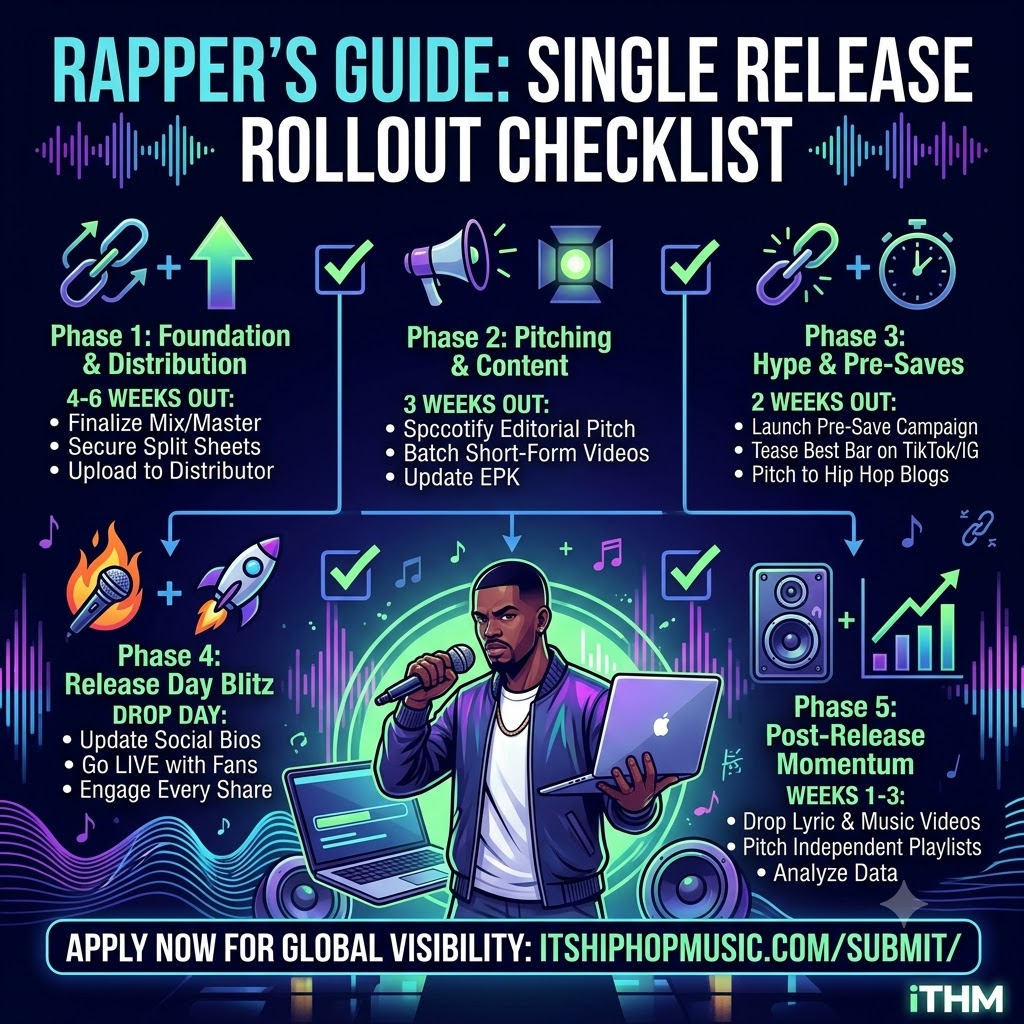
The Ultimate Single Release Rollout Checklist for Rappers
Dropping a rap single without a game plan is basically like tossing your best mixtape right into a black hole. Let’s keep it real: in today’s hyper-competitive hip-hop landscape, having insane bars and a top-tier flow isn’t enough anymore. Talent gets you in the room, but execution is what gets your tracks onto major editorial playlists, drives thousands of streams on Spotify and Apple Music, and blows up your TikTok algorithm.
Whether you’re an underground lyricist grinding out boom-bap or a melodic trap artist experimenting with autotune, you need a blueprint.
Executing a multi-week rollout strategy is simple when using our complete artist marketing packages (https://itshiphopmusic.com/submit/artist-submission/).
If you want to turn your next drop into an actual moment instead of a whisper, you need a system. This definitive, step-by-step single release rollout checklist for rappers will guide you from the studio console straight to your listeners’ headphones.
Phase 1: 4 to 6 Weeks Out – The Foundation, Mix, & Distribution
Before you even think about posting a 10-second snippet on Instagram, your administrative house needs to be completely in order. If you skip this part, you’ll run into distribution delays, sample clearance nightmares, or missed playlist opportunities.
-
Nail Your Master and Mix: Your vocals need to sit crisp and clean right above the beat. Make sure your 808s don’t muddy up the mix, your hi-hats aren’t piercing, and your track is professionally mastered for streaming platforms (aiming right around -14 LUFS so it doesn’t get squashed by compression).
-
Secure Your Clearances & Split Sheets: Nothing kills momentum faster than a copyright strike or a lawsuit from an uncleared sample or beat lease. Settle your producer agreements and sign split sheets with everyone involved before you push that distribution button.
-
Upload to Your Distributor Early: Send your music to DistroKid, TuneCore, CD Baby, or Ditto at least 4 weeks ahead of time. This isn’t just about getting it online; it guarantees your track lands inside Spotify for Artists and Apple Music for Artists with enough time to pitch for official editorial playlists.
-
Design High-Impact Visual Assets: Get your official cover art, promotional banners, and visualizer concepts locked down. Your visual aesthetic has to instantly communicate the mood of your track—whether it’s gritty street realism or luxurious melodic vibes.
Phase 2: 3 Weeks Out – Editorial Pitching & Content Creation
With your distribution locked down and your audio files processed, your focus shifts entirely to algorithmic placement and short-form video content.
-
Pitch to Spotify Editorial: Log into your Spotify for Artists dashboard and submit your unreleased track for editorial consideration. Write a concise, punchy pitch. Tell them your sub-genre, your city, what inspired the track, and any notable names attached. Don’t waste space—get straight to the point.
-
Batch Your Short-Form Content: Do not wait until release week to film content. Shoot 10 to 15 TikToks, Instagram Reels, and YouTube Shorts right now. Focus on behind-the-scenes studio sessions, raw vocal takes, lyric breakdowns, and punchline reaction videos.
-
Build a Clean Electronic Press Kit (EPK): Compile your bio, high-resolution press photos, cover art, and a private listening link (SoundCloud private link or Disco) into a clean, easy-to-read EPK. Hip-hop blogs and tastemaker curators hate digging for assets.
Phase 3: 2 Weeks Out – Hype, Pre-Saves, & Blogger Outreach
Now you start building actual anticipation with your core fanbase and testing the waters with industry tastemakers.
-
Launch Your Pre-Save Campaign: Give your fans a concrete reason to pre-save your track. Offer them something exclusive—like a behind-the-scenes studio vlog, early access to the lyrics, or a chance at exclusive merch.
-
Tease the Hook or Your Hardest Bar: Drop a 15-second snippet featuring the most infectious hook or your craziest bar on TikTok, Shorts, and IG. Let the audio trend and let fans ask when the song is dropping before you even tell them.
-
Submit to Hip-Hop Blogs & Curators: Reach out to independent music blogs, YouTube promotion channels, and tastemaker curators. Secure premiere dates or review commitments so the internet has conversation starters ready on drop day.
Phase 4: Release Day – The Drop & 24-Hour Blitz
Launch day is a full-blown sprint. You need maximum visibility from the absolute second the clock strikes midnight in your target regions.
-
Update All Social Bios: Change your Instagram, Twitter/X, and TikTok bios immediately to the direct smart link (Linktree, Feature.fm, or Linkfire) for your single. Make it frictionless for people to stream.
-
Go Live with Fans: Host a quick Instagram or TikTok live session 30 minutes before release. Talk about what the record means to you, build the tension, and count down to midnight together with your community.
-
Engage with Every Single Share: When fans, fellow artists, producers, or features share your song on their stories or timelines, repost and reply immediately. Early engagement signals to algorithms that people care.
Phase 5: Post-Release – Sustaining Momentum (Weeks 1 to 3)
The drop day rush is over, but the actual heavy lifting of an independent rollout continues. To keep the algorithm feeding your track to new listeners, consistency is everything.
-
Drop Your Visuals in Waves: Drop your lyric video on release week, followed by the official music video 7 to 10 days later. A staggered visual release triggers a second wave of algorithmic attention and fresh streams.
-
Pitch to Independent Curators: Keep the momentum rolling by submitting to targeted playlists through SubmitHub, Groover, and direct DMs to independent curators who champion your specific style of hip-hop.
-
Analyze Your Data: Pull up your Spotify and Apple Music analytics after week one. Look at which cities are streaming the most, see where your TikTok traffic came from, and reinvest your energy or small ad budgets into those exact target markets.