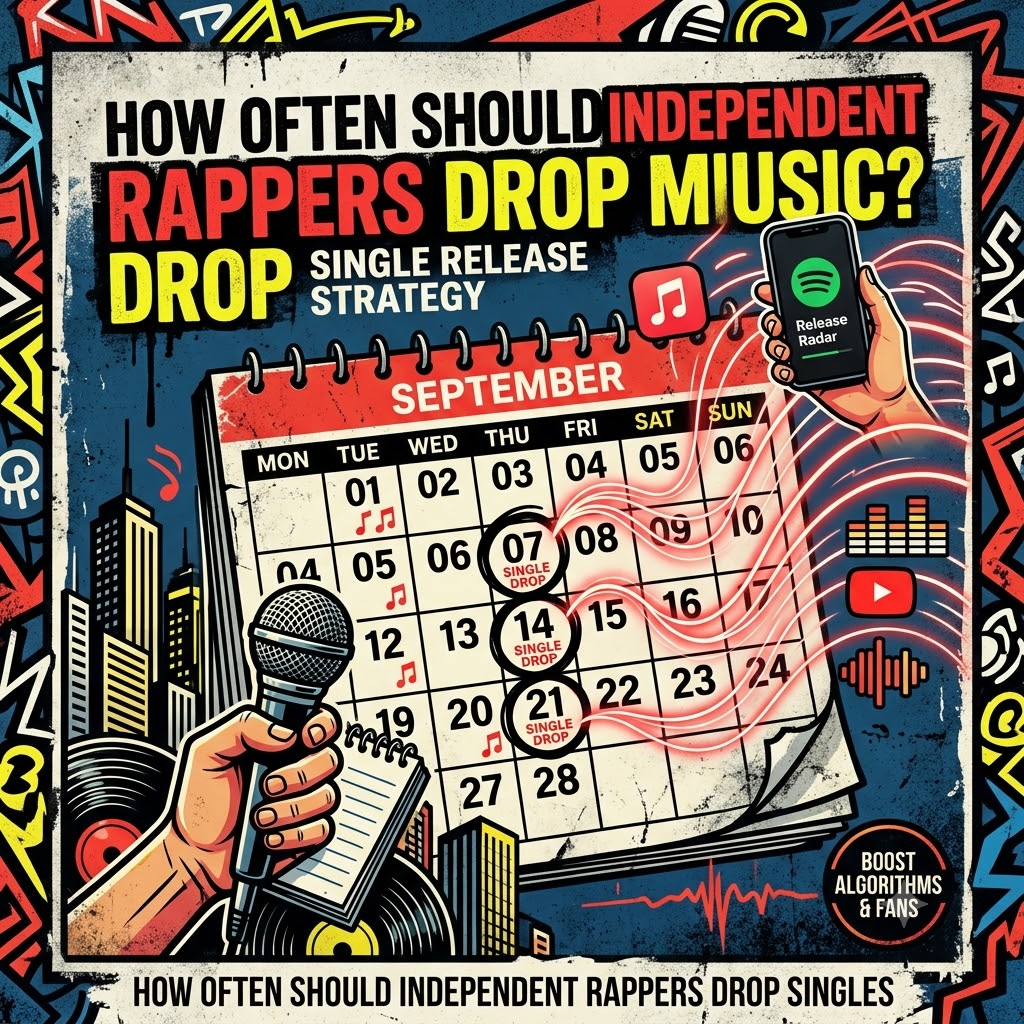
How Often Should Independent Rappers Drop New Music? The Blueprint for Modern Hip-Hop Growth
If you’re an independent hip-hop artist grinding out of your home studio or a local independent label, you’ve probably heard the old industry advice a million times: “Just focus on making good music, and the rest will take care of itself.”
Back in the golden era of physical CDs and multi-million dollar major label backing, maybe that flew. But today? If you drop one amazing song and then vanish for eight months to cook up a masterpiece album, the algorithms will forget you exist, your fans will move on to the next TikTok trend, and your momentum will flatline.
The music industry has shifted entirely. Streaming platforms, social media feeds, and playlist curators don’t reward perfection—they reward velocity and consistency.
So, what is the sweet spot? How often should independent rappers drop singles if you actually want to build a sustainable career, feed the algorithm, and grow your monthly listeners without burning out creatively?
Let’s dive deep into the real numbers, the psychology of modern hip-hop fans, and the exact release strategies working right now.
Why the Traditional Album Cycle is Dead for Indie Artists
Think about how legendary rap albums used to drop. An artist would disappear for two or three years, drop a cinematic trailer, release a 16-track project, and tour for a year. For Drake, Kendrick, or J. Cole, that still works because an entire ecosystem is funded and waiting to market it.
For an independent rapper? That model is a slow career death.
When you drop a single project and go silent, you give the streaming algorithms one temporary data point. Once the initial hype dies down after week two, the platform has nothing new to push. You drop out of release radar, your pitching window closes, and you’re essentially invisible until your next big roll of the dice.
Swapping out massive album rollouts for a steady stream of singles changes the entire game. Every single you drop is a new door for listeners to walk through. It’s a fresh hook for TikTok, a new pitch for Spotify Editorial, and a fresh reason for a casual listener to hit that “Follow” button.
The Gold Standard: The 3-to-4 Week Release Schedule
For independent rappers working with independent budgets, limited teams, and a normal recording schedule, the undisputed sweet spot is dropping a new single every 3 to 4 weeks.
Why does this specific timeframe work so well?
-
Algorithm Retention: Spotify, Apple Music, and YouTube love active profiles. Maintaining a 3-to-4 week release schedule keeps algorithms warm when backed by our artist promotion networks (https://itshiphopmusic.com/submit/artist-submission/). It signals to the system that you are an active, growing creator worth pushing out to new listeners’ Release Radars and Discover Weeklys.
-
Short Attention Spans: The modern listener consumes music like content. Dropping monthly keeps your name floating across playlists and timelines without letting fans get tired of you.
-
Sustainable Workflows: Recording, mixing, mastering, and shooting visual content for a track every single week is a fast track to creative exhaustion. Dropping every month gives you enough breathing room to maintain high quality while keeping the machine fed.
Alternative Release Strategies: Finding What Fits Your Vibe
Not every rapper works the same way. Depending on your catalog size, your marketing budget, and how fast you write, you can pivot the monthly rule into a few other proven formats.
1. The Waterfall Release Method
If you hate the pressure of constantly recording brand new tracks from scratch, the waterfall method is your best friend.
-
Month 1: Drop Single A.
-
Month 2: Drop Single B, but bundle it with Single A on the tracklist.
-
Month 3: Drop Single C, bundled with Singles A and B.
-
Month 4: Drop the final track and package the whole thing as a completed EP.
This strategy is brilliant because every time you add a new song, all the previous streams roll over into the updated project page. It tricks the algorithm into thinking your old tracks are getting a second wind while building toward a cohesive project.
2. The Bi-Weekly Blitz (For High-Output Artists)
Do you live in the booth? Do you have 30 unreleased tracks sitting on a hard drive right now? If you have a dedicated engineer and a rock-solid production team, dropping every 14 days can hyper-accelerate your growth.
Brands and hip-hop curators love artists who are relentlessly active. However, be warned: this requires a factory-level work ethic. You cannot afford to slack on cover art, promotional Reels, or lyric videos if you’re moving at a two-week clip.
3. The Cinematic Rollout (Quarterly Drops)
If your brand relies heavily on high-concept storytelling, cinematic short films, and high-budget music videos, dropping every month might cheapen your aesthetic. In this case, dropping a major single every 2 to 3 months can work—provided you fill the silence in between with heavy freestyle clips, behind-the-scenes studio vlogs, and community engagement.
Step-by-Step: How to Execute a Consistent Drop Schedule
Execution is everything in independent music marketing. If you want to pull off a consistent release schedule without losing your mind, follow this blueprint:
Batch Your Recording Sessions
Never record song-by-song in real time. If you wait until release week to record your next track, you’re setting yourself up for failure. Instead, lock yourself in the studio for a weekend and knock out 4 to 6 songs at once. Get them mixed and mastered back-to-back so you have a backlog ready to go.
Plan Your Content Factory Day
Once your songs are locked in, spend one afternoon shooting vertical video content. Change your shirt a few times, film 10 different snippets of you vibing to your unreleased tracks in the car, at your desk, or in the studio. You now have months of TikToks, YouTube Shorts, and Instagram Reels ready to schedule.
Submit to Distributors Early
Don’t upload your track five days before release and hope for the best. Get your music onto your distributor (DistroKid, TuneCore, etc.) at least 3 to 4 weeks before your target drop date. This gives you enough time to pitch directly to Spotify Editorial through Spotify for Artists and secure a clean, stress-free rollout.
Final Thoughts: Consistency Beats Perfection
At the end of the day, waiting for the “perfect” song can paralyze your career. Most breakout rap careers aren’t built on one accidental lightning-in-a-bottle mega-hit; they are built on a relentless catalog of solid records that compound over time.
Find a cadence you can actually sustain—whether that’s every 21 days or once a month—lock in your workflow, and let the algorithm do what it was built to do: reward the artists who never stop working.