


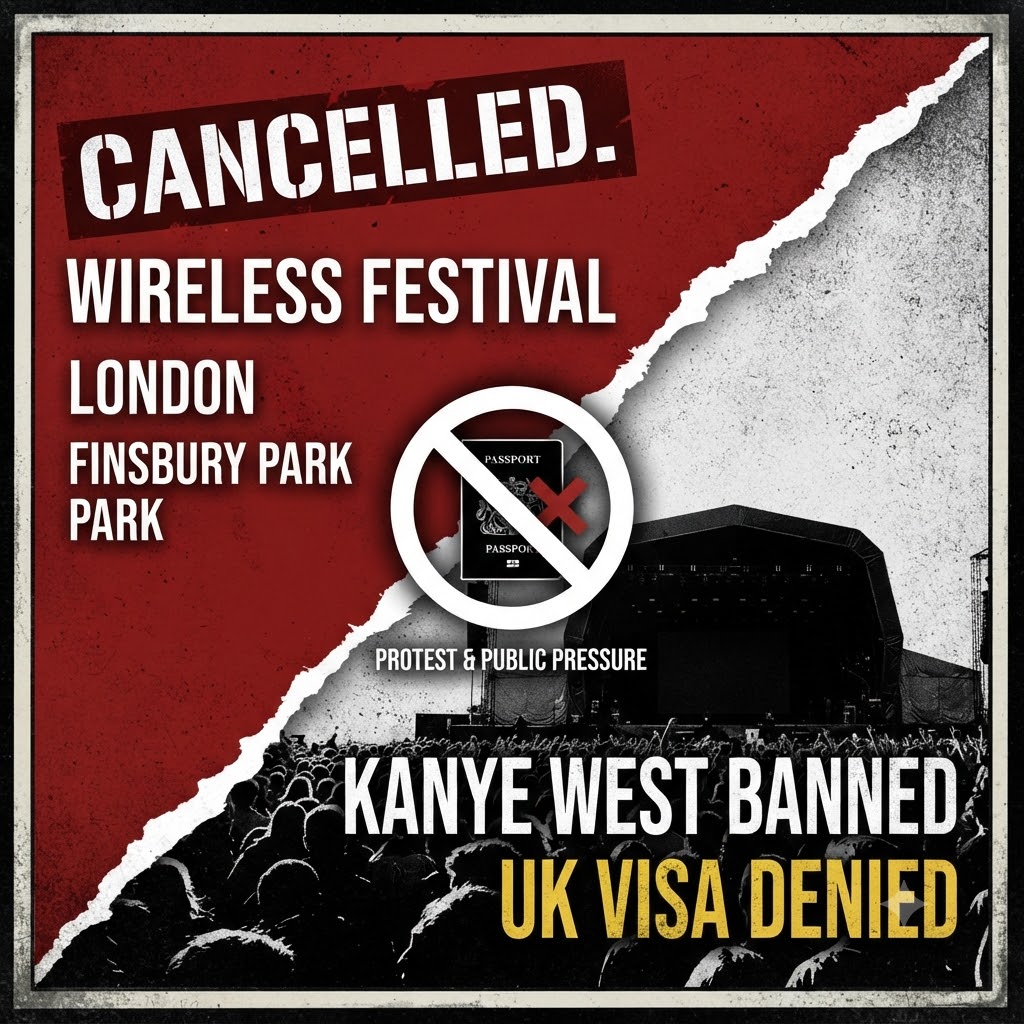
Kanye West Banned from the UK: Why Wireless Festival Was Forced to Cancel Entirely
The live music community was thrown into chaos following a high-stakes clash between international pop culture, corporate backing, and government policy. London’s premier urban music celebration, Wireless Festival, was forced to completely cancel its upcoming three-day event. The reason? The UK Home Office officially blocked Kanye West—who now goes by Ye—from entering the country, denying his Electronic Travel Authorisation (ETA).
For fans who had already locked down tickets or pre-sales, it was a massive shock. For the live events industry, it marks a historic turning point in how festival lineups are scrutinized. Let’s dive into how a single festival booking snowballed into a national political firestorm, why the government stepped in, and what this means moving forward.
How the Wireless Festival Booking Sparked Outrage
The controversy kicked off the second Festival Republic announced Ye as the major headliner for the three-day event scheduled at Finsbury Park. It was meant to be a massive milestone—his first time performing live in the UK in over a decade. Instead, it immediately triggered a furious public backlash.
Critics pointed directly to a long string of controversial, antisemitic remarks, public praise for Nazism, and inflammatory merchandise choices from the rapper over previous years. Rather than driving ticket sales through excitement, the announcement split the music community down the middle.
The Sponsor Exodus
Corporate sponsors quickly realized the association was becoming a PR nightmare. Major brands didn’t want their logos anywhere near the festival grounds:
-
Pepsi: The title sponsor dropped its backing almost immediately.
-
Diageo: The corporate giant behind Guinness pulled its sponsorship.
-
Rockstar Energy: Quickly followed suit, backing out of the partnership.
Political Pressure Mounts
The noise soon reached the highest levels of British government. Prime Minister Keir Starmer publicly condemned the booking, stating that the artist should not be welcomed given his history of hate speech. London Mayor Sadiq Khan also distanced City Hall from the event, declaring that the rapper’s past actions did not align with London’s core values.
Ye’s Public Appeal and the Debate Over Forgiveness
Before the government officially brought down the hammer, Ye tried to get ahead of the spiraling narrative. In a public statement, he expressed a desire to sit down with members of the UK’s Jewish community to listen, learn, and show accountability.
“My only goal is to come to London and present a show of change, bringing unity, peace, and love through my music… I know my words aren’t enough—I’ll have to show change through my actions,” Ye shared in a statement.
Initially, festival promoter Melvin Benn of Festival Republic stood his ground, arguing for the power of second chances. The argument was that ticket buyers were purchasing entry to hear classic radio hits, not a platform for political rants.
However, advocacy groups like the Board of Deputies of British Jews pushed back, arguing that genuine remorse and behavioral change had to come long before setting foot on a major festival stage.
The Government Steps In: The UK Visa Denial
Despite submitting a travel application via a UK Electronic Travel Authorisation (ETA), the Home Office intervened directly. Authorities officially blocked his entry, ruling that his presence in the country would “not be conducive to the public good.”
With their headlining act legally barred from entering the country, festival organizers realized the entire weekend was logistically impossible to salvage. Festival Republic issued a short, definitive notice confirming the cancellation of the festival:
-
Automatic Full Refunds: Organizers confirmed that every single ticket holder would receive a full, automatic refund.
-
A Glitch in the System: Organizers noted that they had consulted multiple stakeholders ahead of booking the rapper, and no red flags had been raised initially—highlighting just how rapidly public and political sentiment shifted.
What This Means for the Future of Live Music
The Kanye West UK visa denial sends a thunderous message across the global entertainment industry. It proves that major music festivals can no longer easily separate high-profile headliners from their off-stage controversies and sociopolitical fallout.
As the dust settles around Finsbury Park, festival bookers are going to look twice at international contracts. The line between separating art from the artist is blurring, and governments are increasingly willing to use immigration laws to draw a hard boundary.






 from entering the country over visa denials.)