How to Pitch Your Beat Catalog & Vocal Hooks to Indie Video Game Developers
Let’s be honest: the traditional blueprint for hip-hop producers and beatmakers has barely changed in a decade. You spend hours crafting a hard-hitting instrumental, upload it to a crowded marketplace, post a 15-second snippet on Instagram or TikTok, and hope an artist buys a lease. If you’re lucky, you might lock down a local studio session or snag a minor placement with an up-and-coming rapper.
Meanwhile, the market is completely flooded. Every single day, thousands of producers upload millions of tracks to beat stars, YouTube, and streaming services. Standing out in that sea of noise is exhausting, and relying solely on hip-hop vocalists for your income can feel like running on a treadmill that never slows down.
What if you’re looking in the wrong places entirely?
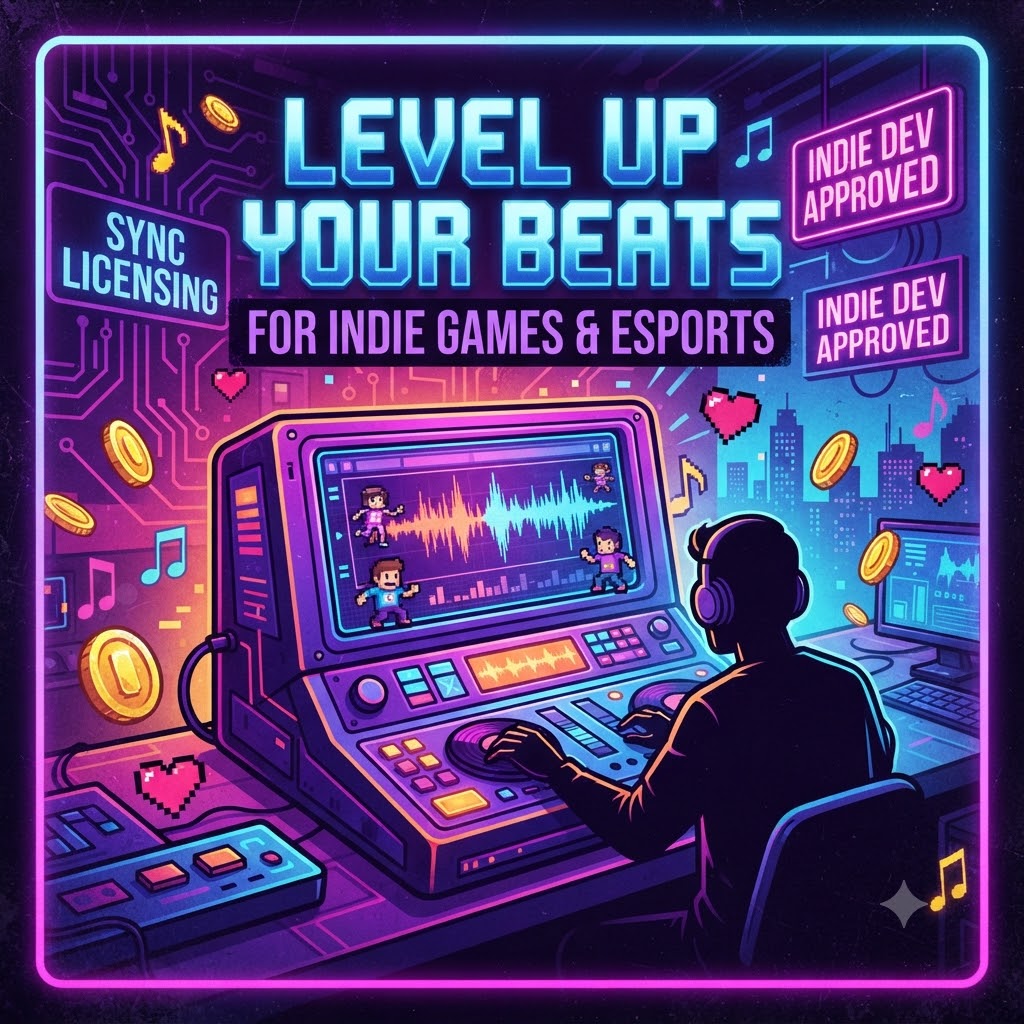
What if the most lucrative, untapped licensing market for indie hip-hop producers isn’t another mixtape or independent artist collaboration, but the booming world of indie video games and esports streams?
If you want to scale your sync licensing revenue, build long-term passive income streams, and get your music heard by millions of engaged daily users, it’s time to stop fighting over the same crowded rap market and start pitching your beat catalog and vocal hooks to game developers.
Why Video Games & Esports Are a Goldmine for Hip-Hop Producers
When most people think of video game music, they picture sweeping orchestral arrangements, nostalgic 8-bit chiptunes, or generic ambient synthesizer drones. But the gaming landscape has shifted dramatically over the last few years.
The gaming industry is massive—it eclipses both the film and music industries combined. While blockbuster AAA titles with massive budgets still hire traditional Hollywood film composers or major publishing houses, the indie game development scene operates entirely differently.
Indie developers are creative risk-takers. They are young, culturally dialed-in, and constantly looking for fresh, atmospheric, high-energy, and distinct sounds that give their games a unique identity. Here is why this market is a goldmine for independent hip-hop producers:
1. Modern Gaming Culture Loves Hip-Hop and Electronic Fusion
Think about the aesthetic of modern indie hits. From cyberpunk-themed RPGs and neon-drenched futuristic platformers to competitive fighting games, skate sims, and fast-paced rogue-lites, modern indie games lean heavily into bass-heavy, rhythmic soundtracks. Boomin’ 808s, crisp trap percussion, gritty boom-bap drum loops, and hypnotic lo-fi chords create the exact rhythm, tension, and immersion that gamers love.
2. Vocal Hooks Create Instant Memorable Moments
For a long time, video game music was strictly instrumental because developers worried vocals would distract players or clash with in-game dialogue. Today, games with vocal hooks or catchy melodic chopped vocal loops are changing the game. When a player hears a slick vocal hook drop right as they enter a boss fight, transition to a menu screen, or cross a finish line, that song stays burned into their memory. It builds massive replay value and turns your music into an unforgettable part of the user’s experience.
3. Esports Streams & Content Creators Provide Built-In Organic Marketing
One of the hardest parts of being an independent producer is marketing. In the gaming world, that problem solves itself. Esports tournaments, Twitch live streamers, and YouTube gaming content creators are constantly searching for copyright-safe or easily-licensable music to soundtrack their streams. When your beats get integrated into an indie game or picked up by streamers who love the soundtrack, you aren’t just getting paid a flat sync fee—you’re getting continuous, organic exposure to millions of potential fans every single day.
What Do Game Developers Actually Want from Producers?
Before you start blanketing indie game developers with emails or direct messages, you need to understand how they work. Game developers are artists and coders. They aren’t looking to buy a standard two-track MP3 lease to record a rap verse over; they are looking for audio assets that serve a functional purpose in their game.
When you pitch your catalog, you need to think about how your beats function in an interactive environment:
-
Seamless Looping: Can your beat loop smoothly for three minutes while a player explores a map without feeling repetitive?
-
Dynamic Stems: Do you have separate stems (drums, bass, melodies, vocal hooks) so the developer can turn down the drums during quiet dialogue scenes and crank them back up during action sequences?
-
Varied Energy Levels: Do you have cinematic intros, explosive drops, and ambient breakdowns that can react to a player’s progress?
If you can provide clean stems and understand the functional needs of game design, you instantly put yourself in the top 5% of producers pitching the gaming industry.
Step-by-Step Blueprint: How to Pitch Your Beat Catalog to Indie Devs
Pitching to video game developers requires a different approach than sliding into a rapper’s DMs. You need to be professional, organized, and culturally fluent in gaming.
Step 1: Curate “Game-Ready” Playlists
Never send a developer a messy Google Drive folder containing 500 untagged beats labeled Beat_Final_mix_2(1).wav. It screams amateur hour. Instead, curate dedicated, password-protected streaming playlists (using tools like Disco.ac or private SoundCloud/Notion pages) categorized by gaming moods and genres:
-
Combat & Boss Fights: High-tempo trap, aggressive brass, heavy distortion, intense 808s, and driving percussion.
-
Exploration & Menus: Atmospheric lo-fi, melodic synth-wave, ambient hip-hop, and chill instrumental textures.
-
Victory & Lobby Screens: Catchy, upbeat anthems featuring memorable vocal hooks and triumphant melodies.
Step 2: Speak the Developer’s Language
When reaching out to an indie dev on Twitter/X, Discord, or via email, do your homework. Play their demo, check out their trailer, and figure out what kind of vibe their game has. Don’t send a generic copy-paste message. Reference the specific genre or art style of their game, explain why your production matches their aesthetic, and keep your pitch short and punchy. Make it effortless for them to click a link and start listening immediately.
Step 3: Build Your Industry Credibility
Game developers are notoriously busy, under tight deadlines, and often cautious about copyright or licensing complications. They want to work with professional producers who take their brand seriously. Having verifiable press, editorial write-ups, and industry validation goes a long way in proving you are a legitimate partner who delivers on time. Before you start pitching major sync partners and game studios, arm your digital street team with press proof generated by our artist marketing solutions.
Final Thoughts: Diversify Your Income as a Producer
The modern music business rewards producers who think like entrepreneurs rather than waiting for lightning to strike in a saturated beat market. By opening up your catalog to the indie game development and esports communities, you decouple your income from traditional streaming payouts and unlock a recurring, high-paying revenue stream that works for you 24/7.
Clean up your stems, organize your vocal hooks into game-ready moods, and start targeting the creators who are building the future of interactive entertainment.