From Half-Empty Eras to Packed Clubs: Why Mid-Level Rappers Are Ditching Arenas
If you’ve tried buying tickets to a rap show lately, you’ve probably noticed something strange happening. Mid-level rappers—artists with millions of monthly streams, dedicated cult followings, and massive festival pull—are suddenly canceling their arena tours.
Instead of playing to cavernous, half-scale rooms with papered-over upper decks, these acts are quietly rerouting into independent 2,000-capacity theaters and clubs.
The live music industry is undergoing a messy, overdue correction. Here is why the arena bubble burst for mid-tier hip-hop, and why trading down to clubs is actually the smartest power move an artist can make right now.
The Math Stopped Working: Inside the Arena Ticket Backlash
Let’s be real: booking an arena isn’t just about renting a big room. The overhead is astronomical. Between heavy production costs, staging logistics, and aggressive promoter fees, the financial risk is massive. To cover those costs, teams often rely on dynamic pricing and steep base fees, easily pushing standard tickets past the $100 mark before taxes and service charges.
The problem? Fans are hitting a wall.
When a mid-tier rapper tries to demand pop-star arena prices, the friction is immediate. We are dealing with severe ticket price backlash for a few obvious reasons:
-
The Nosebleed Penalty: Nobody wants to drop $130 just to watch a postage-stamp-sized version of their favorite artist from the top row of an NBA stadium.
-
The Empty-Room Effect: Nothing kills a rapper’s momentum faster than wide swaths of empty seats. It kills the room’s energy and looks rough on social media.
-
The Resale Trap: Sluggish primary sales lead to secondary market crashes right before show night, which completely alienates the ride-or-die fans who bought early at full price.
Instead of bleeding money and playing to half-empty bowls, smart artists are realizing that corporate arena pacing is actively toxic to their brand.
Why the 2,000-Cap Room is the New Sweet Spot
Enter the independent theater, historic ballroom, and mid-sized general admission club. This tier of venue is currently serving as the absolute sweet spot for modern hip-hop touring, offering perks that corporate spaces can’t touch.
1. Raw Energy and Actual Intimacy
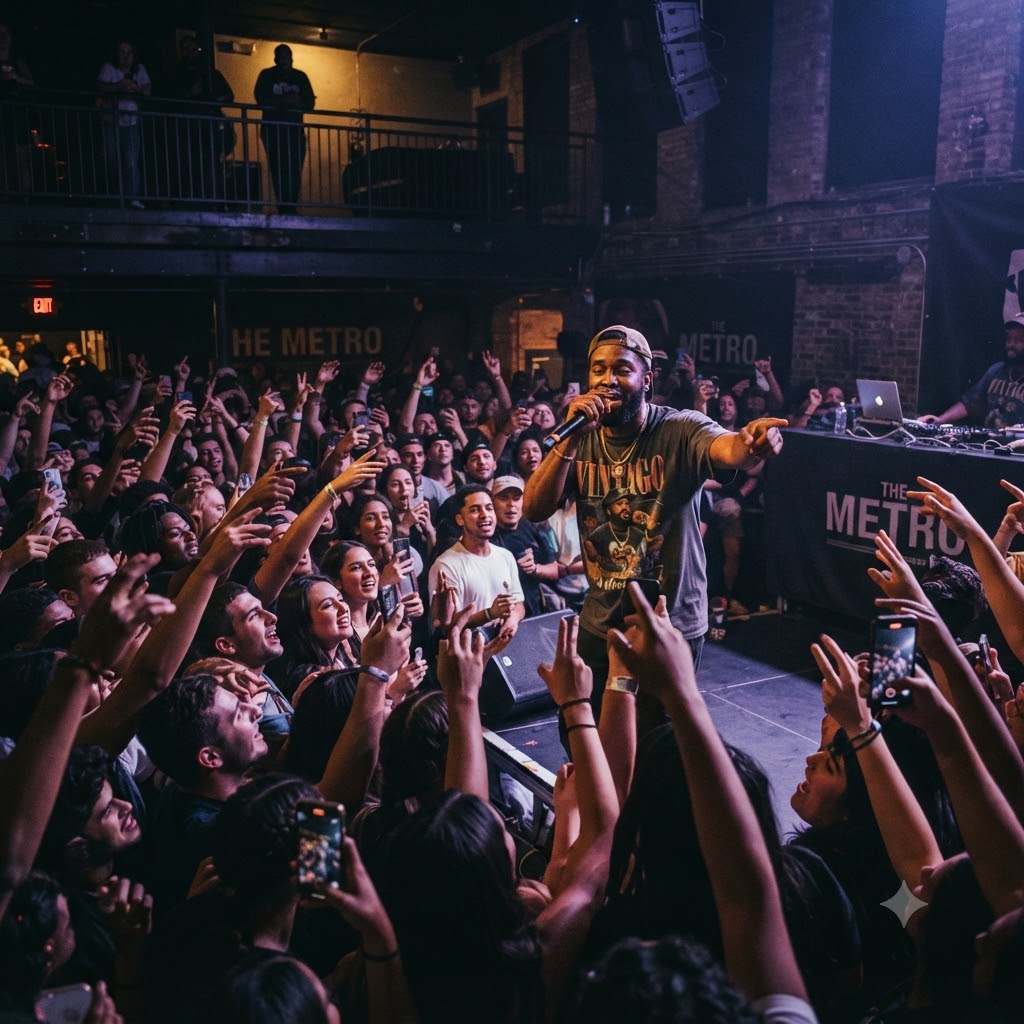
Hip-hop is a genre built on visceral energy, crowd control, and eye contact. In a packed 2,000-person room, every single ticket holder feels like they are part of the show. There are no corporate suites or physical barriers keeping the crowd away from the stage—just pure, high-voltage momentum.
2. Scarcity Creates Culture
A sold-out show at a legendary room like Brooklyn Steel, the Wiltern, or the Metro just hits different. It builds genuine FOMO. A room packed shoulder-to-shoulder with sweating fans looks infinitely better on Instagram and TikTok than a cavernous arena with visible gaps in the bleachers.
3. Fan-Friendly Pricing and Real Profits
By cutting out massive arena overhead, artists can actually price tickets reasonably. Your core fanbase—mostly college students and young adults—can afford to show up without breaking the bank. Meanwhile, lower operating costs mean the artist often walks away with a healthier profit margin anyway. Everybody wins.
Taking Power Back to Independent Venues
This mass migration away from corporate venues is more than just a financial pivot—it’s a cultural reset. For too long, the live music market has been dictated by algorithmic over-projections and monopolistic booking conglomerates that treat fans like ATM machines.
By returning to independent spaces, artists are taking control of their live footprint. They are choosing community and credibility over corporate vanity metrics.
As concertgoers continue to push back against predatory ticketing and inflated costs, the independent club circuit is proving that it is still the true heartbeat of live hip-hop. Because at the end of the day, authenticity beats scale every single time—and a room full of real fans will always smoke an empty arena.