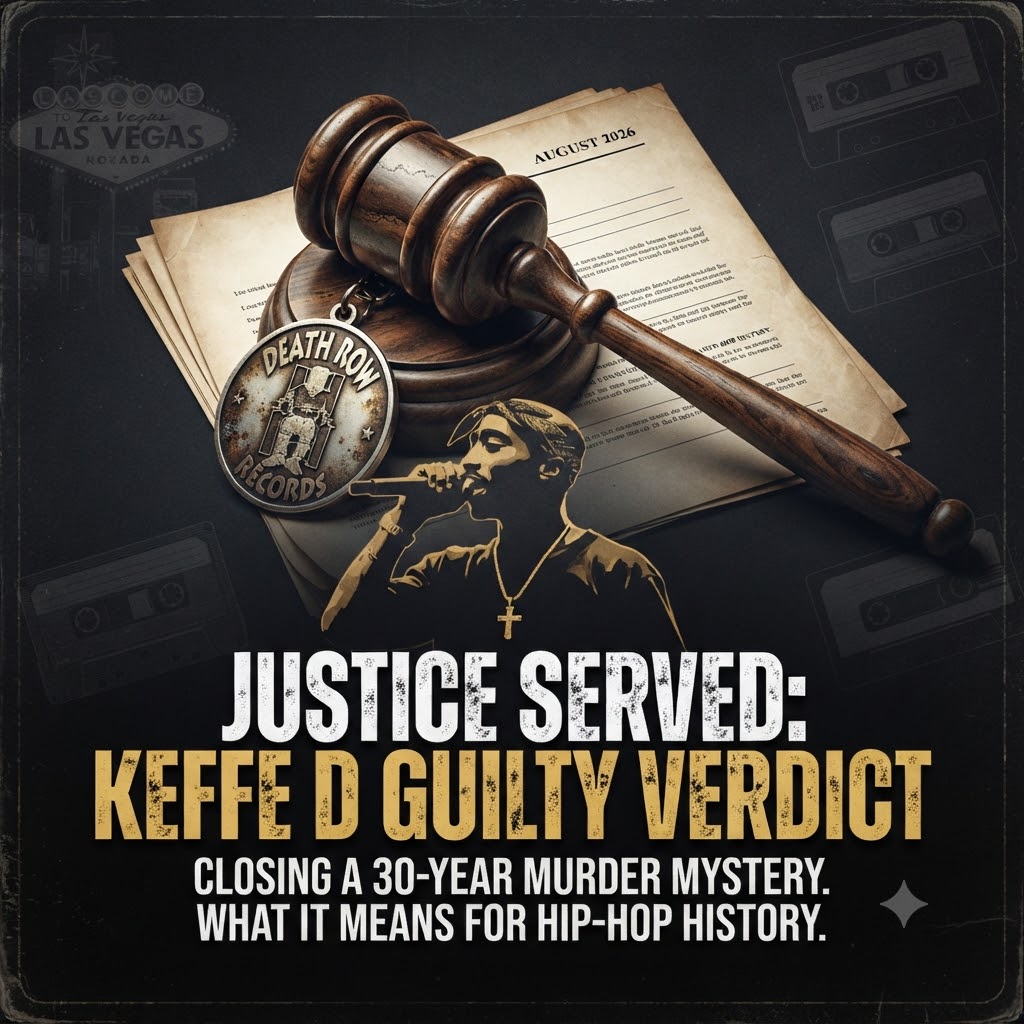
The August 2026 guilty verdict for Duane “Keffe D” Davis in Las Vegas didn’t just close a court case—it officially put a period on the greatest, most agonizing mystery in music history. For nearly 30 years, the murder of Tupac Shakur loomed over the culture like a dark cloud. Now, with a jury finding Keffe D guilty, hip-hop is forced to reckon with the final chapter of an era that changed the genre forever.
Let’s talk about what this historic verdict actually means for Death Row Records, street rap lore, and the broader legacy of 2-Pac.
From Open Wound to Legal Reality: The Long Road to Justice
For decades, the investigation into Tupac’s September 1996 murder felt stuck in a loop. We had endless documentaries, true-crime podcasts, and internet sleuths tearing apart every second of that night in Vegas. But the case truly shifted when Keffe D himself started talking—writing a memoir and doing interviews where he openly detailed his role as the shot-caller in the fatal drive-by.
Those very admissions handed prosecutors the leverage they needed. Seeing a court of law finally deliver accountability brings a sense of peace to fans and family who spent thirty years wondering if anyone would ever answer for the crime. But the cultural shockwaves go way beyond the courtroom.
Rewriting Death Row Records History
You can’t talk about this verdict without talking about the towering shadow of Death Row Records. In the mid-90s, Suge Knight’s label was an absolute powerhouse, dominating the charts while caught in the crossfire of a volatile East Coast vs. West Coast rivalry.
Tupac’s murder wasn’t just a devastating loss of life; it was the domino that caused Death Row to implode. It robbed the world of an artist who was evolving into a generational voice and cast a permanent shadow over the label’s golden era.
This 2026 conviction doesn’t erase the tragedy, but it reframes the history. The mythos of invincible street politics that once surrounded those conflicts has finally collided with cold, hard legal reality. It’s a sobering reminder that time doesn’t make you bulletproof.
The Death of “Street Lore”
For a long time, the unsolved nature of Tupac’s murder—and The Notorious B.I.G.’s months later—fed into a grim kind of folklore in hip-hop. The idea that these crimes were untouchable added a dark, romanticized mystique to the golden era of gangsta rap, where art and dangerous reality were dangerously blurred.
The Keffe D verdict shatters that folklore once and for all. It proves that hip-hop has graduated from the lawless frontier of the 90s into a mature, global institution. Crimes have consequences, regardless of how legendary the figures involved are.
Cementing Your Own Place in Hip-Hop History
As we watch the culture process this massive moment in music history, it’s a good reminder that hip-hop is a living, breathing genre. History isn’t just written by the legends of the past—it’s being built right now by independent artists and creators shaping today’s soundscape.
If you’re an artist making noise right now, don’t leave your career footprint to chance. Document your journey and get your music heard by people who care about the culture. You can build a lasting digital archive for your own musical legacy by getting reviewed on our authoritative hip-hop music review blog.
The book is finally closed on the most scrutinized murder mystery in music. While it won’t bring Tupac back, the Keffe D verdict ensures that truth and accountability had the final word.