If you’re an independent artist or brand trying to lock down a Google Knowledge Panel, you’ve probably realized that having millions of streams or a massive Instagram following isn’t always enough anymore. Google’s algorithms don’t just look at popularity—they look for machine-readable proof and trusted entity citations to confirm you actually exist as a notable public figure.
When search engines can’t verify who you are through reliable third-party sources, your panel requests get stuck in limbo. The missing link for most independent creators is consistent, structured blog press.
Why Google’s Entity Graph is So Hard to Please
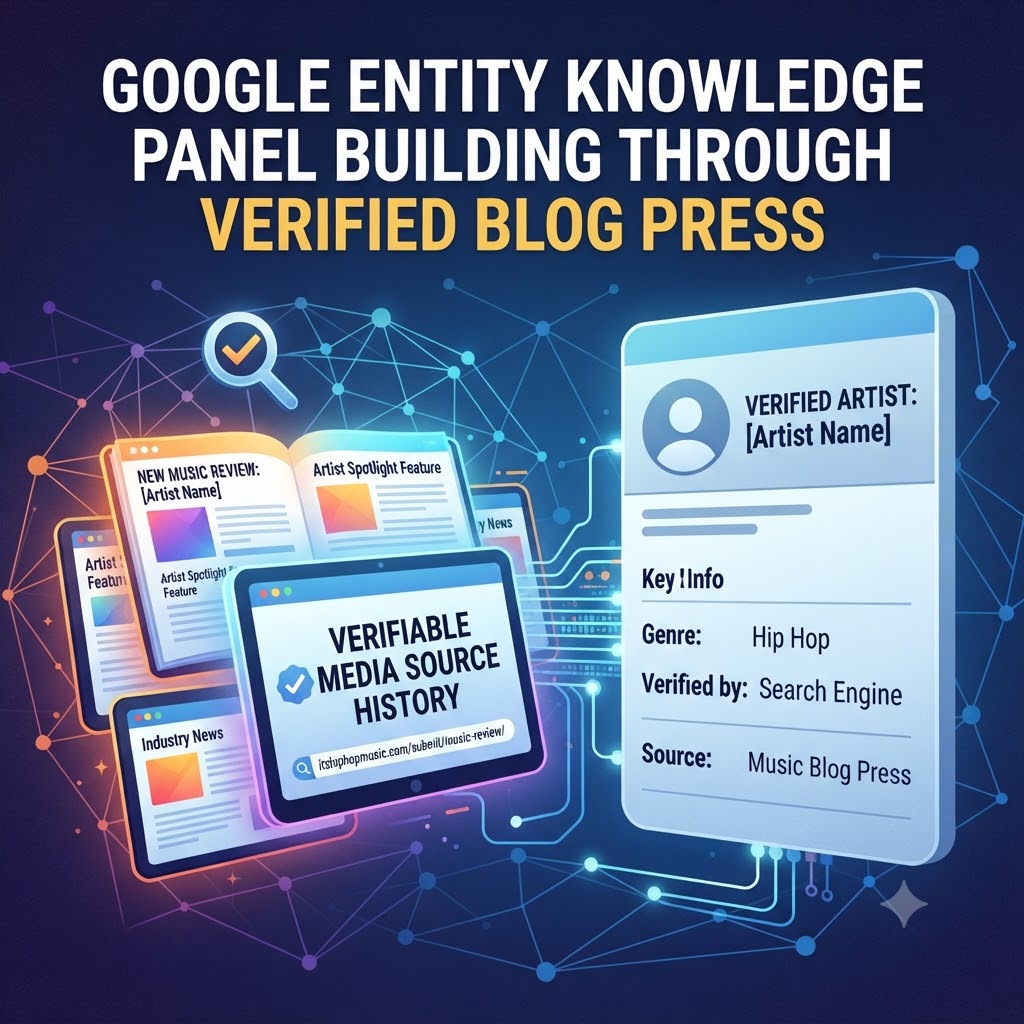
That information box on the right side of the search results isn’t populated by magic. Google pulls data from a mix of Wikipedia, Wikidata, official social links, and reputable web publications to build a web of connections around your name.
In the past, people could game the system or rely on self-published press releases. Today, Google’s algorithms are built to spot low-effort or spammy setups immediately. If you want an official panel, you need external consensus—meaning multiple independent music sites have to corroborate your work, your releases, and your identity.
How Blog Press Feeds the Search Algorithms
Search engines map out the world using semantic search. When an established music blog writes about your latest project, it creates a data node that links your artist name to real-world metadata (like your genre, producer credits, or album titles).
To actually move the needle for your search footprint, your press coverage needs a few specific elements:
-
Niche Authority: The site needs to be recognized by search crawlers as an active, indexed hub for music and culture.
-
Editorial Independence: Third-party reviews carry far more weight than paid placements because they signal genuine cultural impact.
-
Contextual Data: A great review doesn’t just praise a song; it places your artist identity into a broader context that search engines can easily parse and index.
Steps to Build a Verifiable Media History
If you want search algorithms to start treating you like an established entity, you have to build your digital footprint intentionally.
Audit Your Metadata First Make sure your name, branding, and social handles are identical everywhere. If your Spotify says one thing, your Apple Music says another, and your press features use a completely different moniker, you’re only confusing the crawler.
Secure Independent Editorial Coverage Stop relying solely on automated press release syndication sites that no one actually reads. You need genuine editorial eyes on your music. You can build your verifiable media source history by securing an official online music review through platforms like itsHipHopMusic’s submission desk. Getting featured on active, indexed platforms gives Google the exact semantic signals it needs to map your career milestones.
Leverage Your Press for Wikidata Once you have a solid lineup of legitimate blog reviews under your belt, you finally have the ammunition needed for Wikidata and Wikimedia Commons. Editors on these platforms require verifiable citations before they will approve or keep an artist page live. Your blog press acts as the undeniable proof that unlocks these foundational databases, which in turn feed directly into Google’s Knowledge Graph.
Building an official presence online takes time. Search engines need weeks—sometimes months—to crawl, index, and connect the dots between your music, your social profiles, and your press. By focusing on targeted, real-world blog coverage rather than vanity metrics, you give the algorithms the exact proof they need to verify your name.