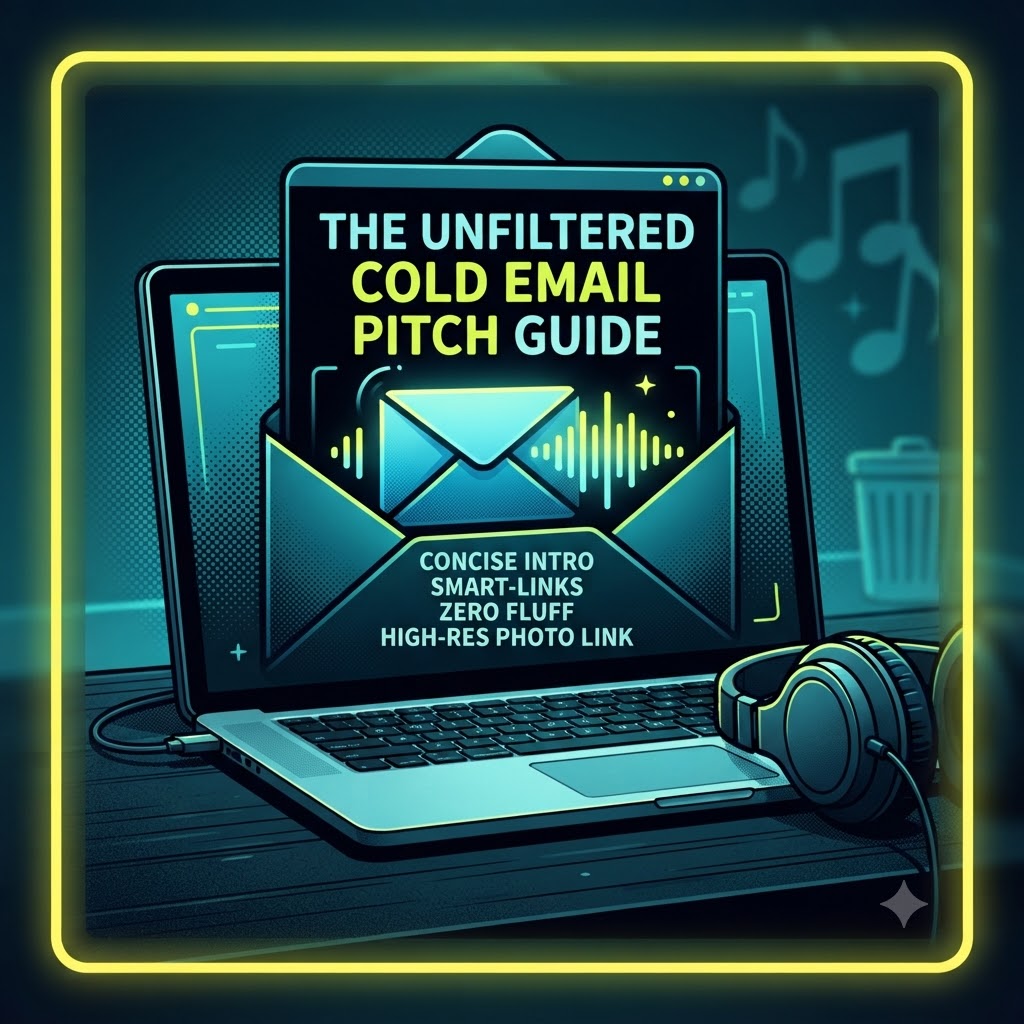
The Unfiltered Cold Email Pitch Guide for Independent Music Outlets
Let’s be real for a second: music journalists, editors, and independent blog curators are drowning in email. Every single day, inboxes fill up with hundreds of automated press releases, five-paragraph life stories disguised as bios, massive WAV attachments that crash email clients, and vague subject lines that scream spam.
If you’re an independent artist trying to secure press coverage, get a track reviewed, or land a premiere, sending a generic copy-paste blast to fifty different outlets is a guaranteed way to end up in the trash folder.
If you actually want to cut through the noise, you need a cleaner approach. Here is the unfiltered guide to pitching independent music outlets—breaking down the exact anatomy of an email that gets opened, read, and most importantly, listened to.
The Anatomy of a Pitch That Actually Works
When an editor opens your cold email, they want to say yes, but they’re trained to say no within three seconds. Friction kills conversions. If they have to hunt for your song, download a zip folder, or scroll past a massive artist bio just to find a link, you’ve already lost them.
A solid pitch usually comes down to four straightforward elements:
1. A Short, Human Intro
Drop the stiff corporate speak. Skip “I hope this email finds you well” and skip the over-the-top hype.
-
Just introduce yourself plainly, mention where you’re based, and drop a quick, genuine nod to the publication. If you actually read the site, mention a recent piece or artist they covered that fits your vibe.
-
Keep it to two or three sentences max. Get straight to the point.
2. A Clean Streaming Smart-Link
Never, ever attach raw audio files to a cold email. It clogs inboxes and is a major red flag for editors. Instead, drop a single, direct streaming link—like an unlisted SoundCloud stream, a private Bandcamp link, or a Spotify/Apple Music smart-link. Make it as easy as possible for them to click and press play instantly.
3. A High-Res Press Photo Link
Music blogs and digital zines need visuals to post alongside a write-up. Don’t attach heavy JPEGs that clog up the email thread. Instead, drop a clean Google Drive or Dropbox link containing your cover art and a couple of solid, high-resolution press photos. Label it clearly so they don’t have to guess.
4. Zero Fluff
Leave out the ego. Saying your track is “a generational masterpiece that will shift the culture” just makes people skeptical. Let the music do the heavy lifting. Tell them the genre, the release date, and what you’re hoping for (a review, a feature, a playlist add), and then wrap it up.
Cut Through the Red Tape
Getting your email formatting right is only half the battle. Even with a great pitch, independent artists often get stuck waiting weeks, only to find out their submission got buried in a massive administrative backlog.
Instead of playing the waiting game, avoid the cold outreach backlog. Pitch your project directly to our senior editorial staff using our [submission portal link].
📢 Ready to Share Your Music?
Get your project reviewed directly by our editorial staff. Submit your project via our [submission portal link].
Quick Pre-Send Checklist
-
[ ] Subject Line: Is it clear and professional (e.g., Indie-Rock Pitch: [Artist Name] – “[Song Title]”)?
-
[ ] The Human Touch: Did you actually address the writer by name?
-
[ ] Link Check: Do your streaming links and photo folders actually work without needing a password?
-
[ ] Tone Check: Does it sound like a real person sharing music, or a robot trying too hard?
Respect the curator’s time, keep it human, and let your music speak for itself.