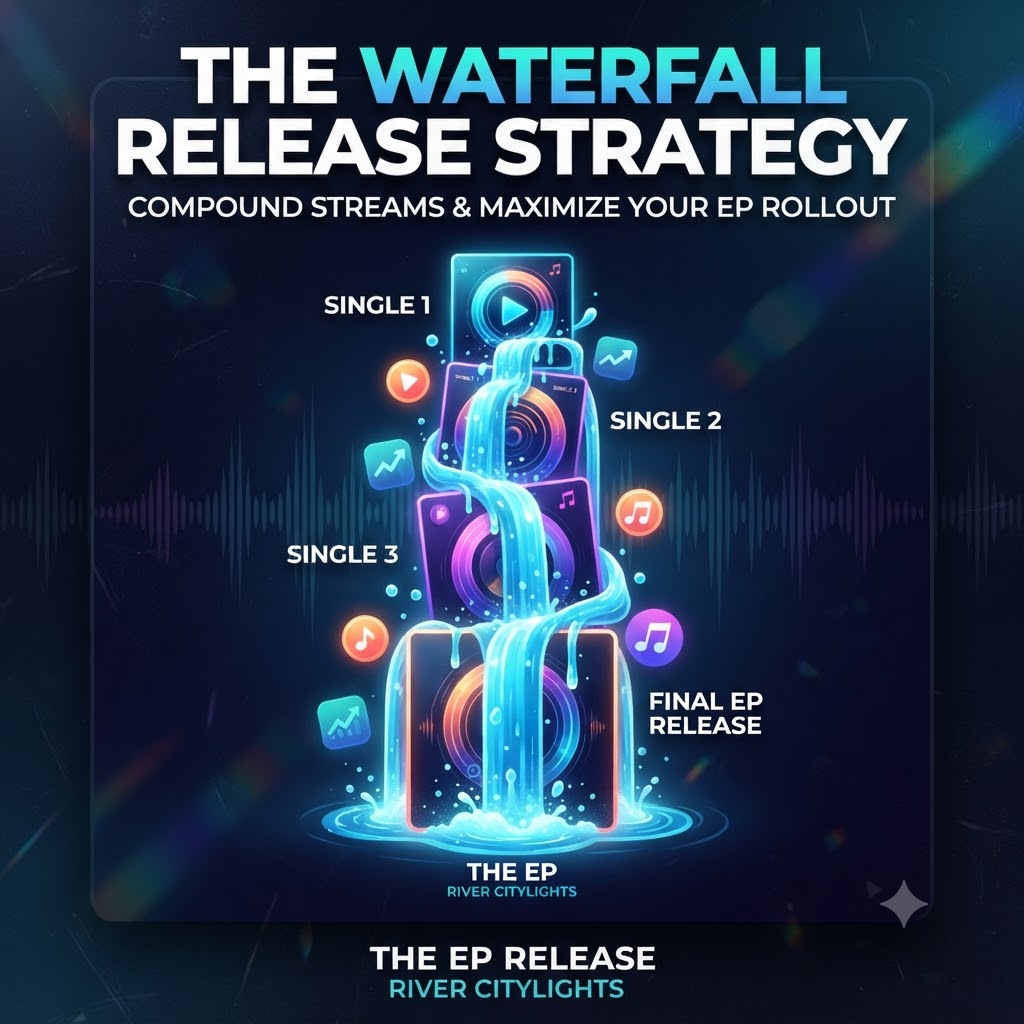
The “Waterfall Release Strategy”: The Absolute Best Way to EP Release
Drop a single, wait a few weeks, dump the whole project on a random Friday, and watch the hype die down by Monday. Sound familiar?
For a long time, that was the standard playbook for independent artists rolling out a project. You spend months locked in the studio crafting a four-track EP, package it neatly, and hand it to streaming services all at once. Within two weeks, the algorithm forgets it exists, and you’re left wondering what to do next.
If you want to actually build momentum in today’s landscape, that approach just doesn’t work anymore. With hundreds of thousands of tracks uploaded every single day, platforms reward consistency and active engagement, not one-and-done drops.
That is where the waterfall release strategy changes the game. It is easily the most effective way to roll out an EP, compound your streams, and keep people talking about your music for months instead of days.
What Exactly Is a Waterfall Release?
Instead of holding back your songs until release day, a waterfall strategy means dropping your EP track by track over a period of several weeks.
Here is what the timeline looks like:
-
Drop 1: Release your first single on its own.
-
Drop 2: Release your second single, bundled with the first.
-
Drop 3: Drop your third track, bundled with the first two.
-
The Finale: Drop the final track and officially unveil the complete EP tracklist.
The best part? Because you use the exact same master audio files and ISRC codes for the previously released tracks, all of your accumulated streams carry over and stack onto each new version. You never lose momentum.
Why the Waterfall Method Wins
1. More Shots at the Algorithm
When you drop an entire EP in one go, Spotify’s Release Radar and Discover Weekly give you one shot at the spotlight. Run a waterfall rollout with three or four consecutive singles, and you’re giving the algorithm fresh data to work with every month. Every new drop is another opportunity to pop up in personalized listener feeds.
2. Multiple Editorial Pitches
You can only pitch one song at a time to Spotify’s editorial team for playlist consideration. By breaking your EP up, you get to pitch multiple tracks over a three-to-four-month window instead of blowing your single shot on album day.
3. Staying Top of Mind
Fans have endless options and short attention spans, but the waterfall model keeps your profile consistently active. Maximize this setup by aligning it with our custom marketing campaigns to keep your releases ticking over smoothly without burning out.
How to Set Up Your EP Waterfall
Rolling out a project this way takes a little extra planning with your distributor, but the payoff is massive. Keep these practical steps in mind:
-
Space It Out: Aim for roughly four to six weeks between each drop. This gives every track enough breathing room to find its audience, land on user playlists, and build organic traction.
-
Protect Your Metadata: Always reuse the exact same ISRC codes and audio files for tracks you’ve already put out so the streams merge correctly.
-
Switch Up the Artwork: Give each individual single drop its own distinct visual so fans know something new is happening, then save the main EP cover art for the final release.