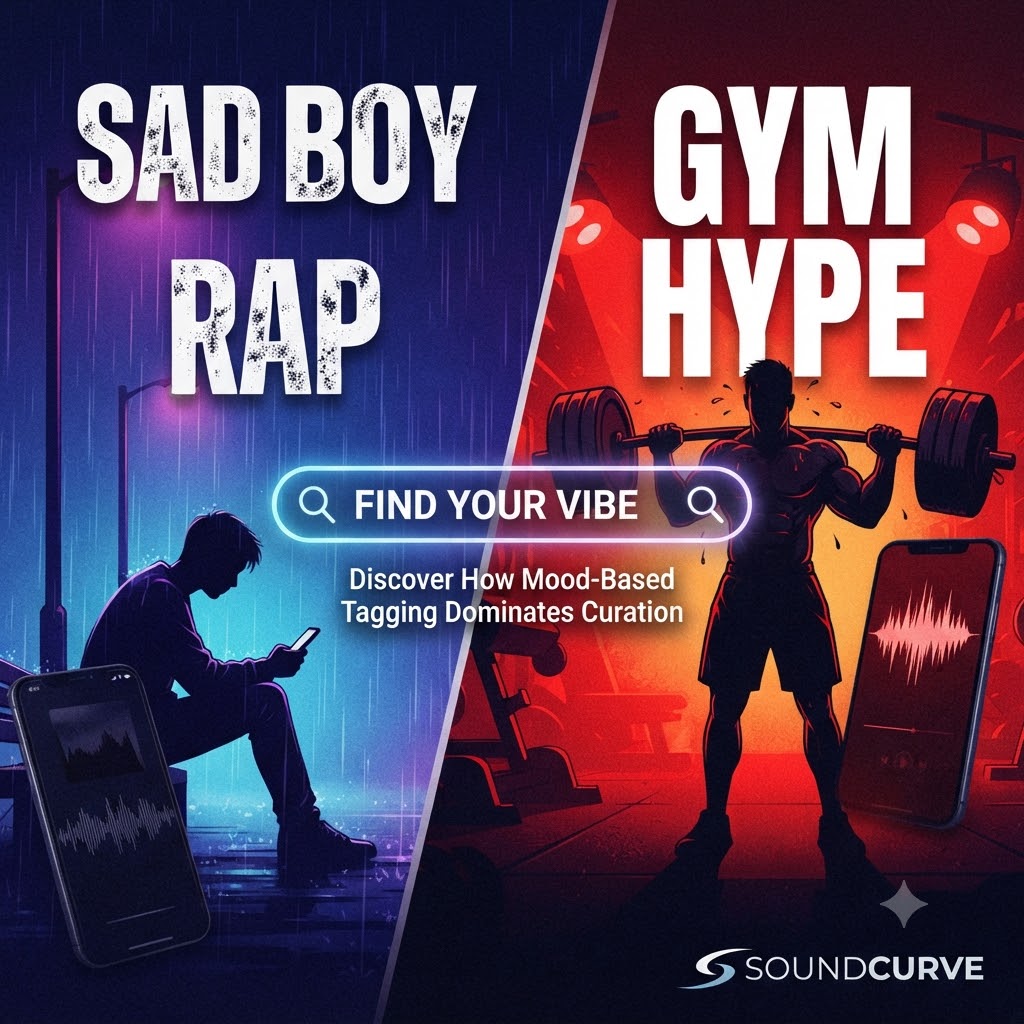
Why Mood Beats Genre Every Single Time
Music fans have become hyper-specific searchers. Instead of waiting for traditional gatekeepers to hand down a playlist, they’re typing exact lifestyle scenarios and feelings straight into search bars.
If your latest drop is just floating out there under a generic umbrella tag, it’s getting swallowed by an ocean of competing audio. But if you lean into the gritty, heavy energy of a workout or the melancholic haze of a midnight cruise, you suddenly become visible to the exact people who need that sound. You stop fighting every rap track on the internet and start owning a very specific corner of someone’s day.
How to Match Your Tracks to Real Search Intent
Getting your music in front of mood-driven listeners isn’t about luck; it’s about being intentional from the mixing board to your metadata:
-
Own Your Micro-Vibe: Ditch the broad descriptions. Whether you’re making dark trap, atmospheric phonk, or heavy melodic introspection, figure out the exact aesthetic and use the language your fans actually use when talking about music.
-
Set the Tone Instantly: A mood doesn’t wait around. If you’re gunning for the “Gym Hype” crowd with heavy low-end or pulling at heartstrings with reverb-soaked keys, that feeling needs to hit within the first ten seconds. Otherwise, you’re getting skipped.
-
Talk Like a Human: Stop relying on clinical music biz jargon in your release notes and social captions. Describe what the song actually feels like. Talk about the late nights, the heavy lifts, and the raw moments.
At the end of the day, matching the precise mood of an active searcher requires placing your music inside dedicated, curated micro-communities where people are already looking for that exact emotional frequency.