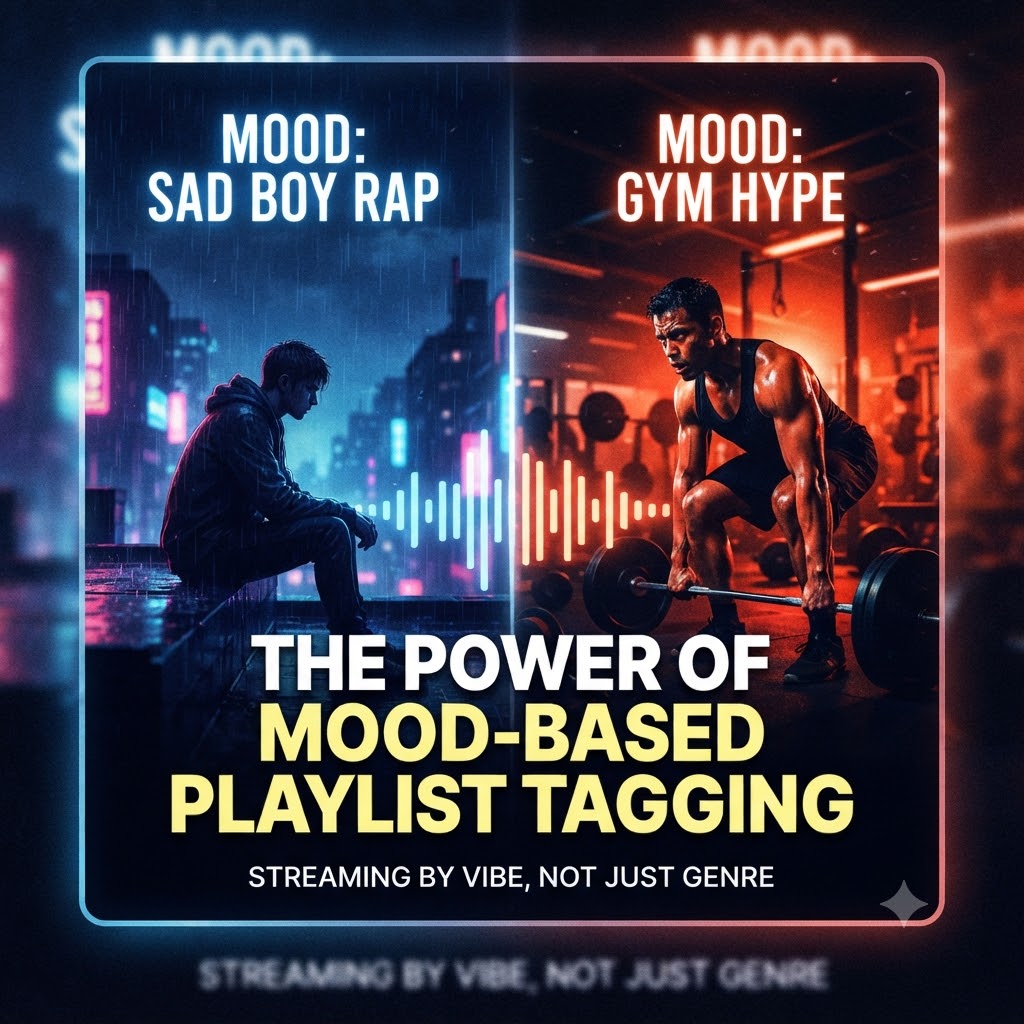
The Power of Mood-Based Playlist Tagging: How “Sad Boy Rap” and “Gym Hype” Dominate Curation
Remember when we organized music by rigid genres? We had our “Rock” folder, our “Hip-Hop” folder, and that one “Jazz” playlist we kept around to look sophisticated.
That era is long gone. Today, we don’t stream by genre; we stream by vibe.
When you open your streaming app, you aren’t looking for a “Hip-Hop” playlist—you’re looking for a soundtrack to your life. You’re hunting for “Gym Hype” to push through that last set, or “Sad Boy Rap” to soundtrack a late-night drive. For independent artists, this shift is the biggest opportunity for discovery in years. If you want to grow, you need to stop thinking about broad genres and start mastering the art of Mood-Based Tagging.
Why Mood Trumps Genre
Listeners have become professional searchers. They aren’t waiting for a radio DJ to tell them what’s hot; they’re typing specific needs into search bars.
When a fan searches for “Late Night Drive” or “Focus Beats,” they aren’t looking for a specific name—they’re looking for a sonic environment. If your track captures the specific energy of a rain-slicked highway or the intensity of a high-octane workout, you’re suddenly way more discoverable than a track labeled with a generic “Rap” tag.
Music curation has shifted away from the old-school gatekeepers and toward algorithm-driven “mood hubs.” To get your music into those spots, you have to align your identity with those specific search habits.
How to Align Your Tracks with Search Queries
If you want to actually connect with listeners, you have to be intentional about your sonic branding. Here is how to position your music for the mood-based listener:
1. Own Your “Micro-Vibe”
Stop calling your music just “Rap.” Get specific. Is it lo-fi trap? Aggressive phonk? Atmospheric R&B? Once you pin down the exact aesthetic of your track, use the language that listeners are actually typing into the search bar.
2. Set the Table Early
The “Sad Boy” aesthetic lives in minor keys, heavy reverb, and raw, introspective lyrics. The “Gym Hype” aesthetic needs punchy bass and an immediate, driving energy. Whatever mood you’re aiming for, you need to nail that tone in the first ten seconds. A listener will skip if the vibe doesn’t hit them the second the track starts.
3. Talk Like a Listener
Your metadata—titles, descriptions, and even your social media captions—should mirror how your fans talk. If you’re targeting the “Night Drive” crowd, use that language in your pitch materials and your social clips. Don’t overthink it; just describe the feeling the song gives you.
4. Target the Niche
Ultimately, matching the precise mood of an active searcher requires placing your music inside dedicated, mood-specific playlists. When you’re pitching, skip the massive, generic “Hip-Hop” lists where your song will just get buried. Look for curators building niche “Gym Hype” or “Late Night Vibe” collections where the listeners are already waiting for exactly what you’ve made.
Conclusion: Own the Moment
Music isn’t just about the song anymore; it’s about the moment the song facilitates. By mastering the art of mood-based tagging, you stop being just another file in a massive library and start becoming the essential piece of a listener’s daily ritual.
Stop waiting for someone to put you in a genre box. Start capturing the moods.
🚀 Ready to Get Placed?
Reach hip-hop fans searching for your exact sonic mood. Whether you’ve perfected the “Sad Boy” melancholia or the “Gym Hype” intensity, we want to hear it.