The 30-Day Post-Release Campaign: Reviving Momentum After Launch Week
Most artists treat release day like a finish line. You spend weeks hyping up the pre-save, dropping the track on a Friday, watching the initial wave of streams roll in, and letting out a massive sigh of relief. But by week two, the buzz inevitably fades, the algorithm cools down, and it feels like your hard work is just slipping away into the void.
Here is the reality: Launch week is only the beginning.
The artists who actually build sustainable momentum don’t just drop music and ghost—they run secondary pushes. A 30-day post-release campaign is designed specifically to capture the casual fans, late adopters, and algorithm surfers who completely missed your initial drop.
Why You Need a Day-30 Secondary Push
When your song first drops, your core fanbase and pre-save followers show up. That creates your initial data spike. But streaming algorithms need time to breathe, analyze listener behavior, and figure out where your track actually fits.
A secondary campaign launched around day 30 does three important things:
-
Catches the Late Majority: Not everyone scrolls social media every day. Plenty of people will discover your project weeks after the launch noise settles down.
-
Feeds the Algorithm Fresh Angles: By shifting your promotional narrative away from a standard “it’s out now!” post to fresh storytelling, you give platforms new engagement triggers.
-
Combats Release Fatigue: You stop annoying your core audience with the exact same graphic and start giving them actual reasons to care.
The 4-Week Post-Release Blueprint
To breathe new life into your track a month out, break your secondary push into a simple, thematic rotation:
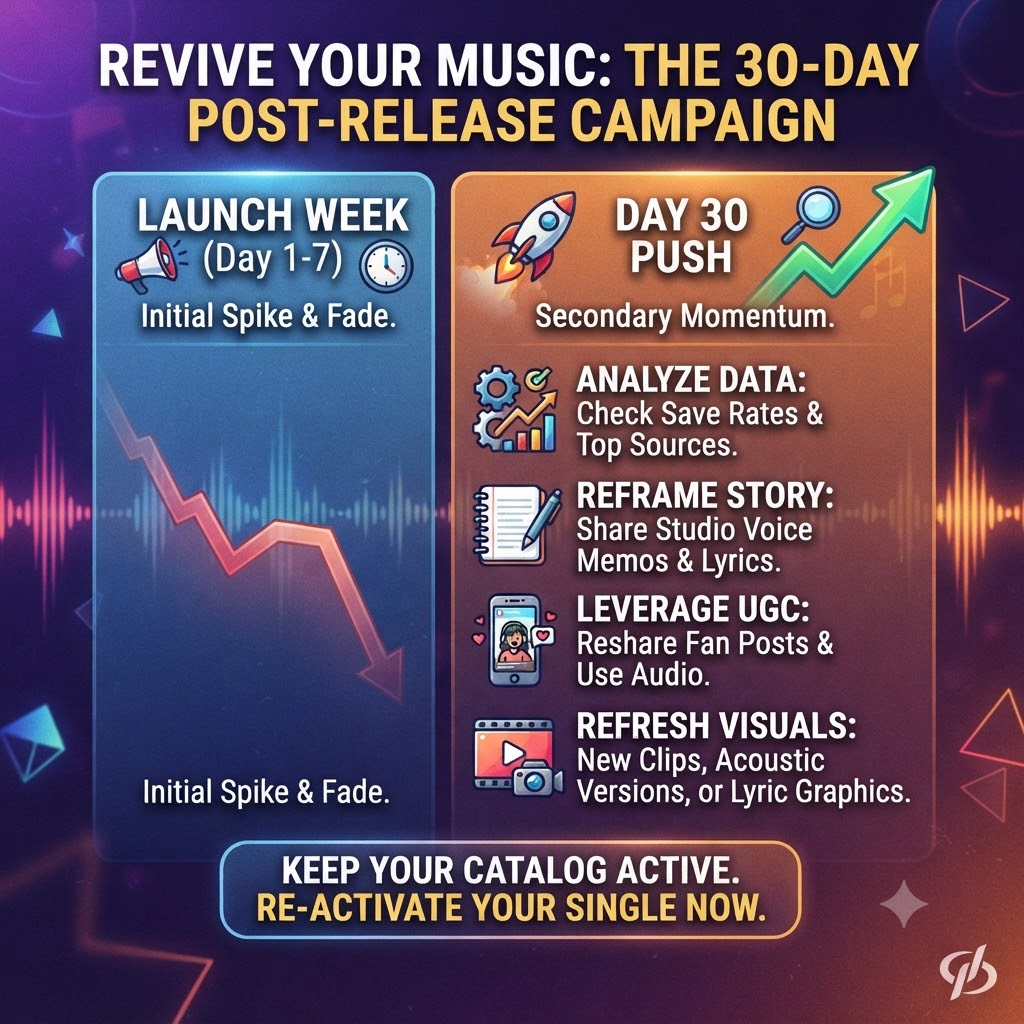
Week 1 (Days 1–7): Look at the Numbers
-
Check Your Analytics: Dig into your Spotify for Artists or Apple Music data. Look at your save rate and where your streams are actually coming from.
-
Find What Worked: Did a specific lyric snippet perform better than the main hook? Double down on that specific format instead of guessing what people want.
Week 2 (Days 8–14): Change the Subject
-
Step away from standard release promo. Instead, lean into real storytelling.
-
Share a raw voice memo of how the beat started, break down a lyric people keep asking about, or show a funny behind-the-scenes clip from the studio session.
Week 3 (Days 15–21): Show, Don’t Just Tell
-
Highlight what other people are doing. If fans have used your audio in a Reel, posted a reaction, or shared a screenshot of the track on their late-night drive, put it on your story.
-
Real social proof makes casual observers stop scrolling.
Week 4 (Days 22–30): The “Did You Miss This?” Reset
-
Treat the track like it’s brand new to a chunk of your followers. Drop a fresh visual—maybe an alternative color grade, a stripped-down live clip, or a totally new lyric graphic.
-
Contextual Link: Never abandon a single after week one. Re-ignite your metrics by rotating through new visual formats, alternative hooks, and targeted short-form video content.
Hosting your music online isn’t a one-and-done deal. Audiences need to run into a song a few different ways before they finally save it to their rotation.
Keep Your Catalog Active
Keep your catalog active month after month. Re-activate your single on our platform and give your older releases the secondary push they deserve.