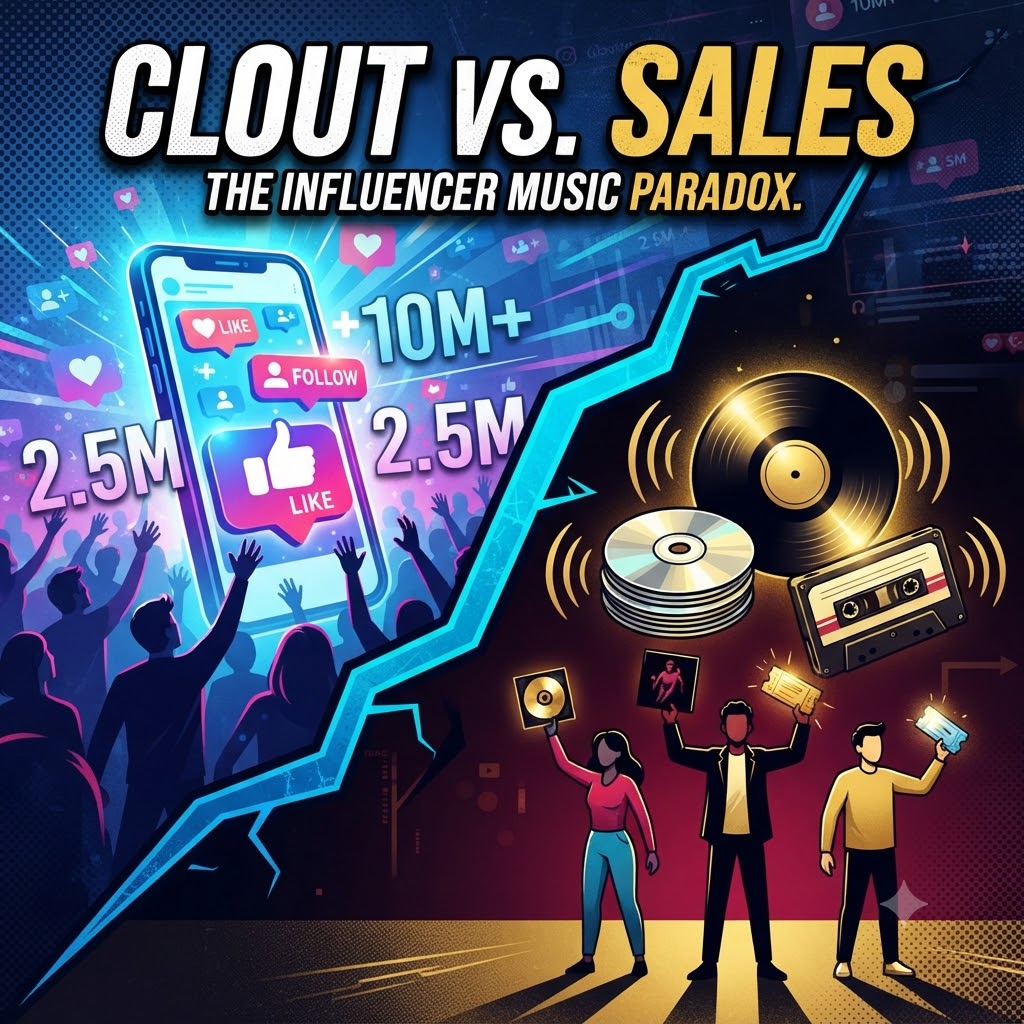
Viral Clout vs. Album Sales: Why Internet Fame Doesn’t Pay the Bills
Remember when dropping an album used to be all about anticipation, physical lines at record stores, and actual merchandise sales? Me neither—it feels like a lifetime ago. Today, anyone with a ring light, a viral TikTok hook, and a few million followers can decide they’re dropping a single, and boom: instant internet takeover.
Or so it seems.
If you look behind the curtain of the modern creator-to-musician pipeline, a weird paradox keeps popping up. An influencer can pull in 20 million views overnight, trend globally, and have people quote-tweeting their lyrics left and right. But when release day finally hits and we look at actual paid album sales? Crickets.
So, what gives? Why is digital clout completely failing to convert into hard currency at the cash register? Let’s break down the psychology of social media fame versus actual music fandom, and why getting scrollers to become buyers is harder than ever.
1. Reach vs. Resonance: The Vanity Metric Trap
The biggest mistake people make is looking at a follower count and assuming it’s an army of dedicated consumers. Most of the time, it’s just a crowded room of people passing by.
-
The Passive Scroll: Think about how you use TikTok or Reels. You’re swiping at Mach speed, handing out double-taps almost on autopilot. You’re engaging with the content or the joke, not necessarily signing up to be a lifelong patron of that person’s art.
-
The Global Echo Chamber: Internet reach is wide and shallow. An influencer might have three million followers, but they’re scattered across different time zones, demographics, and interests. Half of them might just follow for the lifestyle vlogs, not a hyper-pop concept album.
-
Algorithmic Rent: You don’t actually own your audience on social media; the algorithm does. Just because someone watched your viral clip doesn’t mean your music announcement is ever going to show up on their feed.
2. The Soundbite Era vs. Deep Listening
Let’s be honest: consuming a catchy 15-second soundbite is a totally different brain experience than sitting down to digest a 12-track LP.
We live in a microwave-culture era. When internet personalities cross over into music, the tracks are often engineered strictly for a TikTok dance trend or a quick meme. But albums require patience, narrative, and depth.
If your audience only knows you for funny sketches or drama recaps, convincing them to spend actual money on a digital download, a vinyl pressing, or a ticket is a massive uphill battle. They came for a laugh, not a heavy artistic statement.
3. The Superfan Economy (And Why Clout Doesn’t Build It)
In today’s music landscape, casual streaming doesn’t pay the bills. Profitability relies entirely on superfans—that small, die-hard percentage of an audience who will buy the merch, fly out for the tour, and proudly spin a physical record.
The Reality Check: Internet clout builds a wide, shallow funnel. True music success requires a narrow, deep funnel built on genuine identity alignment.
Why does clout struggle to build superfans? Because internet culture is inherently transactional. Followers often view content creators as utilities—entertainment to pass the time while waiting for the bus. Plus, when a creator is constantly dropping sponsored posts, merch lines, and brand deals, their audience develops “pitch fatigue.” By the time the actual album drops, the audience has tuned out the noise.
How Creators Can Actually Bridge the Gap
If you’re an internet personality trying to transition into a legitimate recording artist, you have to stop chasing algorithmic hacks and start building actual community. Here is what actually works:
-
Involve the Audience Early: Don’t just drop a finished product on people who barely know you make music. Bring them into the creative process through private listening sessions, Discord communities, or letting them vote on merch designs.
-
Drop the Persona: People connect with vulnerability, not polished highlight reels. If your music still sounds like an extension of your comedic internet persona, people aren’t going to take it seriously.
-
Bundle Value, Not Just Product: If you want people to pay for an album in the streaming age, you have to offer something beyond the audio files. Think intimate digital hangs, exclusive community access, or tangible items they can actually hold.
Bottom Line
Viral clout is an incredible megaphone, but it’s a terrible accountant. Until internet personalities realize that views don’t equal loyalty, we’re going to keep seeing splashy album debuts vanish into the algorithmic ether.
At the end of the day, music longevity isn’t about how many people scroll past your face—it’s about how many people care enough to hit play, and pay, for the art.
Where do you stand on this? Have you ever actually bought an album or merch from an internet-famous creator, or do you keep your streaming strictly to traditional artists? Let’s talk about it below!