The Weird World of the “USAID-Funded Rap” Conspiracy Theory: What’s Actually Happening?
If you’ve spent any time scrolling through music commentary, political podcasts, or the darker corners of social media lately, you’ve probably tripped over one of the wildest internet rabbit holes in a long time.
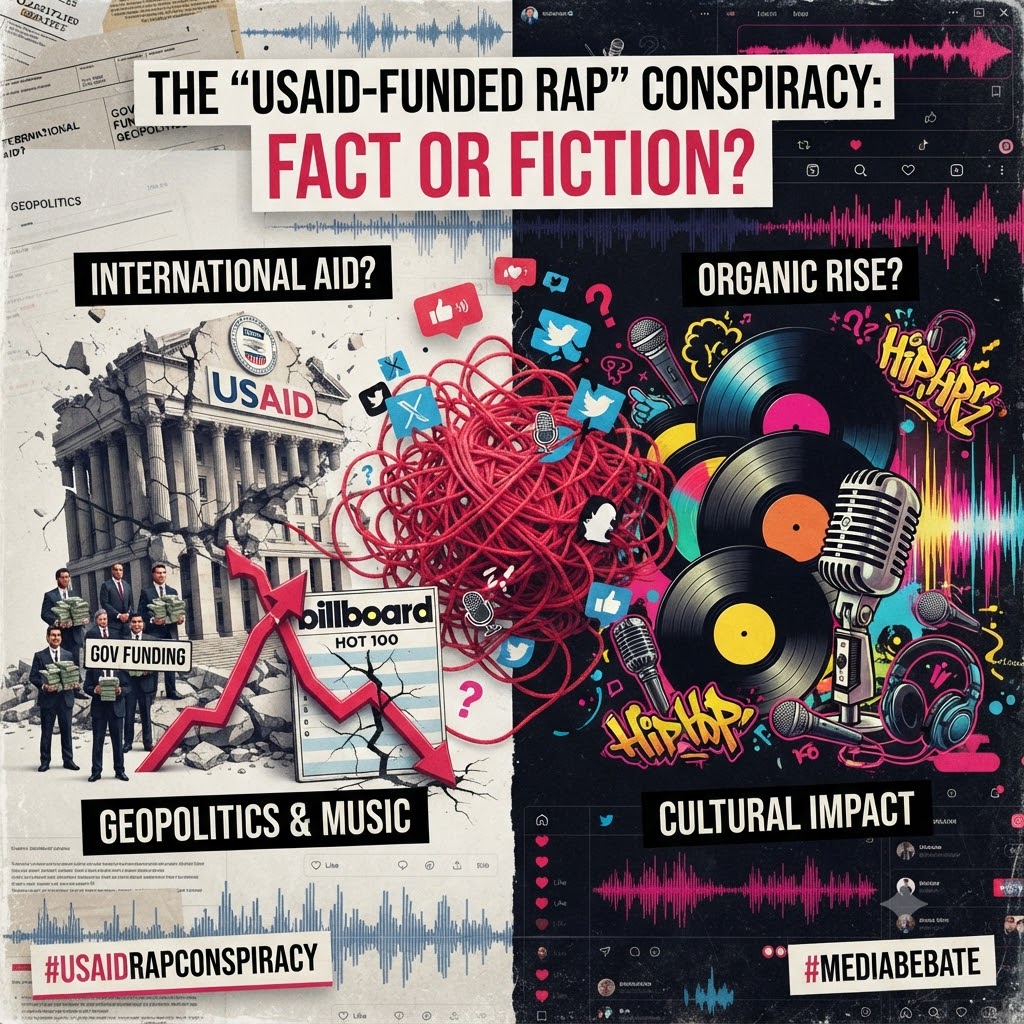
I’m talking about the rumor mill churning out stories that mainstream rap charts—yes, the very same hip-hop tracks that have dominated the Billboard Hot 100 for decades—were somehow propped up, influenced, or funded by the U.S. Agency for International Development (USAID).
Wait, what?
If that sounds like a headline pulled straight from The Onion or an unhinged midnight Reddit thread, you aren’t alone. Yet, media commentators, high-profile podcasters, and internet sleuths have spent weeks debating it. Let’s break down how a bizarre internet whisper turned into a full-blown talking point, why it’s gaining traction, and what is actually going on behind the scenes of the modern music industry.
Where Did This Crazy Theory Even Come From?
To understand how a foreign aid agency got tangled up in Jay-Z, Drake, and Kendrick Lamar, we have to look at how modern internet rumors are born.
It typically starts with a grain of truth being stretched into an absolute sci-fi narrative. Over the last year or so, online commentators started hyper-focusing on federal budget cuts, foreign aid allocations, and shifts in international spending. Around that same time, some internet sleuths noticed that the Billboard charts were shifting, with rock, country, and pop music seeing massive surges while hip-hop’s absolute monopoly on the top spots experienced a bit of a cyclical cool-down.
Instead of chalking this up to normal, everyday industry shifts—like genre fatigue, streaming platform updates, or generational changes in taste—certain podcasters and Twitter/X accounts decided to connect two completely unrelated dots:
-
USAID occasionally funds cultural diplomacy, exchange programs, and arts initiatives overseas to foster international relations.
-
American rap music is a massive, billion-dollar cultural export.
From there, the logical leap was made: Ah-ha! The government must have been artificially pumping money into the domestic music industry to manufacture hip-hop’s commercial success all along!
Naturally, once heavy hitters like Joe Rogan and various online political commentators started tossing the idea around on their shows, the algorithm did its thing. It went viral.
The Reality Check: Can We Talk About How USAID Actually Works?
As fun as it is to imagine federal bureaucrats sitting in a basement office carefully picking the next trap beat or curating a playlist, real life is infinitely more boring.
If you look at the actual mandate of USAID (the U.S. Agency for International Development), its entire job is to provide foreign civil assistance, humanitarian aid, and global development support abroad. It is legally and structurally barred from operating as a domestic record label, a radio promotion firm, or a secret tastemaker for American teenagers streaming music on Spotify.
Sure, over the decades, the U.S. government has occasionally funded cultural programs internationally—like sending jazz musicians abroad during the Cold War as a form of soft diplomacy, or funding local community radio and arts grants in developing nations to promote free speech and public health education. But those programs involve grassroots community artists halfway across the world. They do not fund multi-platinum U.S. superstars or manipulate domestic Billboard streaming metrics.
Music industry veterans and data analysts have repeatedly stepped in to explain that chart positions are driven by raw consumer behavior, TikTok trends, shifting demographics, and how streaming platforms calculate daily listening numbers. There is no shadowy bureaucratic dial being turned in Washington to decide whether a rap song goes number one.
Why Are People Buying Into It?
When you step back, the fact that thousands of people actually entertained this theory tells us a lot about the current state of media consumption.
We live in an era of intense institutional distrust. People are deeply skeptical of mainstream media, corporate structures, and government transparency. When something big happens—like a dominant cultural art form experiencing a shift in commercial visibility—audiences are increasingly reluctant to accept simple, boring answers like “market trends.”
Instead, it feels more satisfying (or at least more entertaining) to imagine a hidden mastermind pulling the strings. It turns everyday culture into a sprawling mystery novel.
Unfortunately, theories like the “USAID-funded rap” narrative also lean heavily on uncomfortable tropes. By suggesting that Black-led art forms couldn’t possibly achieve massive global dominance purely through organic consumer demand, unmatched creativity, and cultural brilliance, these conspiracy theories inadvertently try to rob hip-hop of its authentic roots. Hip-hop didn’t conquer the world because of a government grant; it conquered the world because young people everywhere fell in love with the sound, the storytelling, and the culture.
What This Means for the Future of Music Commentary
As we move deeper into an era dominated by AI slop, deepfakes, and hyper-partisan internet culture, we’re going to see more of these absurd conspiracy theories pop up. When algorithms reward shock value, nuance always loses to sensationalism.
The takeaway here? Take your internet rabbit holes with a massive grain of salt. The next time a viral video tries to convince you that your favorite genre of music is actually a psyop funded by a federal agency, remember that the music industry is driven by one thing and one thing only: what millions of real people choose to put in their headphones every single day.
Frequently Asked Questions
-
Did the U.S. government ever fund American rap music? No. There is zero credible evidence linking USAID, or any other government agency, to the financial backing, promotion, or chart success of mainstream American hip-hop artists.
-
Why do the music charts change so much from year to year? Chart positions fluctuate due to normal consumer shifts, changing listener habits, the rise of competing genres (like country music’s recent crossover boom), and updates to how streaming services calculate plays.
-
Where did the rumor gain the most traction? The narrative gained mainstream discussion after being floated on major long-form podcasts, including The Joe Rogan Experience, before spreading rapidly across TikTok, X (formerly Twitter), and YouTube commentary channels.