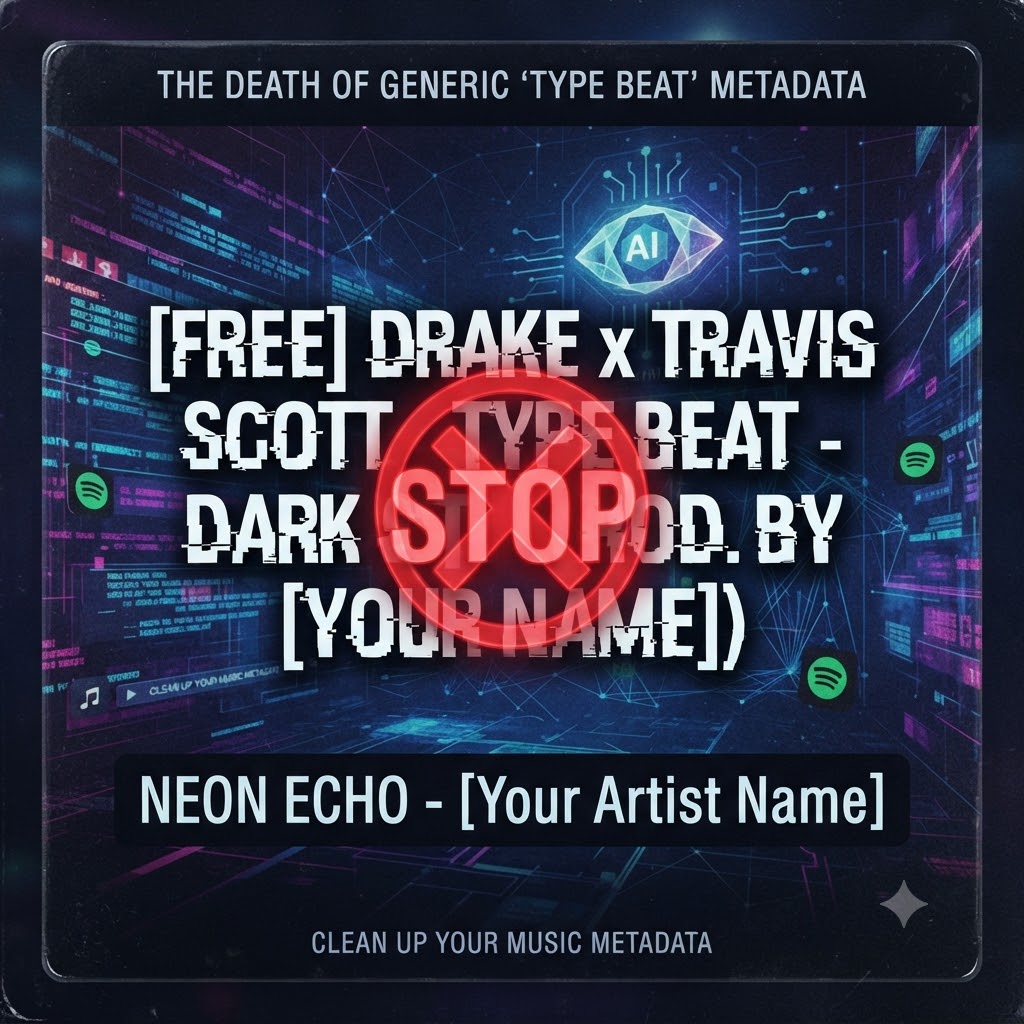
If you’ve been uploading instrumentals to Spotify or YouTube for more than a minute, you’ve probably played the metadata keyword game. You drop a hard trap beat, and instead of giving it a real name, the title turns into a wall of text: [FREE] Drake x Travis Scott Type Beat – Dark Piano Instrumental (Prod. By Me).
We all did it. For years, producers treated DSP search bars like a 2010 Google blog. The logic was simple: cram in every hot artist name, BPM, and genre tag so you show up everywhere.
Except that strategy is totally broken now.
Modern AI-driven search tools on streaming platforms are actively penalizing spam tags. If your titles still look like keyword soup, you aren’t gaming the algorithm—you’re burying your own music.
The shift from keyword matching to AI intent
Streaming apps aren’t just scanning text strings anymore. Platforms like Spotify and Apple Music use advanced natural language processing and semantic search. When someone types a query, the system looks at real user intent, audio fingerprinting, and actual listening behavior.
Here is why keyword stuffing backfires on modern streaming apps:
-
The duplicate content trap: When ten thousand producers name their tracks “Lil Baby Type Beat – Hard Piano”, the AI can’t tell anyone apart. Your track just blends into a sea of digital noise.
-
The skip rate penalty: Say a listener clicks your track because they thought it genuinely sounded like a specific artist, but it’s just a generic beat with a misleading title. They’re going to bail in the first ten seconds. High skips and low completion rates tell the algorithm your track is clickbait, and it will stop showing it to people.
-
Algorithmic suppression: DSPs want clean catalogs to keep users happy. Heavy promotional filler like “[FREE]” or endless artist name-dropping triggers internal quality filters, which quietly keeps your music out of automated playlists like Discover Weekly.
How to fix your metadata for actual discoverability
Writing clean metadata doesn’t mean giving up on search traffic. It just means playing by the rules of modern recommendation engines.
-
Give your beats real titles: Stand out by giving your instrumentals actual character. If you need to note the style, keep it subtle or put the context in the backend distributor fields where it belongs.
-
Use native tags properly: Utilize the official genre and mood tags offered by distributors like DistroKid or TuneCore instead of hard-coding them into the title bar.
-
Let the audio do the work: AI search tools analyze your actual audio—tempo, key, energy, and instrumentation. Match your visual presentation to your real sound so the algorithm actually finds your core audience.
To get real traction, you need to clean up your internal metadata presentation, then back up your catalog with high-authority Spotify Playlist Submission Services. Clean metadata tells the algorithm who you are, while targeted playlisting gives those systems the real engagement data they need to start pushing your work organically.
The takeaway
The days of outsmarting the algorithm with keyword-stuffed titles are over. Treat your music like a professional product, keep your titles clean, and let the AI actually hear what makes your sound unique.