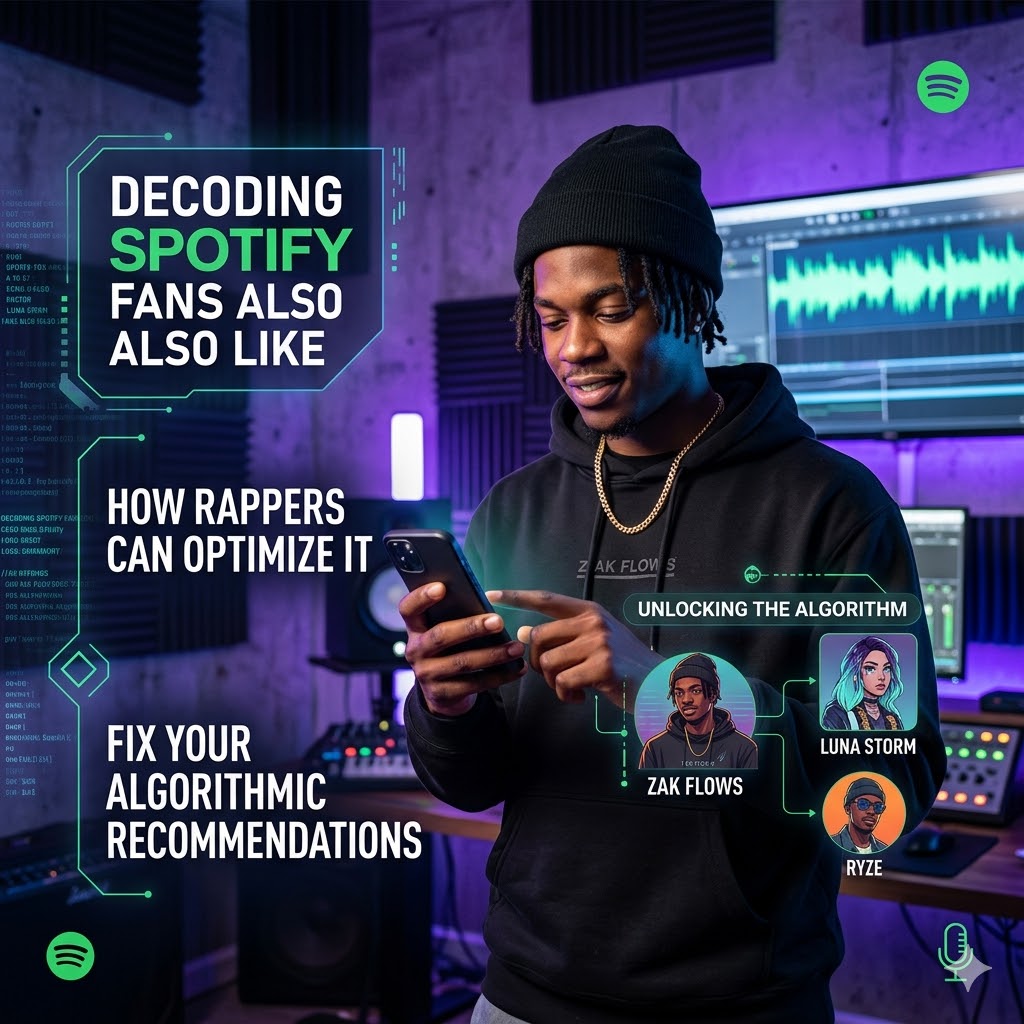
Decoding the Spotify “Fans Also Like” Section: How Rappers Can Optimize It
For independent rappers, the “Fans Also Like” section is more than just a sidebar on your profile—it’s your digital calling card. When Spotify suggests your music alongside established artists, it’s not just a nice-to-have feature; it’s the algorithm giving you a stamp of approval and telling the world exactly who your target audience is.
The frustrating part? This section is a moving target. It’s a reflection of how people listen to you and where you show up online. If the names popping up next to your profile don’t match your sound, you’re missing out on fans who would actually care about your music.
Here is how you can stop the confusion and start steering the algorithm in your favor.
How the Algorithm Actually Works
Spotify doesn’t just “listen” to your songs to figure out who you are. It’s smarter than that, and it relies on two big data points:
-
Who is listening to you: This is the big one. If a thousand people stream your track and then immediately jump over to listen to a specific peer, Spotify catches that pattern. It’s called “co-listening,” and it’s the primary way the platform builds bridges between artists.
-
Your digital footprint: Spotify’s web crawlers are constantly scouring the internet. They look at blogs, music sites, and social captions to see who you’re being mentioned with. If you’re consistently being written about or tagged alongside certain rappers, the platform assumes you belong in that same circle.
How to Influence Your “Fans Also Like”
You can’t manually force a change in your “Fans Also Like” section, but you can build the right environment so the algorithm does the work for you.
-
Be Smart with Playlists: Stop building playlists of only your own songs. Build “mood” or “genre” lists that include artists you actually sound like—or the ones you want to be grouped with. If you are a drill artist, put your track next to the artists you admire in that lane. It creates a clear roadmap for the algorithm to follow.
-
Quality Over Quantity in Pitching: It’s tempting to try to get your music on every playlist under the sun, but that can backfire. If your music ends up on a pop playlist, a lo-fi playlist, and a rock playlist, the algorithm won’t know where to put you. Focus on getting placed next to similar artists on playlists that understand who your exact target audience is.
-
Control Your Narrative: Since Spotify looks at off-platform data, your digital presence matters. When you’re doing interviews or sending out press releases, ensure the content clearly frames you within the scene you want to be a part of. If you’re being described as an “alternative hip-hop artist” one week and a “club producer” the next, you’re just creating noise.
-
Sync Your Metadata: Think of your metadata like SEO for your music. If your genre, mood, and style tags are messy across different platforms, you’re making it impossible for the algorithm to categorize you. Keep it clean and consistent everywhere you exist online.
The Bottom Line
The “Fans Also Like” section is ultimately a reflection of the company you keep. If your audience is too scattered, your recommendations will be, too. By being intentional about where you show up and who you associate with, you can stop leaving your growth to chance and start building a fanbase that actually sticks.
CTA Box Want to fix your algorithmic recommendations? Start targeting the right listeners using our professional music submission services.