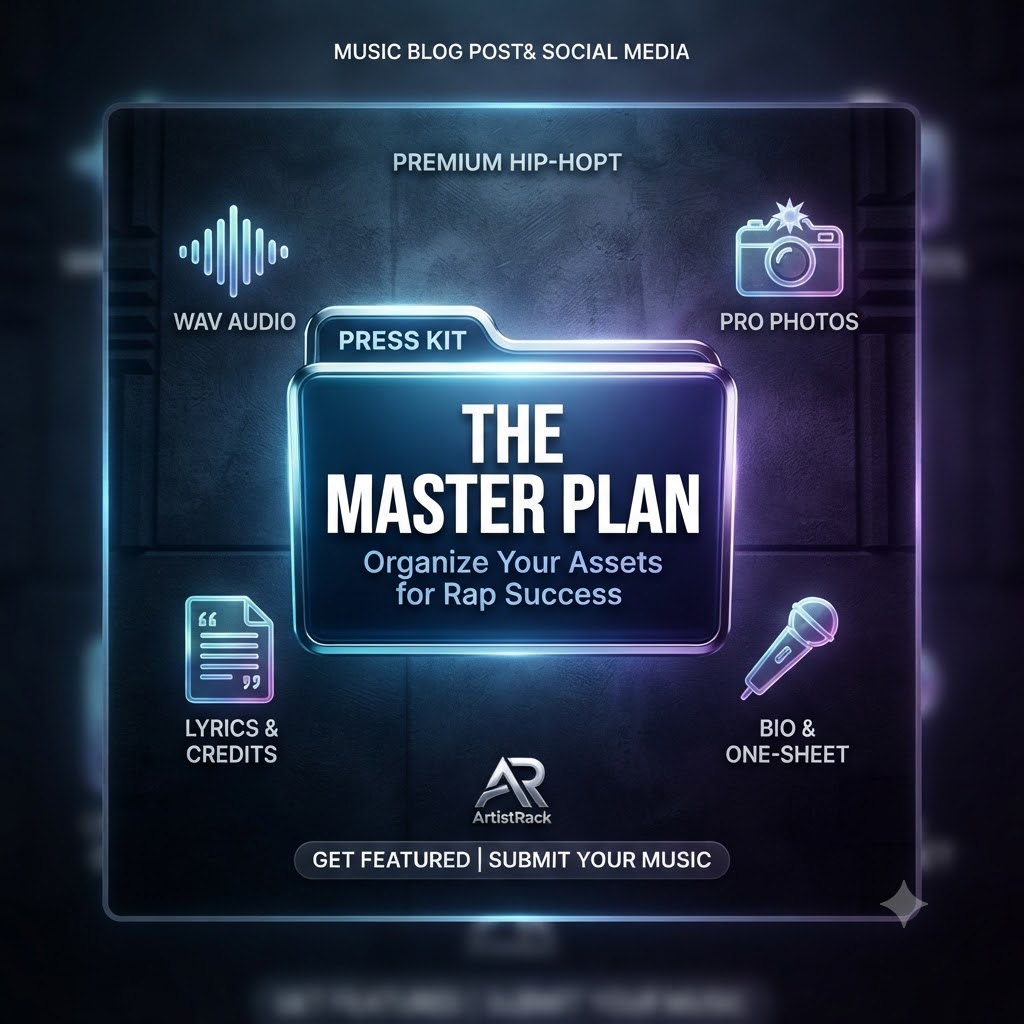
The Master Plan: Building a Media Folder That Actually Gets Results
In the hip-hop game, momentum is everything. When a blog editor, a radio DJ, or a playlist curator asks for your EPK, they don’t want to dig through three different email chains or click through a dozen broken links. If you aren’t ready to drop a professional folder into their inbox the second they ask, you’re missing your shot.
A clean, organized media folder shows you’re a serious artist who knows how the industry moves. It’s not just about being tidy; it’s about making it impossible for a writer or curator to say “no” because they had to do too much work to find your files.
Here is how to structure your folder so you look like a pro from day one.
The Golden Rule: Keep It Under One Link
Stop sending your photos, lyrics, and audio in separate emails. Create one master folder in Google Drive or Dropbox titled exactly like this: [Artist Name] – [Project Title] – Press Kit.
Inside, keep things simple by using these four specific folders:
1. Audio Files (The Essentials)
Don’t mess around with low-quality MP3s for professional features. Give them the best quality possible.
-
WAV Files: Always provide the full-resolution file.
-
Clean Versions: Even if your track is aggressive, include a clean edit. Many radio stations and playlist curators are contractually obligated to only play clean music. If you don’t have it ready, you’re off the list.
2. Visuals (High-Res)
Editors need options to make your feature look good on their site. Provide at least three professional shots.
-
Variety: Give them a mix of landscape (perfect for header images) and portrait (better for interviews/profiles).
-
Cover Art: Make sure your artwork is high-res (3000x3000px). If it looks blurry on their site, it reflects on your brand.
3. Documentation (The “Need-to-Knows”)
Keep the technical stuff easy to find.
-
Lyrics: Drop a PDF of your lyrics in here. It makes it way easier for writers to pull out your best bars for a review or a breakdown.
-
Credits: Give credit where it’s due. List the producer, mixing engineer, and anyone else who helped bring the track to life. It’s the professional thing to do and makes you look like a team player.
4. The Bio/One-Sheet
Think of this as your elevator pitch. Keep it short, real, and focused on the story behind the project. Editors are busy; they want to know who you are and why they should care in under a minute.
Put Your Assets to Work
Once your folder is locked and loaded, you’re ready to scale. Put your assets to work by securing a premium write-up through our [ArtistRack Submission Portal].
When you make the process easy for the people covering your music, you’re already miles ahead of the competition.
CTA Box: Get Your Music Covered Stop waiting for the right person to find you. Put your organized assets in front of our editorial staff today.