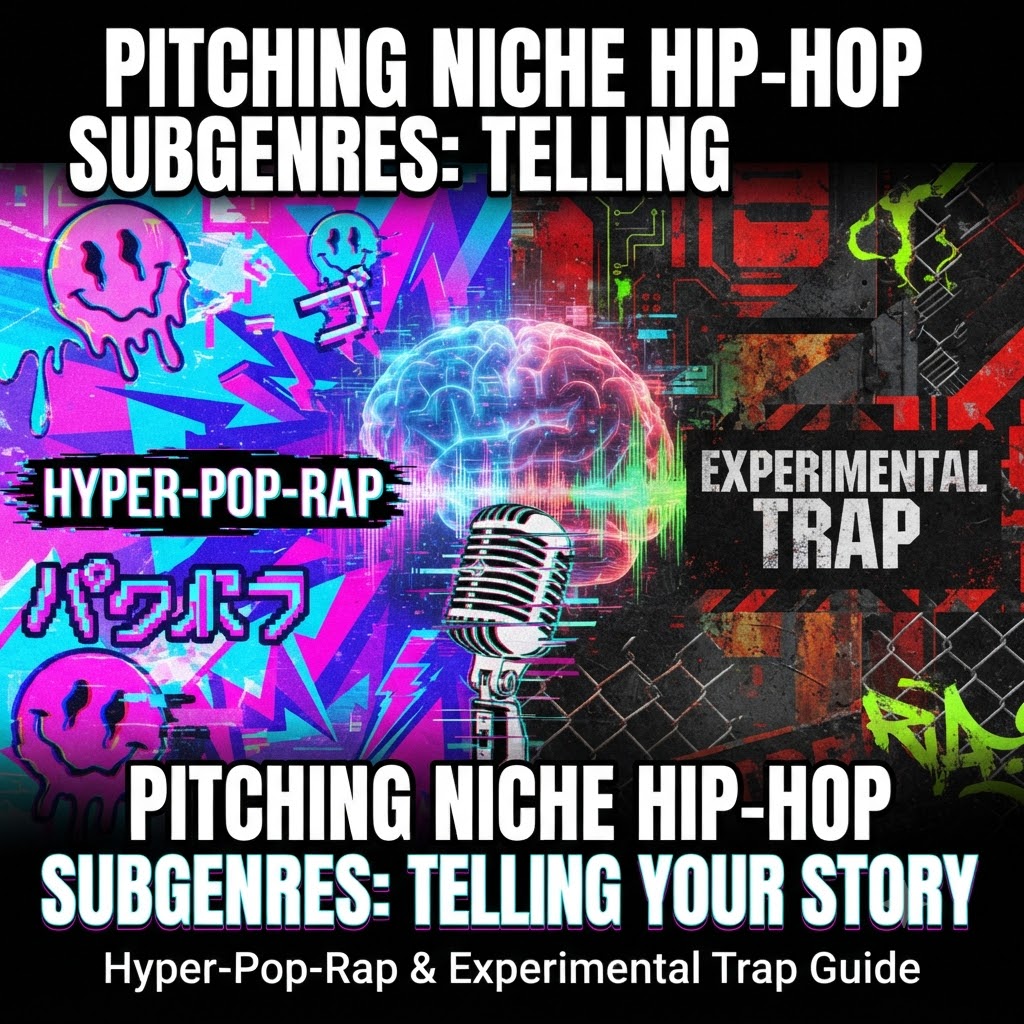
Pitching Your Sonic Innovation: How to Talk to Journalists About Hyper-Pop-Rap and Experimental Trap
The most exciting music right now isn’t happening on the charts—it’s happening in the fringes. Whether you’re crafting distorted, high-BPM Hyper-Pop-Rap or pushing the boundaries of Experimental Trap with industrial textures, you’re creating something that doesn’t fit into a standard Spotify playlist.
But here is the hurdle: How do you explain a sound that ignores all the rules to a journalist who has heard it all before?
If a writer can’t quickly grasp the intent behind your chaos, they’ll likely move on to the next email. If you want coverage, you have to bridge the gap between your sound and their understanding. Here is how to pitch your experimental work without the fluff.
1. Map Your Sound (Instead of Just Naming It)
Don’t assume the person reading your pitch spends their weekends digging through niche subgenres on Soundcloud. Instead of throwing around labels, give them a frame of reference.
-
The “Vibe Check”: Use a simple comparison to help them orient their ears.
-
Example: “We’re blending the abrasive, synth-heavy aesthetic of hyper-pop with the raw, rhythmic foundation of modern trap—think of it like a rave held in a digital dystopia.”
-
-
The Intent: Briefly explain why you’re taking this route. Are you trying to inject more energy into a stale genre? Are you making pop music feel a bit more dangerous? That’s your hook.
2. Describe the Texture, Not the Buzzwords
Skip the “innovative” and “groundbreaking” adjectives. They’re empty. Instead, give them language they can actually use in a review.
-
The Approach: Focus on how it feels.
-
Don’t say: “This is a new, experimental trap track.”
-
Do say: “We ditched the standard 808s for metallic, pitch-shifted percussion and glitched-out vocal chops that mimic the feeling of living through information overload.”
See that? You’re showing them the texture, which makes it much easier for them to write a compelling paragraph about it.
3. Sell the Story, Not the Specs
You might have spent weeks in the studio tweaking your VSTs until the synth sounded perfect, but that level of technical detail usually doesn’t make for a good story. Focus on the why.
Is your music a reaction to the repetitive nature of radio hits? Is it a way to channel the anxiety of being constantly plugged into the internet? When you pivot from the “specs” to the “story,” your music turns from just being “noise” into a meaningful cultural statement.
4. Keep It Human
If your pitch sounds like it was generated by a bot, it will be deleted like one. Keep your tone direct, punchy, and authentic. Treat the journalist like a peer who appreciates music just as much as you do—not like a barrier you have to break through.
Find the Right Home for Your Sound
We know that alternative sonic lanes aren’t always welcomed by mainstream outlets, and that’s a shame. Our editorial platform is built specifically to bridge that gap. We don’t just host tracks; we analyze the architecture of your sound and give it the weight it deserves.
Submit your experimental work safely through our ArtistRack platform for custom coverage. We understand the nuance of your subgenre and are here to help you get your vision across to a wider audience.
Ready to take the next step?
Don’t let your progressive sound get lost in the shuffle. It deserves analytical respect and a platform that actually speaks your language.
[Click Here to Submit Your Track via our Portal] and let’s start the conversation.