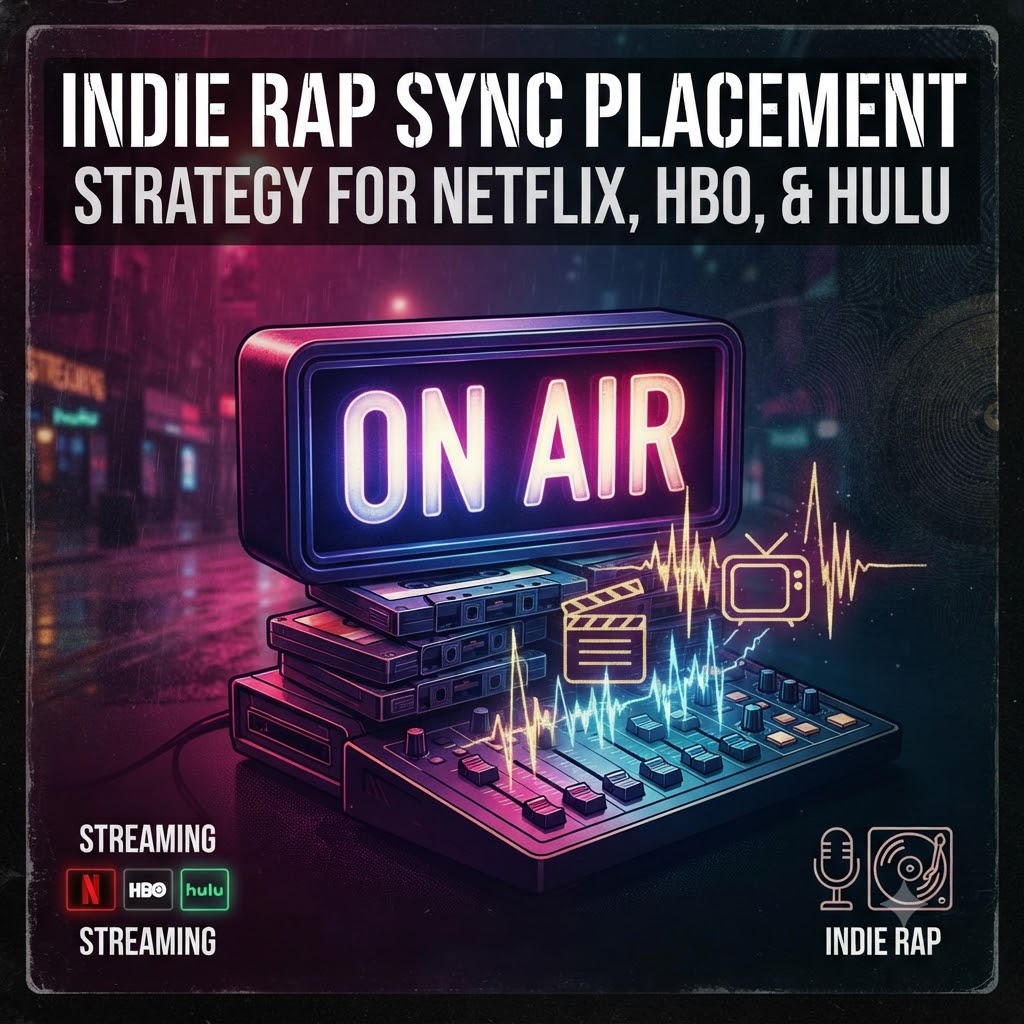
From Underground to Screen: The Indie Rap Sync Placement Playbook for Netflix, HBO, and Hulu
Picture this: A tense, high-stakes scene on a gritty new HBO crime drama. A character is walking through a neon-lit alley in slow motion, and your underground rap track drops. The heavy 808s rattle through home soundbars, thousands of viewers Shazam the song on the spot, and your monthly streaming numbers jump overnight.
That’s the power of a sync placement.
With Netflix, HBO, and Hulu pumping out prestige content faster than ever, they’re constantly hunting for fresh, authentic sounds that don’t sound like generic stock music. For independent hip-hop artists, landing a sync deal on a major streaming series is one of the best ways to fund your career, build a global audience, and land a massive industry breakthrough.
Let’s break down how independent rap tracks actually land paid placements on top-tier streaming platforms—without getting bogged down by legal red tape.
1. Make Your Tracks “Sync-Ready” (Or Watch Them Get Skipped)
Music supervisors aren’t just looking for good songs; they’re looking for audio tools that fit a moving picture. If your track is structured like a traditional radio single, it might fail the screen test.
-
Kill the Uncleared Samples: This is the absolute #1 killer of indie sync deals. If your beat uses an unauthorized vocal sample from a 1970s soul record or a movie quote, networks will pass instantly. They cannot risk a copyright lawsuit. Stick to original compositions, royalty-free loops, or fully cleared producer kits.
-
Fix Your Intro: Songs with a 30-second atmospheric intro before the beat drops are a nightmare for editors. They need music that can hook a viewer right away or hit a precise visual transition.
-
Always Have a “Toolbox” Folder Ready: Never send just a single MP3. Keep a folder ready with your WAV master, an instrumental (vital for dialogue-heavy scenes), an acapella, and a clean/TV mix (swapping out profanity so it can actually pass network broadcast standards).
2. Understand What Music Supervisors Actually Want
Behind every great streaming soundtrack is a music supervisor. They are the gatekeepers bridging the gap between creative directors and the music industry. If you want to work with them, you need to understand their workflow.
-
Speed is Everything: When a director needs a track for a scene being edited tomorrow, they need answers today. If a supervisor emails asking for stems and you take a week to reply, the window slams shut.
-
Be a “One-Stop Shop”: Major platforms love working with one-stop tracks. If a rap song has three different co-writers, two beatmakers who own half the master, and an unresolved sample, the paperwork becomes a headache. If you control 100% of both your master and publishing (or have a signed split sheet letting you act on behalf of everyone), you jump to the front of the line.
3. Fix Your Metadata and Digital Footprint
Music supervisors don’t browse Spotify playlists the way fans do; they use specialized databases (like DISCO or curated industry libraries) searchable by keyword. If your metadata is a mess, your track simply doesn’t exist.
-
Tag Moods, Not Just Genres: Don’t just tag your track as “Hip-Hop.” Tag it with emotional states and scene descriptors: Gritty, Tense, Cinematic, Rebellious, Late-Night Drive, Confident, Aggressive, Triumph.
-
Use “Sounds-Like” References: Help the supervisor visualize the placement instantly. Write descriptions like: “Hard-hitting underground rap similar to Vince Staples meets Run the Jewels.”
4. Choose Your Path: Libraries vs. Direct Pitching
Indie rappers usually break into the streaming game through two main routes:
| Pathway | Pros | Cons | Best For |
| Sync Agencies & Libraries | Active pitching power, direct relationships with Netflix/HBO supervisors, handles backend legalities. | Takes a cut (usually 50% of the sync fee), often requires non-exclusive or exclusive contracts. | Artists who want a hands-off approach and a dedicated team pitching for them. |
| Direct Pitching | Keep 100% of the upfront sync fee, direct creative relationship with supervisors. | Requires heavy networking, cold outreach, and real administrative hustle. | Independent artists with strong industry contacts and a tight catalog. |
Quick tip: Never spam music supervisors on social media with random MP3 attachments. Build real, respectful relationships, send personalized notes with professional streaming links (like private Soundcloud or DISCO links), and prove you actually understand the vibe of their shows.
Final Thoughts: Treat Your Catalog Like a Business
Landing a placement on a Netflix original isn’t just about having one viral song—it’s about building a consistent catalog of sync-ready music. Clear your samples, organize your stems, fix your metadata, and start treating every track as a potential audio backdrop for the next big TV moment.
When the right scene calls for your unique sound, you’ll be ready to deliver.