How to Get Your Rap Song Played in Clubs and Strip Clubs: The Real-World DJ Servicing Blueprint
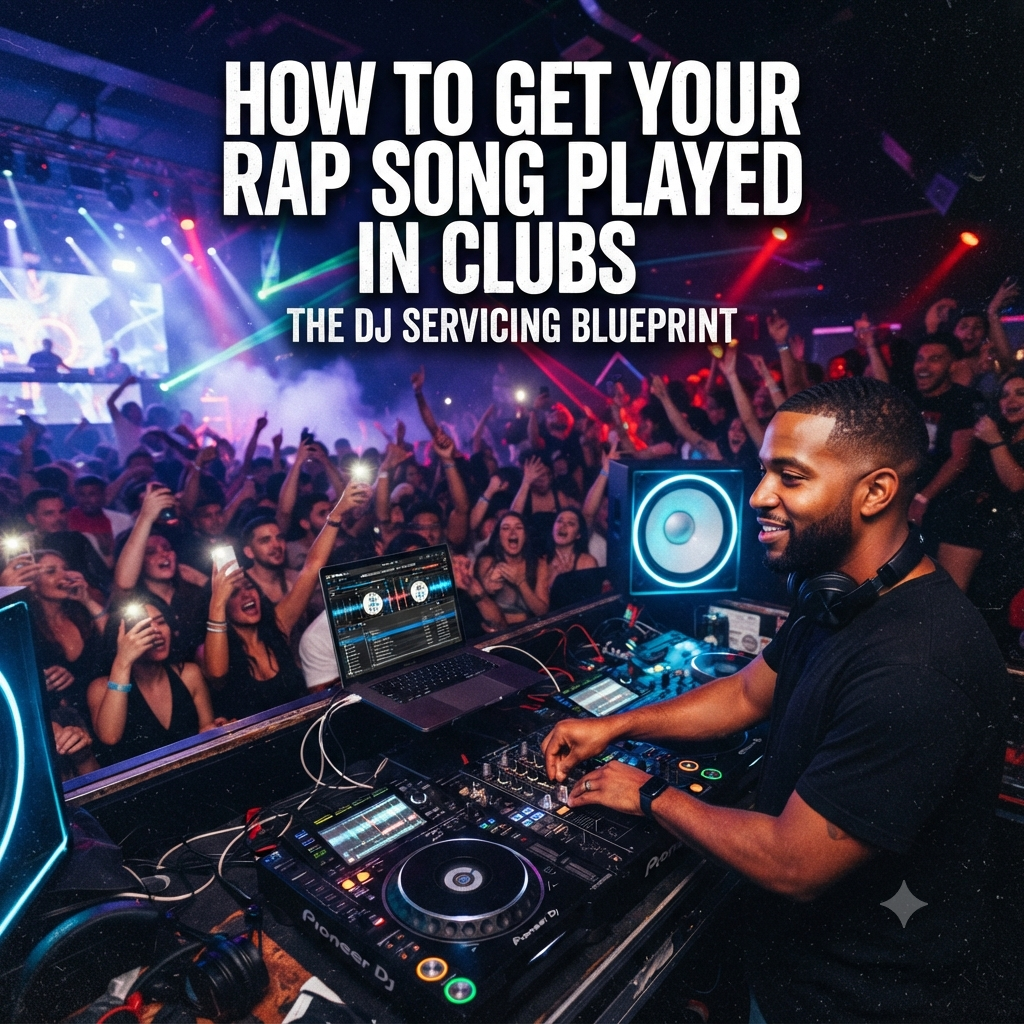
Streaming algorithms and editorial playlists are great, sure, but nobody in the history of rap music ever walked out of a packed club at 2:00 AM talking about a Spotify banner. Records catch fire when the subwoofers rattle the drinks off the table and half the room pulls out their phone to Shazam what’s playing.
If you are trying to figure out how to get your rap song played in clubs, stop wasting time DMing random promoters with SoundCloud links. Nightlife runs on its own strict code. Strip clubs and flagship hip-hop spots—from Atlanta and Houston to Miami and L.A.—are the real A&R rooms of the music industry. The songs that move dancers and pack dance floors on a Friday night are the exact tracks urban radio and major labels chase three weeks later.
Breaking a record locally takes sweat, preparation, and street smarts. Here is how you actually get your music out of your hard drive and into the DJ booth without looking like an amateur.
Stop Sending Spotify Links: Fix Your DJ Service Pack First
Nothing gets an independent artist ignored faster than handing a working DJ a streaming link or a messy, unedited MP3. Club DJs aren’t sitting at home listening through headphones; they are live-mixing on Serato or Rekordbox in a dark, loud booth while managing a crowd. If your file isn’t formatted for their workflow, they simply won’t play it.
Before you step foot in a venue or send a single email, have your engineer bounce down a proper DJ Service Pack using high-quality 320kbps MP3s (every CDJ and controller reads them cleanly). Your folder needs five specific versions:
-
Dirty (Main): Your standard uncensored club mix.
-
Clean (Radio Edit): Crucial for mainstream clubs, early-night warmups, and radio mixshows.
-
Instrumental: DJs love blending a hot new beat underneath an acapella everyone already knows.
-
Acapella: Gives creative DJs a way to tease your hook over another track before dropping your beat.
-
8-Bar Intro / 8-Bar Outro Edits: This is the biggest mistake indie artists make. Most streaming songs start right on the vocal or a heavy melody drop. A DJ cannot smoothly beatmatch that out of another song without the vocals clashing. An 8-bar drum or simple instrumental intro gives them room to blend your track in cleanly.
One more detail: fix your file metadata. Nobody in a packed club is searching for final_mix_v4_MASTERED_NEW.mp3. Tag the file properly with your artist name, song title, BPM, and musical key. Make their job easy, and you instantly separate yourself from 90% of the artists begging for spins.
Get Your Music Into Regional Record Pools
Working DJs don’t rip tracks off YouTube—the audio quality sounds terrible on a $50,000 club sound system. Instead, they pay monthly subscriptions to digital record pools to download clean, pre-formatted music every week. Getting your single accepted into the right pools puts your record directly on the laptops of thousands of active club and strip club DJs.
Don’t waste money blasting every generic pop pool on the internet. Target platforms with deep hip-hop and regional club roots:
-
MP3waxx (especially heavy in Southern and strip club circuits)
-
Heavy Hits
-
DJcity
-
BPM Supreme
-
Digital DJ Pool
When you submit your pack, keep your pitch short. Include clean cover art, the BPM, whether it’s clean or dirty, and two sentences explaining why the record works—mention local buzz, notable producers, or early crowd reactions. DJs care about whether a track clears a floor or fills it, not your life story.
Build Real Relationships With Resident DJs
Everyone wants to chase the celebrity DJ flying in for a 45-minute festival set. Forget them. Celebrity DJs play pre-planned sets and hop back on a plane. Resident DJs are the tastemakers running the same room three to five nights a week. They know what the regulars drink to, what makes the crowd turn up, and what clears the floor.
Building a relationship with a resident DJ takes actual face time:
-
Pull up on off-nights: Don’t try to network on a chaotic Saturday night when the booth is surrounded by security. Show up on a Tuesday or Wednesday when the room is slower. Tip the bartenders well and be a regular face.
-
Never interrupt a transition: If the DJ has headphones pressed to one ear and hands on the platters, stay back. Wait until they have a long track playing out, catch eye contact, offer to buy them a drink, and keep your introduction brief.
-
Ask how they want the music: Some want an email, some prefer AirDrop on the spot, and plenty of old-school club DJs still appreciate a clean USB flash drive with your logo on it. Follow their rules.
-
Show love before asking for favors: Record short clips of their sets, tag them on Instagram, and support their nights. When a DJ sees you bringing good energy and spending money at their bar, testing your record becomes a no-brainer.
Why Strip Clubs Break More Rap Records Than Nightclubs
If you want to understand how to get your rap song played in clubs, you have to understand strip club politics. In cities like Atlanta, Houston, and Miami, strip clubs are the ultimate proving ground for hip-hop.
Unlike traditional nightclubs where people stand around holding drinks trying to look too cool to dance, strip clubs have a built-in feedback loop: the entertainers. Dancers choose the music they perform to, and in many major venues, they pay DJ fees or tip out the booth to hear specific records. If the dancers catch onto your beat, they will ask the DJ to run it back three times a night.
To win in that environment, your music has to fit the room:
-
Dial in your low end: Strip club sound systems push massive bass. If your 808s are muddy or your vocals get swallowed by the subwoofers, your song will sound weak right after a Future or GloRilla track. Test your master in a car with heavy subs before you service it, and make sure the loudness holds up (-8 to -6 LUFS is standard for modern club rap).
-
Hit the right tempo: Tracks sitting around 95–105 BPM (classic bounce) or 130–145 BPM in half-time give dancers the exact pocket they want to move to.
-
Network respectfully: Connect with entertainers on social media, tip generously when you’re in the building, and let the music speak. Once dancers start requesting your song, the DJ has no choice but to keep it in heavy rotation.
Host VIP Section Nights to Test Crowd Reaction
Sometimes you have to create your own momentum. Booking a VIP section with your team, friends, and core supporters gives you immediate leverage with both promoters and resident DJs. When you are spending real money at the bar, you aren’t begging for a favor—you are a paying client bringing business into the building.
Talk to your host or slip over to the booth early in the night to coordinate a spin during peak hours, usually between 12:30 AM and 2:00 AM when the room is at capacity.
When your record drops, watch the room like a hawk:
-
Are people nodding their heads or reaching for their drinks?
-
Do the dancers lock into the beat right away?
-
Are phones coming out to record the hook or Shazam the track?
Have someone on your team shoot clean, vertical video of the crowd reacting to the song. That footage is pure currency. You can text those clips to DJs in neighboring cities to prove your record already works in packed rooms, and pair real-world club spins with verified digital streaming growth via our independent artist campaign services so new listeners actually find your catalog when they search for you the next morning.
Ready to Turn Local Buzz Into National Momentum?
Let our professional marketing team manage your visibility. Submit your project via our Artist Submission Page.
Focus on Local Saturation Before Chasing the World
The biggest mistake independent artists make is trying to promote everywhere at once. Sending $50 to twenty different DJs across ten states does nothing. Instead, lock down two or three flagship venues in your own city. Show up every week, pack out sections, build genuine friendships with the resident DJs, and turn your record into the local anthem. Once a song owns a city, the DJs in the next city over will start calling you before you even have to ask.