How to Get Sponsored by Streetwear and Clothing Brands as an Indie MC
Let’s be real for a minute: in hip-hop, your style speaks before you even hit the stage. From nineties throwback jerseys to modern technical streetwear, fashion and rap have always shared the same DNA. But as an independent MC, getting fresh gear isn’t just about looking good in your next photo shoot—it’s a real business move. Landing apparel sponsorships gives you free wardrobe, opens up co-marketing budgets, and builds instant credibility with fans and industry insiders alike.
The problem? Most independent rappers go about it all wrong. Sending a blanket DM saying, “Hey bro, send me free clothes and I’ll rock them in my next video” won’t get you far. Apparel brands get dozens of those messages every single day, and 99% of them go straight to the trash.
If you want to figure out how to get clothing brand sponsorships for rappers, you have to stop asking for hand-outs and start offering real business value. Brands aren’t charity organizations; they want a clear return on investment. Here is the exact blueprint to build a professional pitch deck, leverage your platform, and lock down apparel deals that actually pay off.
Stop Pitching Like an Artist—Start Pitching Like a Media Platform
When a clothing company decides to sponsor an artist, they aren’t doing it just because your verses are fire. They are doing it because you have direct access to an audience they want to reach.
To land real deals, you have to shift your mindset. You aren’t just an MC dropping tracks on Spotify; you are a targeted culture-focused media channel. When you approach a brand, you need to show them exactly how placing their clothes on your body turns into eyes, engagement, and sales for them.
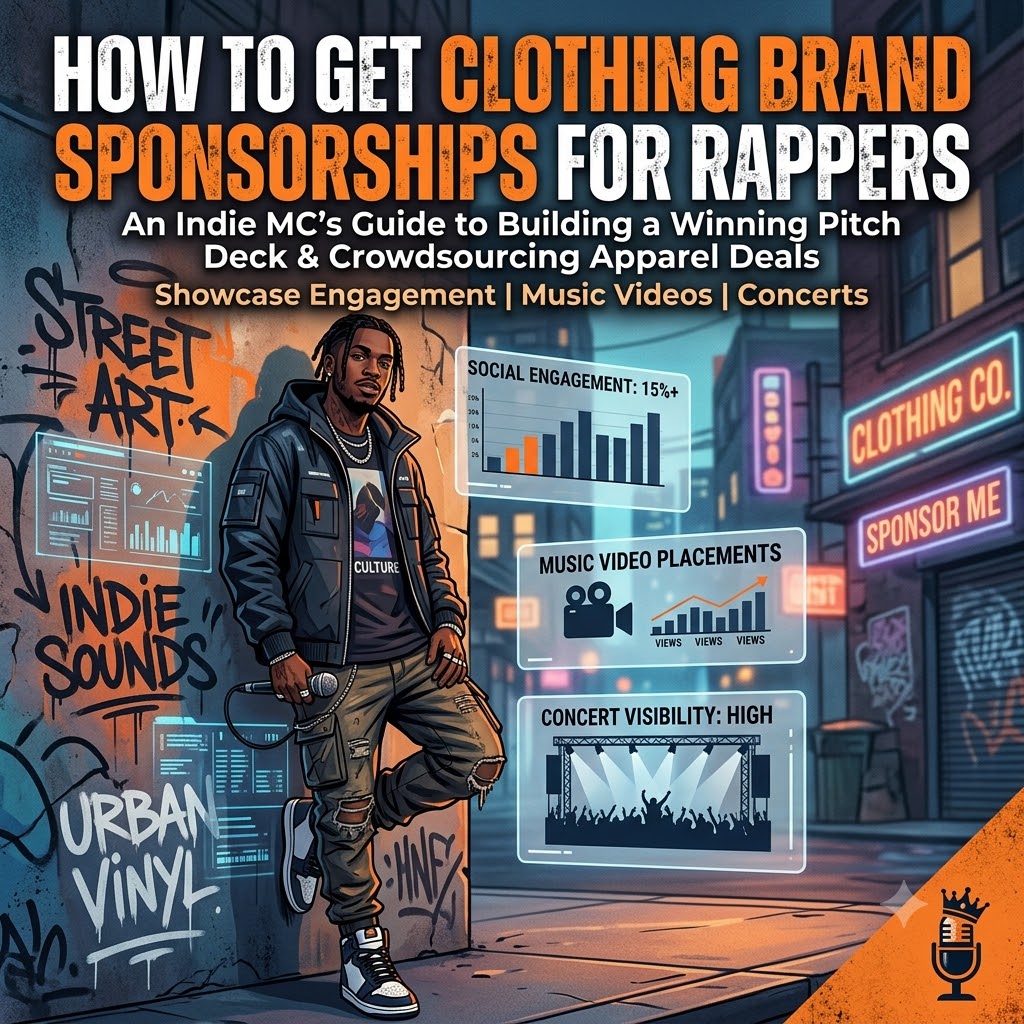
To make that case, you need a clean, professional Sponsorship Deck (sometimes called an Artist Media Kit). This isn’t a long-winded biography—it’s a quick, visual presentation that highlights three main pillars:
-
Your actual audience engagement numbers
-
Placements in your upcoming music videos
-
High-visibility moments at live shows and festival dates
The Ultimate Sponsorship Deck Layout for Rappers
Your pitch deck should be a sleek, well-designed PDF (keep it around 5 to 8 slides). Keep the text direct, use sharp images, and make the numbers easy to read. Here is how you should structure it slide-by-slide:
1. The Intro & Visual Aesthetic
Start strong. Give a short, punchy bio detailing who you are, where you’re based, and your specific lane in hip-hop—whether that’s underground boom-bap, melodic trap, or conscious rap. Include 2 or 3 high-resolution press photos that showcase your personal fashion sense right away. If your style looks messy or cheap here, a brand will close the file before reaching slide two.
2. Real Engagement Beats Fake Numbers
Don’t fall into the trap of thinking you need 100,000 followers to land a brand deal. Micro-influencers with 3,000 to 10,000 deeply loyal followers often get better conversion rates than account-boosted artists with massive, passive followings.
-
What to list: Spotify monthly listeners, top cities where people stream your music, core age demographics, and your average engagement rate (likes and real comments relative to your follower count).
-
Proof point: Take clean screenshots directly from your Instagram, TikTok, or Spotify for Artists dashboard. Transparency builds trust.
3. Dedicated Music Video Placements
Music videos give brands long-term visibility. A good music video lives on YouTube and streaming services for years, constantly serving as a visual advertisement for whatever you were wearing on camera.
-
Detail your release schedule for the next 6 to 12 months.
-
Outline exact placement options: “Lead performance wardrobe in a video targeting 50,000 views,” or “Product placement shot during the intro hook.”
-
Throw in crisp video stills from your previous releases to prove your production quality looks professional enough for their brand.
4. Stage Presence & Concert Visibility
Streetwear lives in the real world, and nothing beats the energy of a live crowd seeing an artist flex a crisp fit under stage lights.
-
Include high-quality concert photos where your outfit takes center stage.
-
List your upcoming tour dates, festival slots, opening gigs, or local venue runs.
-
Highlight press coverage, blog write-ups, or recap videos that prove people actually turn up for your shows.
Clean Up Your Digital Footprint First
Before you start firing off emails to local clothing lines or boutique streetwear labels, take a hard look at your online footprint. When a brand representative reads your email, the first thing they do is search your name on Google and Instagram.
If your online presence looks disorganized, or if your music isn’t covered anywhere outside your personal profile, decision-makers will hesitate to tie their company name to yours. Having legitimate press coverage and platform validation makes you look like a rising star rather than a hobbyist.
A great way to lay that foundation is to build the verified digital footprint required to impress corporate sponsors through our artist submission networks. Having your releases featured on established hip-hop blogs and media outlets gives you press links you can drop right into your pitch deck to show brands you’re the real deal.
How to Cold Pitch Brands Without Getting Ignored
Once your deck is ready and your online ecosystem is tight, it’s time to start reaching out. Here is how you execute outreach without coming across as annoying:
Aim for the Right Targets
Don’t reach out to Supreme, Kith, or Nike on day one. Target growing, independent streetwear lines, local cut-and-sew brands, or emerging online labels. Look for brands that already match your personal style and cater to the exact type of listeners who come to your shows.
Track Down the Right Person
Avoid sending pitches to general contact forms like info@brandname.com. Use Instagram or LinkedIn to find the actual Brand Manager, Marketing Director, or Influencer Relations Lead. A direct message or personalized email to the right person gets opened ten times faster.
Keep the Initial Pitch Short and Value-First
Your first email shouldn’t be a novel. Keep it under 150 words, lead with a compliment about a specific collection they dropped, and immediately explain what value you bring to them.
Example Pitch: “Hey [Name], loved the recent winter drop—the heavy-weight hoodies are clean. I’m an independent MC based in Chicago heading on a 10-city Midwest tour this spring averaging 300+ ticket sales per city. We’re currently prepping 2 music video shoots next month, and I’d love to feature a couple of your pieces in our main visual rollouts. Attached is my media deck with our audience breakdown and video stats. Let me know if you’re open to chatting about a quick product integration!”
Offer Tiered Collaboration Options
Make it easy for them to say yes. Give them low-friction options to start building a relationship:
-
Tier 1 (Product Seeding): They send you free gear, and you guarantee 1 Instagram post, 2 Stories, and wear it in your next studio video.
-
Tier 2 (Video & Stage Integration): Dedicated wardrobe placement in an upcoming official music video plus live performance tags across a tour run.
-
Tier 3 (Paid Ambassadorship): Multi-month contract including exclusive outfit rights on stage, promo codes for your fans, and affiliate revenue share.
Final Thoughts: Relationships Build Long-Term Revenue
Getting sponsored isn’t a one-and-done transaction. The artists who win long-term treat brand partners like team members. When a brand sends you a package, post it promptly, tag them clearly, take high-resolution photos, and send them the raw image files so their social media team can repost you, too.
When you make life easy for a brand, a simple free hoodie today can easily turn into a paid capsule collection or a fully funded tour tomorrow.