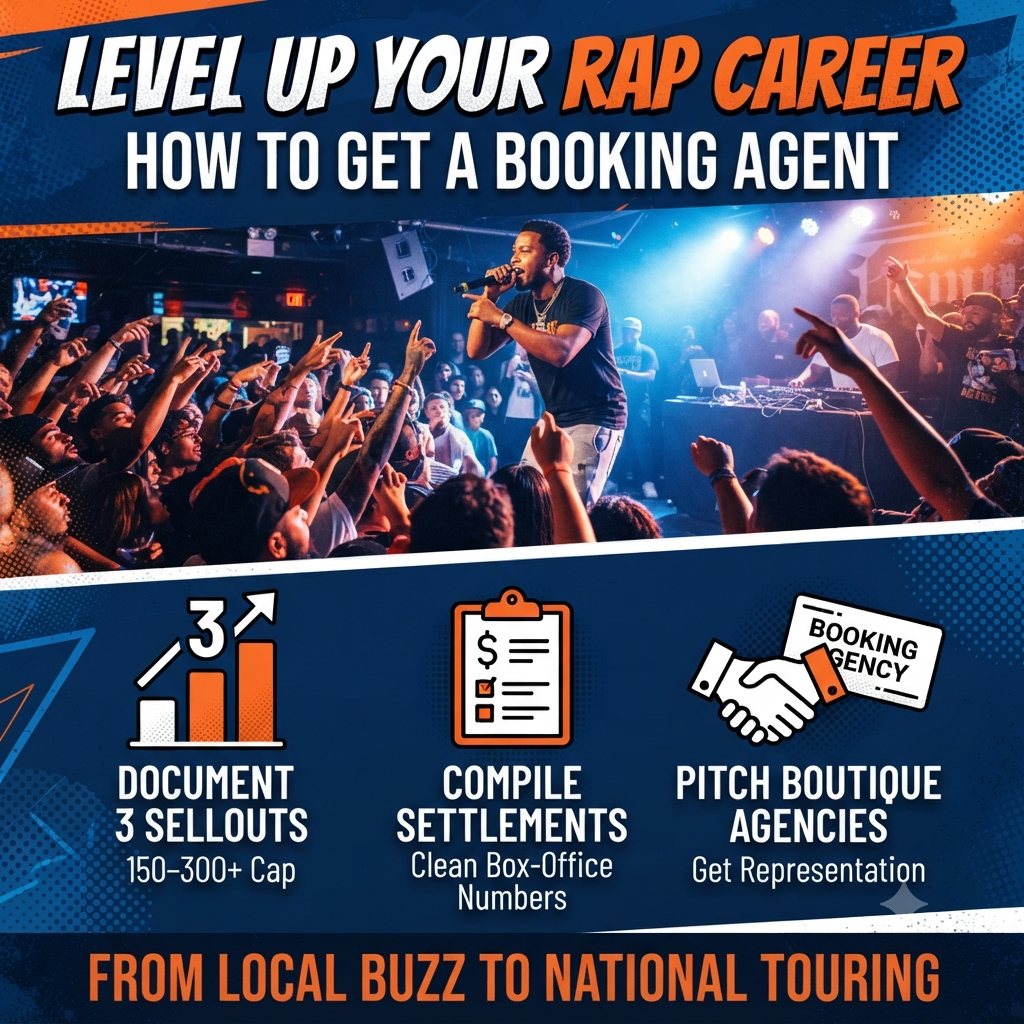
How to Get a Booking Agent as a Rapper After Selling Out Local Shows
Figuring out how to get a booking agent as a rapper changes everything about how you work on the road. Instead of begging local promoters for scraps or taking risky door splits with zero guarantees, you start building real routing, clean deposits, and leverage when talent buyers pick up the phone.
Most rappers get stuck thinking an agent is going to discover them off a viral clip or a good verse. Real agents don’t work like that. They get paid a percentage of gross show fees—usually around 10% to 15%—so if you don’t move tickets yet, signing you is just extra work with no check at the end. Selling out local rooms in the 150–300+ ticket range proves you actually have buyers in your city. Once you hit that level, getting representation comes down to keeping receipts, showing clean box-office numbers, and pitching boutique urban booking agencies that know how to build developing touring acts.
Why Selling Out Local Rooms (150–300+ Tickets) Actually Matters
Anyone can pack a room if half the building is on a guest list or their cousin booked the spot. What gets an agent’s attention is paid ticket sales in the 150–300+ range across real clubs, independent venues, or small theaters. When strangers pay out of pocket to see you perform, it proves your music translates off headphones and into a live setting.
Talent buyers and booking agents look at local sellouts with a pretty sharp eye:
-
You can repeat it: One big night might come from a feature, a release party, or a holiday weekend. Three sold-out shows in a row shows a real pattern.
-
You’re moving up rooms: Going from a 100-cap room to 150, then 250 or 300+, shows your local ceiling hasn’t hit a wall yet.
-
The room makes money: Venues pay attention to bar sales and crowd energy, and agents pay attention to venues that want you back.
Live proof works best when your online and regional numbers back it up. Before sending pitches out, build the regional streaming numbers and press proof that attract top booking agents with our hip-hop promotion packages. If an agent or promoter checks your name and sees real listeners in nearby cities alongside solid press, they know your draw isn’t trapped inside one zip code.
Milestone 1: Document Three Consecutive Local Sellouts
Don’t treat three sold-out home shows like three random weekends. Treat them like a short campaign where every number gets written down cleanly. If an agent asks how you pulled those crowds, you want straight answers ready—not guesswork.
What to Track After Every Show
-
Ticket numbers: Write down venue capacity, total paid tickets sold, guest list/comp counts, and walk-up sales at the door.
-
What moved tickets: Note what actually got people to buy—short video clips, local DJs, college word of mouth, paid ads, or opening slots—so you know how to repeat it in a new city.
-
Venue and crowd details: Keep track of who ran the room, how sound and stage time went, and who showed up in the crowd.
-
Clean visual proof: Grab wide crowd shots that show a full room and clear performance clips with good audio, not shaky dark angles where nobody can tell what’s happening.
Try to stack all three sellouts within a tight window, like a two- or three-month run. A string of recent sellouts feels active and urgent; three shows spread out over two years feels stale.
Milestone 2: Compile Clean Box-Office Settlement Sheets
A box-office settlement sheet is the end-of-night money sheet for a show. It breaks down ticket sales, any agreed venue or production expenses, deal splits, and what actually goes into your pocket. Bringing clean settlement sheets to the table shows you treat live performance like a real business instead of winging every payout.
What to Look For on a Settlement Sheet
-
Show basics: Date, city, venue, room capacity, and deal type (flat guarantee, door split, or guarantee plus a backend bonus).
-
Gross ticket sales: Total tickets sold times ticket prices, minus taxes or ticketing fees depending on how the deal is written.
-
Deductions: Pre-agreed production, sound/light charges, or promoter marketing costs if those were part of the contract.
-
Net payout: The final amount paid out to you or your team after everything is settled.
| Settlement Item | Why Agents Care |
| Paid vs. Comp Tickets | Shows real ticket buyers versus freebies; a massive comp list raises eyebrows. |
| Gross Ticket Revenue | Shows how much money the room can generate at your current price point. |
| Guarantee & Bonus Terms | Establishes your starting fee and where extra money kicks in. |
| Net Payout & Timeliness | Proves the show paid cleanly and shows what you realistically walk away with. |
Put all three settlement sheets into one clean folder or PDF along with a simple one-page summary of your local run. Never pad numbers or fake ticket counts. Agents talk to promoters and venue buyers every single week, and inflated numbers get spotted fast.
Milestone 3: Pitch Boutique Urban Booking Agencies
Once you have three documented sellouts and real settlement numbers, skip chasing massive legacy agencies where newer acts can sit on a shelf. Look at boutique urban booking agencies instead. Smaller agencies that focus on hip-hop, R&B, and live urban acts often spend more time developing artists, routing driving markets or short hops (roughly 3 to 5 hours from your home city), and actually calling buyers to pitch your name.
How to Pick the Right Agencies
-
Check who is actually on the roster: Look at the artists they book right now. If they represent hip-hop or urban acts playing 150- to 500-cap rooms, they already have relationships with the right venues and talent buyers.
-
Match your map to their lanes: Look for agents booking clubs, college shows, and weekend dates in cities near you where your streaming or social stats already show listeners.
-
Look for artist builders: Agencies that specialize in regional growth know how to take a strong hometown draw and test it in secondary cities without burning you out.
How to Write a Pitch That Gets Read
Keep your first email or DM short, plainspoken, and easy to skim. Agents read a lot of pitches, and most of them are all hype with zero numbers.
-
Subject line: Put your name, city, and live proof right up front—for example:
[Artist Name] — 3 Local Sellouts (200+ Cap) | Live Video & Settlements. -
First few lines: Say who you are, where you’re based, and that you just sold out three local shows in a row with exact ticket counts.
-
The core numbers: Share your rough fee range, top cities on streaming, and any real press or radio support you have.
-
Simple links: Send one clean link with live footage, a quick summary of your settlement numbers, and the cities you want to hit next.
Follow up once or twice over two to three weeks if you don’t hear back, and share any fresh win like another packed room or a new single doing numbers. If an agent passes because you haven’t proven you can draw outside your hometown yet, ask what milestone they want to see next and keep building toward it.
Launch your project with a full marketing setup. Start on our Artist Submission Portal.