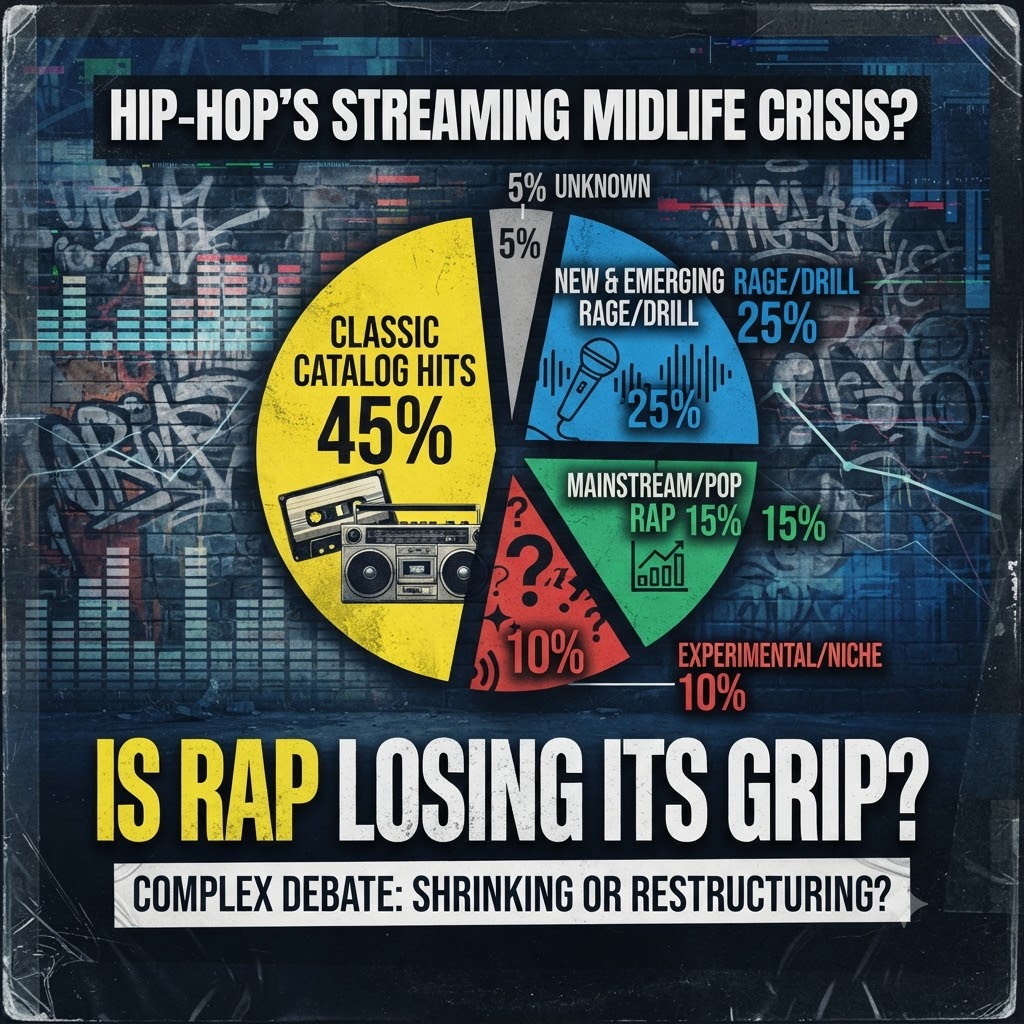
Complex sparked a massive internet debate over rap’s streaming share. Let’s look past the viral panic to see what’s actually happening to the culture’s numbers.
If you’ve spent any time on music Twitter or Reddit lately, you’ve probably tripped over the endless debate sparked by Complex and other industry outlets. The burning question everyone’s fighting about? Is hip-hop going through a streaming midlife crisis?
For years, rap didn’t just have a seat at the table—it was the table. It dominated the Billboard charts, dictated global playlists, and ran streaming platforms like Spotify and Apple Music. But recently, a mix of chart data and hot takes has people asking if the genre’s grip is slipping.
So, what’s the real deal? Are rap’s streaming numbers actually tanking, or is the industry just shifting underneath our feet? Let’s talk about it.
The Two Sides of the Viral Debate
Whenever a genre as massive as hip-hop experiences a shift, the internet always splits into two extreme camps.
On one side, you have the “sky is falling” crowd pointing out that rap’s overall percentage share of total music consumption has dipped from its absolute peak. Their argument usually looks like this:
-
The pie is shrinking: Total streaming percentages for rap have slipped compared to other genres.
-
Catalog crutch: A huge chunk of current rap streams are driven by legacy acts and throwbacks rather than massive, culture-shifting new drops.
-
The superstar void: Between blockbuster tour cycles, it sometimes feels like the pipeline of undeniable, generation-defining crossover hits has slowed down.
On the flip side, insiders argue that calling this a “decline” misses the forest for the trees. Hip-hop isn’t shrinking; it’s restructuring.
Why “Restructuring” Makes More Supportable Sense
When a genre matures past its explosive breakout years, consumption habits naturally change. Here is why this “midlife crisis” actually looks a lot like growing pains:
1. The Genre is Too Fractured to Look Like a Monolith
Hip-hop isn’t just one sound anymore. Today, it’s splintered into a million thriving micro-genres—rage music, underground pluggnb, regional drill, melodic trap, and everything in between. Because fans are spread across such a massive ecosystem of niche sounds, it’s harder for a single mainstream track to completely monopolize the global charts the way they used to. That’s not a loss of audience; it’s a fragmentation of taste.
2. The Audience is Aging Out of the Loop
Hip-hop has been around for over 50 years now. The kids who grew up on the golden eras of the 90s and 2000s are adults with jobs, families, and completely different listening habits. Older fans lean heavily into catalog listening—revisiting classics, deep-dive albums, and curated playlists rather than blindly looping whatever TikTok trend is blowing up this week. That explains why legacy catalogs are pulling numbers that put new releases to shame.
3. Streaming Isn’t the Only Metric
Daily algorithm metrics only tell part of the story. While recorded music streams bounce around, hip-hop remains an absolute juggernaut in the live entertainment space. Massive global stadium tours prove fan engagement and spending power are higher than ever, even if the daily streaming pie chart looks a little different than it did five years ago.
Where Does Rap Go From Here?
Every dominant genre eventually hits a crossroads where pure commercial saturation forces a reinvention.
If hip-hop is having a midlife crisis, it’s a healthy one. It’s forcing artists and labels to look past cheap algorithmic hacks and get back to what made the culture bulletproof in the first place: raw storytelling, real innovation, and community.
As the digital landscape settles down, the definition of a “hit” is changing. Rap isn’t dying—it’s just entering its second act.