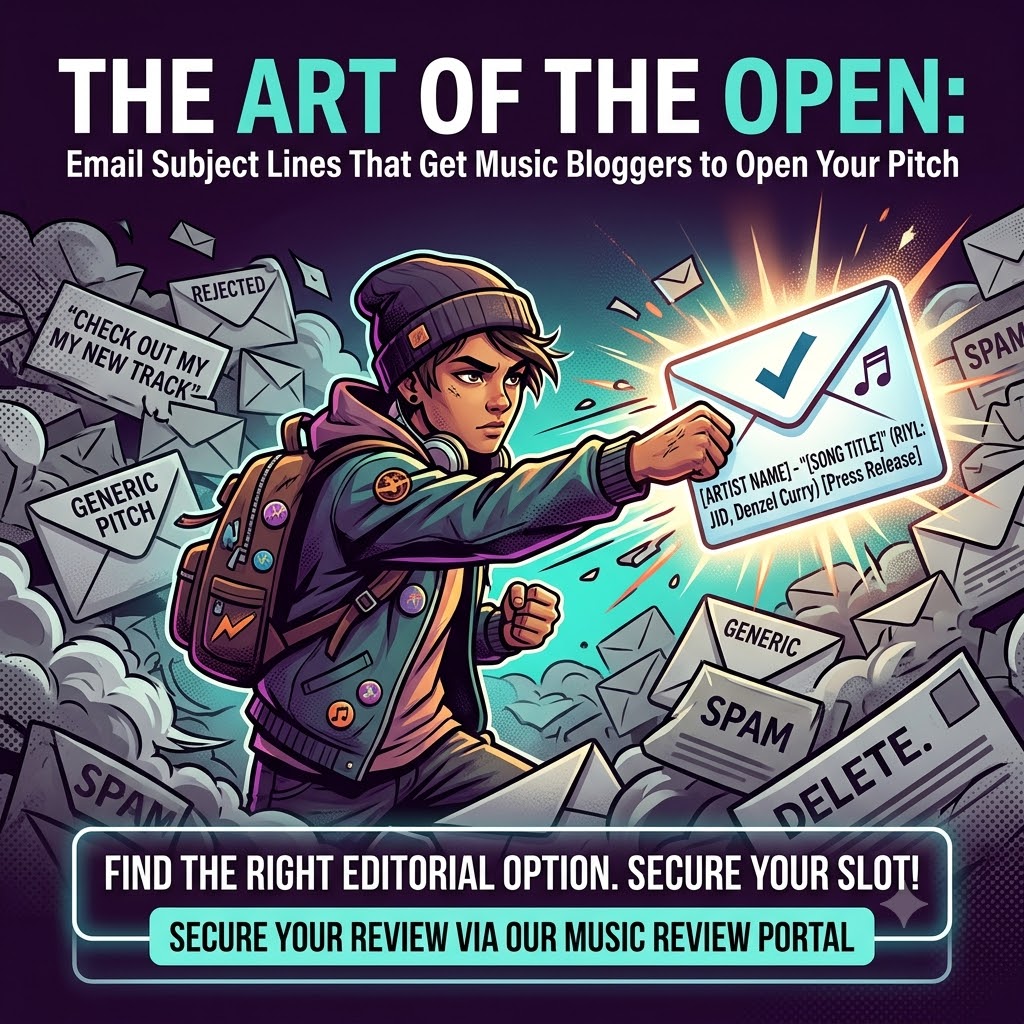
Email Subject Lines That Get Music Bloggers to Open Your Pitch
If you’ve ever spent weeks obsessing over a beat, dialing in the vocal mix, and laying out a rollout strategy, only to hit send on 50 pitch emails and hear absolute crickets—you’re not alone.
It’s one of the most frustrating parts of being an independent artist or manager. You know the music is solid, but it feels like you’re throwing your release into a black hole.
Here’s the reality of the music business in 2026: top hip-hop bloggers, playlist curators, and digital editors deal with overwhelming inbox clutter. A writer at a mid-tier hip-hop publication can easily receive 200 to 500 pitches a week. Major editors get thousands. They aren’t sitting around looking for reasons to open your email; they’re actively looking for reasons to hit delete so they can clear out their inbox before lunch.
If your subject line looks like spam, reads like a generic template, or tries too hard with fake hype, your pitch gets killed before anyone even hears your song.
If you want to master email subject lines to pitch music bloggers, you need to stop guessing and start using proven formulas rooted in clarity, genre context, and instant credibility. Let’s break down how to get your emails opened and your tracks actually reviewed.
Why 90% of Music Pitches Go Straight to the Trash
Before we look at the exact formulas that work, we need to talk about why most independent pitches fail immediately.
Music journalists don’t hate reviewing new artists. Most of them started writing about music specifically because they wanted to discover new talent before everyone else. What they hate is having their time wasted by lazy emails.
When an editor scrolls through their inbox, three specific types of subject lines instantly land in the trash:
-
The Vague Headline: Subject lines like “Check out my new single” or “Fire new music for your blog” tell the recipient nothing. Who are you? What genre is it? Why should they care right now?
-
The Over-Hype / Emojis: Throwing five flame emojis, ALL CAPS, or claims like “The Next Drake Just Dropped” triggers two things: email spam filters and instant skepticism. True industry professionals rarely pitch like that.
-
The Zero-Context Pitch: If a writer has to open your email, read two paragraphs, and click a link just to figure out what style of music you make, they won’t bother. They’ll just move on to the next pitch.
To get an open from a busy writer, your subject line needs to answer three questions in under two seconds: Who are you? What is the song called? What does it sound like?
The Formula That Cuts Through: Breakdown of a High-Open Subject Line
If you look at the pitches sent by established PR agencies, you’ll notice they stick to a consistent, high-performing structure:
[Artist Name] – “[Song Title]” (RIYL: JID, Denzel Curry) [Press Release]
This specific setup works because it strips away fluff and gives the editor every single piece of information they need before they even click. Let’s break down why this exact arrangement gets such high open rates.
1. Clear Identification: [Artist Name] - "[Song Title]"
Keep it clean. Start with your artist or group name, followed by the track title in quotation marks. The quotes aren’t just for grammar; they create a quick visual separation that makes the title easy to scan on a phone screen.
2. The Power of “RIYL” (Recommended If You Like)
This is the most critical element of the entire subject line. RIYL stands for “Recommended If You Like” (sometimes written as For Fans Of or FFO).
Bloggers think in terms of sonic lanes and editorial fit. If a writer focuses heavily on lyrical, high-energy underground rap, seeing reference artists like JID or Denzel Curry instantly tells them, “This fits what I write about.”
When choosing reference artists, follow two rules:
-
Be Realistic: Don’t just list Drake, Kendrick Lamar, or Travis Scott unless your music is a direct clone. Choose artists who represent your specific sub-genre niche.
-
Use Relevant Peers: Pick 2 to 3 artists who are currently active and well-known in the scene you’re trying to enter.
3. The Content Tag: [Press Release] or [Exclusive]
Adding brackets at the end helps the writer immediately understand what type of coverage you’re asking for:
-
[Press Release]= Standard news coverage or track write-up. -
[Exclusive Premiere]= You are offering them the right to feature the music before anyone else gets it. -
[Music Video]= Let’s them know there is a visual asset ready to embed.
4 More Subject Line Formulas to Add to Your Rollout Strategy
Not every pitch is the same. Depending on where you are in your rollout campaign, you can adjust your subject line angle to fit the moment:
The Premiere Offer (High Value to Bloggers)
[Exclusive Premiere] [Artist Name] – “[Song Title]” (RIYL: Joey Bada$$, Cordae)
Why it works: Music blogs love exclusives because it drives fresh traffic to their site first. If you’re offering an exclusive stream or early video premiere, make sure that value prop is front and center.
The Local / Scene Angle
Atlanta Hip-Hop: [Artist Name] Blends Trap & Soul on “[Song Title]”
Why it works: Regional publications and local tastemakers specifically cover their home scene. If you have a strong local buzz or your sound represents a specific city, lead with that context.
The Milestone / Co-Sign Angle
Produced by [Notable Producer]: [Artist Name] Drops “[Song Title]”
Why it works: If your track features a well-known guest artist, was mixed by an industry veteran, or produced by someone with credits, lean on that name recognition in your line.
The Direct Video Pitch
[Official Video] [Artist Name] – “[Song Title]” (RIYL: Baby Keem)
Why it works: Many blogs specifically curate music video roundups. Highlighting that you have a finished visual makes it easy for video editors to jump right in.
3 Quick Rules for Writing Pitch Emails That Convert
Once your subject line earns you the open, your email body needs to deliver. Keep these core principles in mind:
-
Keep it Under 150 Words: State who you are, give a 2-sentence background on the track, and drop your streaming link. Don’t send your entire life story.
-
Use Streamable Links (No Downloads): Never attach raw MP3 files or ZIP folders—they flag spam filters and waste storage space. Send private SoundCloud, Private YouTube, or Disco links that play with one click.
-
Personalize the Opening: Spend 30 seconds reading the blog first. Addressing the writer by their actual name (“Hey Alex,” instead of “Hey Admin”) instantly separates you from 95% of automated spam.
Streamline Your Coverage Strategy
Cold pitching is a crucial muscle to build as an independent creator, but it requires patience, continuous follow-ups, and a lot of trial and error.
If you want to skip the risk of unopened emails by securing guaranteed placement through our music review portal, you can cut through the noise instantly and get your latest release in front of active hip-hop fans and industry readers.
The Takeaway
Your subject line isn’t the place to get overly artistic or cryptic—it’s marketing real estate. Treating your subject line like a clear, informative signpost gives music bloggers everything they need to evaluate your pitch quickly.
Focus on clear artist branding, spot-on RIYL references, and concise email bodies. When you respect an editor’s time, they’re far more likely to respect your music.