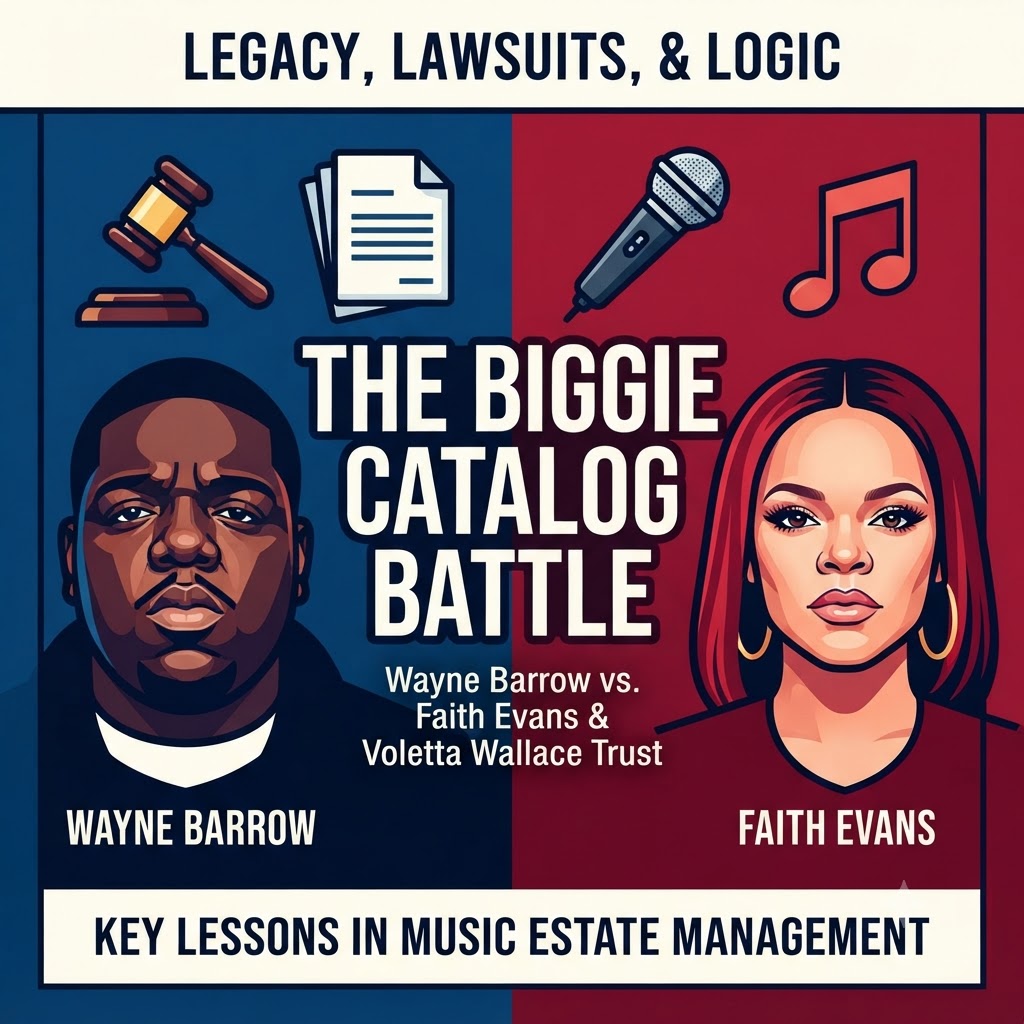
Legacy, Lawsuits, and Logic: What Biggie’s Catalog Battle Teaches Us About Music Estate Management
When you talk about hip-hop royalty, few names carry the sheer weight of The Notorious B.I.G. Decades after his passing, Christopher Wallace’s catalog—anchored by monumental albums like Ready to Die and Life After Death—remains the gold standard. But with multi-million-dollar valuations come high-stakes legal battles.
Lately, the industry has been glued to a massive legal showdown involving Biggie’s longtime former manager, Wayne Barrow, and the late rapper’s widow, R&B legend Faith Evans. Centered around the estate of Biggie’s mother, the late Voletta Wallace, this courtroom fight has put a glaring spotlight on how legacy catalogs are managed, protected, and fought over.
Inside the Ruling: Barrow vs. Evans
The friction goes back to the corporate structure of Notorious B.I.G. LLC, which was set up years ago by Voletta Wallace and Faith Evans to handle the icon’s intellectual property. Things came to a head following a major catalog partnership with Primary Wave.
After Mama Wallace passed away, it came to light that she had amended her trust to name Wayne Barrow as her sole successor trustee. Barrow quickly filed suit, claiming Faith Evans was withholding financial distributions that rightfully belonged to Voletta’s trust.
In a sharp 16-page ruling, Delaware Chancery Court Chancellor Kathaleen St. J. McCormick sided with Barrow. Leaning into a bit of hip-hop history, the judge invoked Biggie’s own “Ten Crack Commandments”—specifically the rule to keep family and business separate—noting that this clash was almost inevitable when relatives and massive corporate assets mix.
Ultimately, the court ruled that the Voletta Wallace trust is a legitimate member of the LLC and is entitled to its 25% share, ordering the release of withheld funds. While other family estate disputes are still working their way through the courts, this ruling is a massive turning point for the catalog’s administration.
Why This Matters for Independent Artists
It’s easy to look at a high-profile Delaware court case and write it off as something that only affects superstar estates. But the core lessons from the Barrow-Evans dispute apply to anyone trying to build a lasting music career:
-
You Need a Paper Trail: Estate and partner disputes almost always start when agreements are vague, rushed, or poorly documented. Protecting your work means having your paperwork airtight from day one.
-
Treat Your Music Like a Business: Whether your catalog is worth a fortune or you’re pulling in a dedicated indie fanbase, clear boundaries and transparent agreements between managers, partners, and collaborators keep everyone out of court.
-
Plan for the Future: Mama Wallace spent decades fiercely protecting her son’s legacy. Setting up proper trusts and governance early ensures your art takes care of the people you care about instead of turning into a legal headache.
Secure Your Legacy: Build a Searchable Track Record
If the battle over Biggie’s estate proves anything, it’s that keeping a clear history of your music, rights, and milestones is more important than ever. You don’t need a major buyout on the table to start running your career like an enterprise.
If you’re an independent artist looking to lock in your history, build industry credibility, and get your work noticed, you need a verifiable paper trail. You can build a permanent, searchable paper trail for your music catalog through our music review submission page (https://itshiphopmusic.com/submit/music-review/).
Final Thoughts
The modern catalog gold rush has turned timeless verses into corporate assets. While the drama surrounding Biggie’s estate is a textbook warning about mixing family with business, it’s also a reminder of the sheer, generational power of great music. Make sure your business is as solid as your catalog.