The Mobb Deep Estate Lawsuit: Why Rappers Need a Music Catalog Will & Trust
For over thirty years, Prodigy and Havoc were practically synonymous with Queensbridge royalty. You couldn’t mention one without the other. Yet almost a full decade after Prodigy passed away in 2017, the Mobb Deep legacy is tangled up in a messy federal lawsuit.
Filed in late October 2026 by Prodigy’s widow and estate executrix, Ikesha Dudley, the complaint accuses Havoc of pocketing millions from more than 170 Mobb Deep shows, merch runs, and trademark deals, while demanding the return of Prodigy’s master recordings. Havoc has pushed back hard against the claims, setting the stage for an ugly courtroom fight over who really owns the Mobb Deep name and catalog.
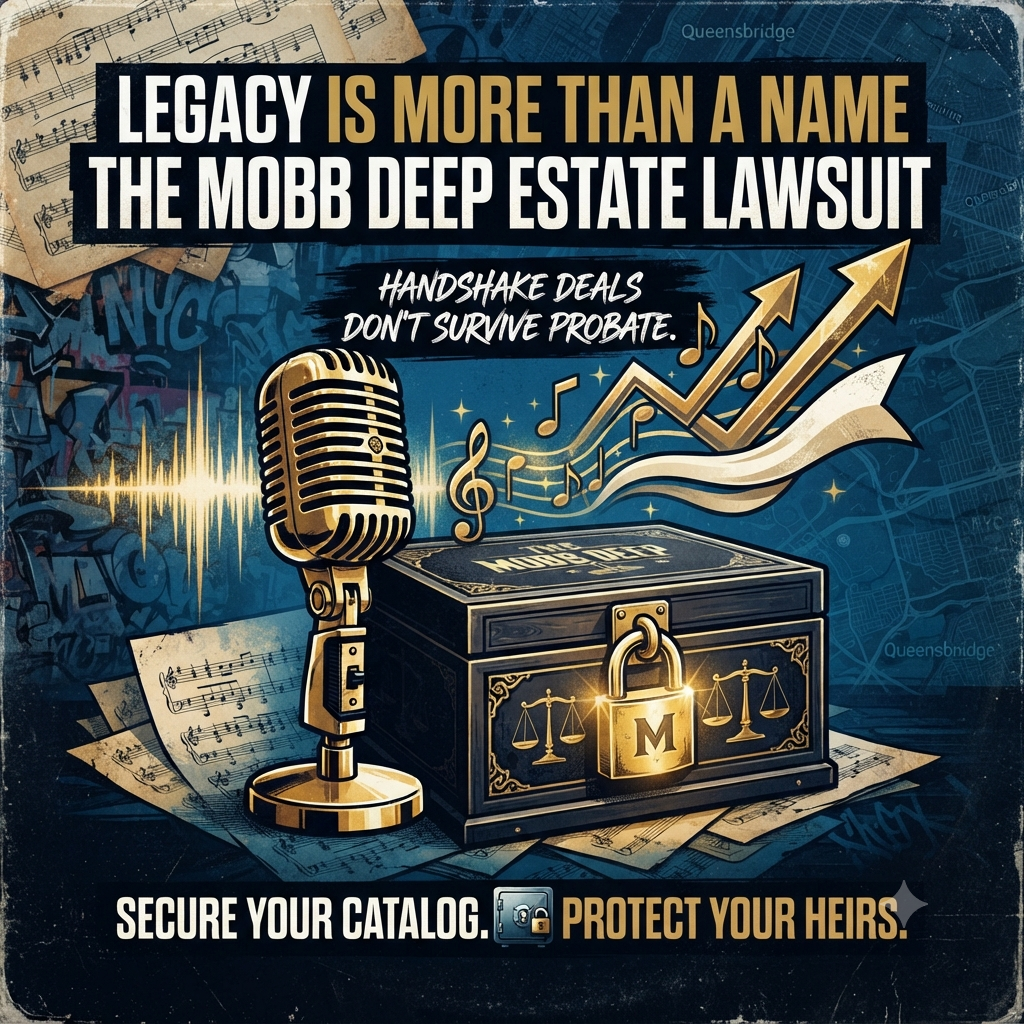
It’s a tough thing to watch if you grew up on The Infamous. More importantly, if you’re an independent rapper or producer uploading tracks from a home studio today, it’s a massive wake-up call. Handshake deals and “we’re brothers, we’ll figure it out” agreements fall apart the second probate court gets involved. Getting serious about estate planning for musicians and rap catalogs isn’t just for legacy acts with platinum plaques—it’s the only way to make sure your family actually gets paid when you aren’t around to chase down the checks.
What the Mobb Deep Lawsuit Teaches Independent Artists
Back in the 1990s, Prodigy and Havoc built Mobb Deep on a straightforward understanding: group money gets split 50/50. Things got complicated after Prodigy died. Havoc kept touring under the Mobb Deep banner, selling shirts, and keeping the brand alive on stages around the world.
Here is where things go sideways in the music business. When one partner dies without an updated operating agreement or a music trust spelling out how post-mortem touring, group trademarks, and unreleased masters work, gray areas turn into million-dollar lawsuits.
For independent artists, the fallout happens even faster. If you pass away without clear paperwork, your distributor and PROs don’t just automatically wire money to your mom or your kids. Usually, they freeze the accounts until a court tells them who is legally in charge. Your catalog sits in limbo, nobody can clear a sample or approve a sync deal, and your family is stuck paying a probate lawyer out of pocket just to access money you already earned.
Why a Basic Will Won’t Save Your Music Catalog
A lot of artists think downloading a free will template online means they’re covered. It doesn’t. A standard will still has to go through probate—which is slow, expensive, and completely public.
While your estate is stuck in probate court:
-
Your royalty checks stall: Streaming distributors and Performance Rights Organizations (PROs) routinely hold payouts if ownership is unclear or someone contests the will.
-
Sync deals walk away: Music supervisors for TV shows, movies, and video games work on tight deadlines. If your family can’t sign off on a license within 48 hours because a judge hasn’t signed off on the estate, that placement goes to another artist.
-
Everyone sees your business: Probate filings are public record. Anyone can look up what your catalog is worth and who is getting paid.
The smarter move is setting up a Revocable Living Trust paired with a dedicated Music LLC that holds your copyrights. A trust skips probate completely. You name a successor trustee—ideally someone who actually understands how music royalties work—who can step in on day one, keep collecting checks, and manage your catalog without waiting on a judge.
The 4 Things Every Music Trust Needs to Cover
If you want your family to control your catalog without hiring a team of litigators, your estate plan needs to lock down four specific areas.
1. Master Recording Ownership and Split Sheets
Your masters are usually the biggest long-term asset you own, and they are also the easiest thing for someone else to claim if your paperwork is sloppy. Every single track you drop needs a signed split sheet saved before it goes live on DSPs. Inside your trust documents, spell out:
-
Which masters you own 100% outright versus records you co-own with a label or partner.
-
Exact backend percentages owed to producers, engineers, and featured artists.
-
Where the actual files live—meaning the physical hard drives, cloud folders, WAV files, and track stems for both released songs and vault records.
2. Publishing Shares and Royalty Registrations
Even if you signed away your masters, your publishing—the lyrics, melodies, and beat composition—pays out every time a song streams, hits radio, or gets played live. Don’t make your family play detective trying to track down missing pennies. Put your IPI number, writer/publisher splits, and login info on file for:
-
Your PRO: ASCAP, BMI, SESAC, or GMR.
-
Mechanicals: The MLC (Mechanical Licensing Collective) and Harry Fox Agency.
-
Neighboring Rights: SoundExchange (especially crucial if your music gets spin on SiriusXM, Pandora, or internet radio).
3. Passwords, Logins, and Two-Factor Authentication
Think about where your music business actually lives right now. It’s behind two-factor authentication on your phone. If something happens to you tomorrow and nobody knows your passcode, your family is locked out of DistroKid, TuneCore, BeatStars, YouTube Content ID, and your Stripe or PayPal payouts.
Never put raw passwords inside a will, because wills become public documents. Instead, put every login, recovery code, and banking connection inside an encrypted password manager like 1Password or Bitwarden. Then leave emergency access instructions for your trustee inside a private Letter of Instruction that stays with your trust.
4. Group Agreements and Posthumous Vault Rules
If you’re in a duo, a collective, or a tight-knit producer-rapper partnership, get an LLC operating agreement signed while everyone is still on good terms. As the Mobb Deep case shows, surviving partners and grieving families rarely see eye to eye on what happens next. Put rules in writing covering:
-
Whether a surviving member can tour or sell merch using the group name.
-
Who owns the group trademark.
-
Who gets final say over releasing unfinished verses or beats from the hard drive after you’re gone.
Quick Reference: Your Catalog Protection Checklist
| Asset Category | What to Document | Where to Store It |
| Master Recordings | Track titles, ISRC codes, hard drive locations, distributor contracts | Music LLC / Revocable Trust |
| Publishing | IPI numbers, signed split sheets, PRO & MLC account details | Music LLC / Revocable Trust |
| Digital Logins | Distributor accounts, YouTube CMS, BeatStars, payout portals, 2FA backup codes | Encrypted Password Vault + Letter of Instruction |
| Brand & Group Rights | Trademarks, duo/band agreements, merch splits, posthumous release rules | Operating Agreement + Trust Provisions |
Build a Catalog Worth Passing Down
You can’t protect a catalog you haven’t built yet. Treating your music like a real business means handling the unglamorous legal stuff—copyrights, splits, and trusts—right alongside growing your audience. As you get your paperwork in order and lock down your ownership, keep pushing your records forward to build a valuable, long-term music catalog and expand your fanbase with our curated artist promotion networks.
Ready to Take Your Music Career Seriously?
Convert casual listeners into dedicated superfans. Secure your growth plan with our Artist Submission Services.
Don’t Leave Your Legacy Up to a Judge
The Mobb Deep lawsuit is a rough reminder that thirty years of history and classic records won’t protect your family if the paperwork isn’t there. You put too much time into writing verses, dialing in mixes, and building a name to let your catalog get frozen in court. Sit down with an entertainment and estate attorney, put your masters, publishing, and logins into a proper trust, and make sure your family keeps every dollar you worked for.