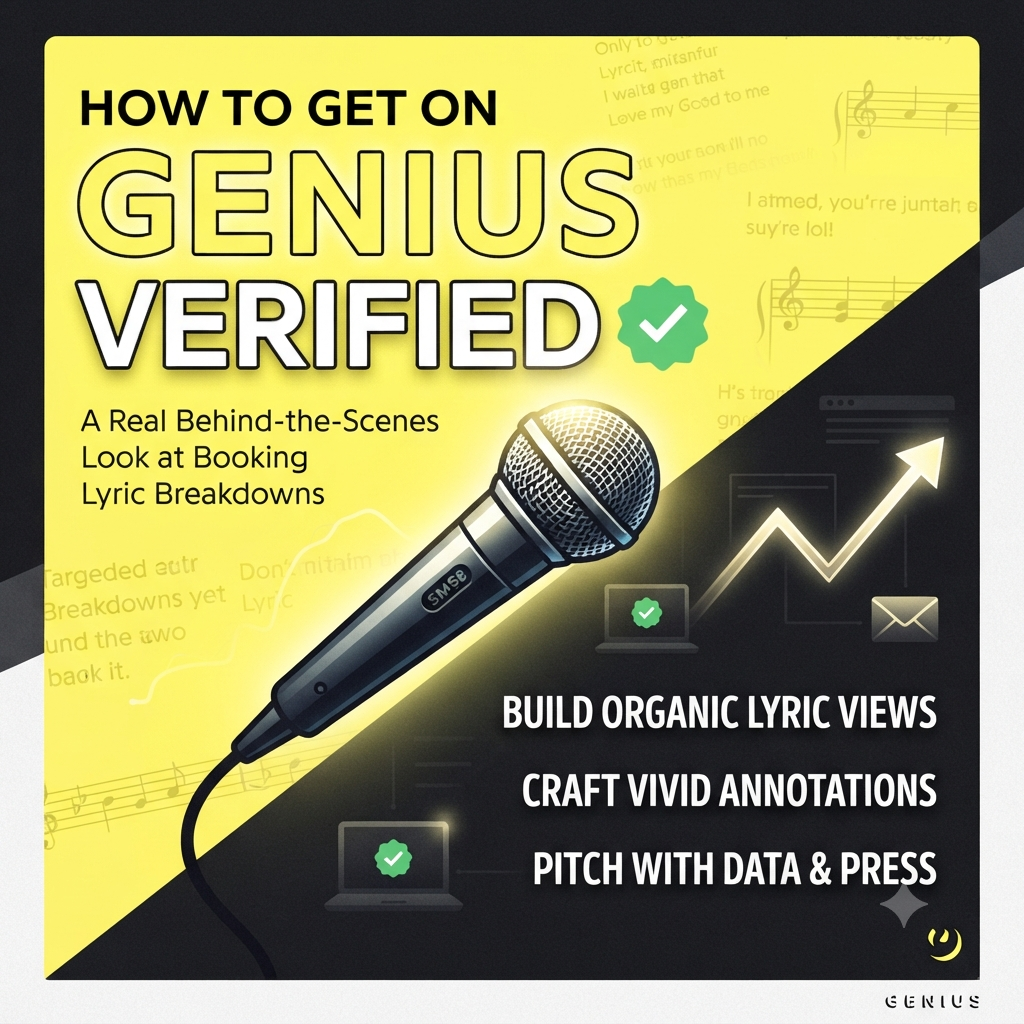
How to Get on Genius Verified: A Real Behind-the-Scenes Look at Booking Lyric Breakdowns
If you make hip-hop or R&B, standing in front of that bright yellow backdrop with a handheld mic is probably somewhere on your bucket list. It is one of those rare media moments that feels like a legitimate rite of passage. Naturally, independent artists spend hours typing how to get on Genius Verified into Google, hoping to find a secret submission form or a direct email to a producer.
Here is the truth that most music marketing blogs won’t tell you: there is no magic portal, and buying fake Spotify streams won’t get you booked.
Genius is not a traditional music magazine looking for favors to hand out. At its core, Genius is a massive search engine and data company built around music lyrics. When their editorial team books a rising artist for Verified or On The Come Up, they are making a calculated bet based on audience curiosity, search volume, and storytelling potential. If you want to get on their radar, you have to stop pitching yourself like a fan and start feeding the exact metrics their producers look at every single morning.
Stop Treating Genius Like an Afterthought on Release Day
Most independent artists put 99% of their release-day energy into Spotify pre-saves, Instagram Reels, and TikTok snippets. Meanwhile, their Genius page sits completely empty for weeks until a random listener decides to transcribe the song—usually getting half the lyrics wrong.
If you want to understand how to get on Genius Verified, you have to treat your Genius lyric page with the same urgency as your DSP uploads. Before a Genius producer ever books an emerging artist, they pull up that artist’s internal platform numbers. They want to see proof that people are actively typing your song title into Google followed by the word “lyrics.”
Here is how you build that internal momentum from day one:
-
Upload your own lyrics the minute the song drops: Don’t wait for the community to do it. Create an account, paste in the exact, properly formatted lyrics, and double-check every line. Make sure your song credits—producers, engineers, featured artists, and sample credits—are completely filled out.
-
Send traffic directly to your Genius page: During release week, switch up your call-to-action. Instead of only dropping a Linktree to streaming platforms, share a direct link to your Genius page on your Instagram Story or X account. Tell your listeners to pull up the lyrics while they run the track back.
-
Watch your page view counter: Genius displays total page views right near the top of the song page. When an independent track quietly racks up 5,000, 10,000, or 25,000 lyric views without major-label backing, it triggers internal alerts on Genius’s trending charts. That organic curiosity is the exact spark that makes an editor click play on your record.
Claim Your Verified Account and Drop Real Annotations
Once people are actually landing on your lyric page, you need to give them a reason to stay there. A plain wall of text does nothing to show off your personality. Long before a camera crew ever puts a mic in your hand, Genius watches how you use the platform’s core feature: annotations.
-
Get your green checkmark: Go through Genius’s official artist verification process. Link your verified social profiles, submit your official releases, and claim your artist profile. Having that verified badge immediately separates you from casual uploaders.
-
Write the annotations yourself: Highlight the three or four most important bars in your song and write authentic, first-person annotations. Don’t just restate what the line means in boring dictionary terms. Share what was actually happening in the room when you wrote it. Mention the specific neighborhood block you were referencing, the studio argument that sparked the hook, or the double meaning behind a punchline.
-
Interact with community contributors: When fans or Genius editors highlight your lyrics and take a guess at what you meant, reply to them. Upvote accurate breakdowns and gently correct the ones that missed the mark.
When an editorial producer checks out your profile and sees that you are already telling vivid stories in the margins of your own songs, their job becomes ten times easier. They don’t have to wonder if you’ll freeze up on camera—you’ve already proven you know how to break down your own pen.
Pitch Songs With Dense Wordplay, Not Just Club Hooks
One of the biggest mistakes artists make when pitching Genius is leading with their most radio-friendly, repetitive club single. A track with a catchy four-word chorus might do great numbers in a DJ set, but it makes for terrible television when you have to stand under studio lights and recite it a cappella for three minutes.
Verified thrives on dense wordplay, regional slang, cultural references, and vulnerable storytelling. Producers are specifically hunting for songs where an artist can pause mid-verse, smirk at the camera, and unpack a bar that flew right over half the audience’s head on the first listen.
Think about the most memorable Verified episodes you’ve ever watched. The magic rarely comes from a singer vocalizing a generic chorus. It comes from the moment an artist explains why a specific metaphor connects to their upbringing, or breaks down a triple entendre that took them two days to write. When you are choosing which song to push toward Genius, pick the record that showcases your sharpest writing and deepest personal backstory.
Of course, internal Genius numbers and great lyrics only tell half the story. When an editor researches an independent artist, they also look for external validation to make sure you actually have a real movement happening outside of your own social feeds. You can build the verifiable media traction that attracts major lyric platforms via our music review submission page. Having legitimate hip-hop journalism and third-party editorial write-ups attached to your name gives producers the exact proof they need to pitch your name in their weekly booking meetings.
How to Approach the Genius Editorial Team Without Sounding Desperate
Once your lyric page views are moving, your artist account is verified with fresh annotations, and you have real press backing you up, you are finally in a position to reach out.
Skip the generic info@ or support@ email addresses—those inboxes are black holes. Instead, spend twenty minutes on LinkedIn or X (Twitter) looking up the actual people who run the video and editorial departments at Genius. Look for titles like Editorial Producer, Senior Video Producer, Community Manager, or Artist Relations.
When you send that email or DM, keep it short, sharp, and grounded in facts:
-
Lead with the data: Mention your song title and point out how many organic lyric views it has pulled on Genius over the last few weeks.
-
Highlight two specific bars: Paste two standout lines from the song and give a two-sentence preview of the story behind them. Show them why it will make a great 60-second clip for social media.
-
Include your press links: Drop one or two links to credible reviews or interviews so they can quickly verify your momentum.
-
Mention your travel schedule: Most Verified episodes are filmed at Genius headquarters in New York or their studio in Los Angeles, though they also run pop-up shoots during major festivals like Rolling Loud and SXSW. Let them know the exact dates you will be in New York or LA so they know booking you won’t require a massive travel budget.
Getting featured on Genius isn’t about begging for a favor. It is about building undeniable curiosity around your lyrics first, then handing their producers an easy, compelling story they know their audience already wants to hear.
Want to Build Real Press Momentum?
Tell your personal story without social media gimmicks. Submit your project via our Music Review Portal.