How to Write a Diss Track Legally Without Ending Up in Court
Beef has powered hip-hop since the park jam days. Whether it is two local MCs trading shots on SoundCloud or heavyweight superstars going bar-for-bar on streaming platforms, competition is part of the DNA of rap music. Going at another artist’s neck on wax can build buzz overnight, lock in your core fanbase, and prove your pen belongs at the top.
There is just one catch that plenty of hungry rappers overlook until a cease-and-desist lands in their inbox: the booth is not a law-free zone.
As hip-hop has grown into a massive global business, legal teams have started paying close attention to what gets said on record. Knowing how to write a diss track legally is no longer something only major-label artists with retainer lawyers need to think about. If you are an independent rapper uploading records to Spotify, Apple Music, or YouTube, crossing the line from sharp lyrical roasting into straight-up defamation can get your track pulled down, freeze your royalties, and drag you into an expensive civil lawsuit.
Here is how the law actually looks at rap beef—and how you can keep your bars ruthless without handing your opponent a legal case.
Why Defamation Law Matters in Modern Hip-Hop
When most people hear the word “defamation,” they think of shady tabloids or news anchors getting sued for lying on TV. Rarely do artists think about it while writing a sixteen. Yet under U.S. law, published song lyrics are treated just like written articles or spoken broadcasts. Written defamation is called libel, and spoken defamation is called slander. When you record a track and distribute it online, you are publishing statements to the public.
For years, a gentleman’s agreement kept rap beef strictly on wax. You took an L, went back to the studio, and wrote a better verse. That unwritten rule has faded fast. In the streaming era, diss tracks generate real money, viral clips, and brand damage—which means artists, managers, and labels are far more willing to let attorneys fight their battles when a line crosses into territory that hurts their business.
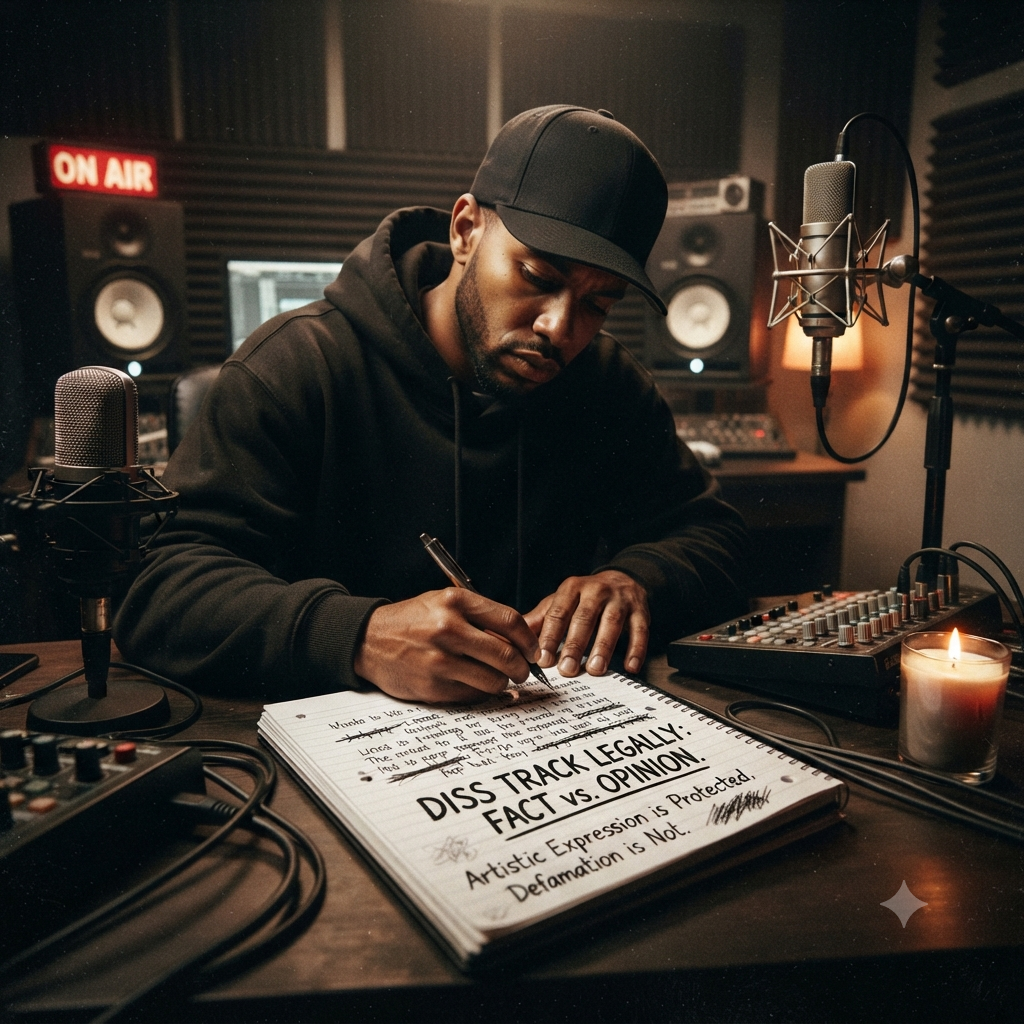
Understanding how to write a diss track legally comes down to one core distinction that judges look at every single time a lyric ends up in court: opinion and hyperbole versus provable statements of fact.
Protected Trash Talk vs. Actionable Lies
Courts are not completely out of touch with how hip-hop works. Judges generally understand that rap is built on bravado, exaggeration, metaphor, and over-the-top insults that nobody listening is supposed to take literally. That gives MCs a wide lane to work in—as long as you stay inside it.
What the Law Usually Protects
-
Rhetorical Hyperbole: Ridiculous exaggerations and cartoonish threats fall under protected artistic expression. Saying an opponent’s career is “dead,” claiming you “body” them on every track, or using wild battle-rap imagery is recognized as figurative language, not a literal confession or threat.
-
Pure Opinion: You have every right to clown someone’s music, style, and credibility. Calling another rapper “washed,” saying their flow sounds stolen, mocking their fashion, or claiming they fell off cannot be proven true or false in a courtroom. That is subjective commentary, and the First Amendment protects it.
-
Parody and Mockery: Mimicking a rival’s voice, ad-libs, cadence, or public persona to make them look foolish is standard fare in hip-hop and generally safe from defamation claims.
Where MCs Get Into Legal Trouble
You step out of that safe zone the second your verse stops sounding like an insult and starts sounding like a news report. If you accuse someone of a specific, provably false real-world act that wrecks their reputation or costs them money, you are in defamation territory.
The biggest danger zones include:
-
False Accusations of Serious Crimes: Throwing around fake allegations of murder, sexual assault, domestic abuse, fraud, or trafficking is the fastest way to catch a lawsuit. Under a legal rule called defamation per se, falsely accusing someone of a serious crime is considered so harmful on its face that the person suing does not even have to prove they lost money to win damages.
-
Fake “Snitch” or Informant Claims: Calling someone a rat in a general, figurative way is common slang. However, fabricating specific claims that an artist cooperated with federal investigators, signed proffer agreements, or testified in a real criminal case crosses into factual territory—and carries massive real-world and financial consequences.
-
Made-Up Business and Money Lies: Claiming an artist or executive stole publishing splits, ran off with show deposits, or is secretly bankrupt when none of it is true can trigger lawsuits from both the artist and their business partners.
-
False Claims About Private Health or Misconduct: Spreading fabricated rumors about someone’s medical status or severe personal scandals serves no artistic protection if it is presented as fact.
The “Actual Malice” Rule and Why “Allegedly” Won’t Save You
If you are dissing an established rapper, producer, or label executive, the law treats them as a public figure. That works in your favor to a degree, because public figures have to clear a much higher bar to win a defamation case.
They cannot just prove your lyric was false and embarrassing. They have to prove actual malice—meaning you either knew the statement was a lie when you recorded it, or you acted with reckless disregard for the truth because you simply did not care whether it was real or not. Basically, if you invent a career-ruining lie out of thin air just to make a viral TikTok moment, you are handing them actual malice on a silver platter.
Another trap rappers fall into is thinking a single word acts like a bulletproof vest. Tossing “allegedly,” “I heard,” or “word on the street is” in front of a false accusation does not automatically protect you. Courts look at the overall impression your bars leave on an average listener. If the context makes it sound like you are spilling real dirt rather than cracking a joke, phrasing it like a rumor will not make a lawsuit disappear.
How to Keep Your Diss Track Deadly Without Catching a Case
Some of the greatest diss records in hip-hop history never needed fake rumors to do permanent damage. When you study classic battle records, the sharpest angles always target things the listener can actually see, hear, and verify.
-
Go After Their Craft and Authenticity: Tear apart their delivery, predictable rhyme schemes, watered-down commercial pivot, or lack of originality. Attacking an artist’s credibility in the booth cuts deeper than gossip and stays firmly inside protected opinion.
-
Lean Into Wordplay and Metaphor: Double entendres, flip schemes, and layered punchlines do two things at once—they impress real hip-hop listeners, and they make it clear to any outsider reading the lyric sheet that you are writing poetry, not sworn testimony.
-
Stick to Public Receipts: If your opponent has public court records, embarrassing interview clips, failed rollouts, or documented contradictions, use them. Truth is an absolute defense against defamation. If a claim is backed by verifiable facts, they cannot win a defamation suit over it.
-
Watch the Cover Art and Promo Rollout: Many artists clean up their verses and then ruin everything with the single artwork or YouTube thumbnail. Photoshopping a rival onto fake court paperwork, doctoring mugshots, or posting defamatory captions on Instagram during promo week can trigger the exact same legal heat as the song itself.
-
Clear Your Beats and Samples: A diss track only works if it stays live. Even if your lyrics are completely legal, dropping a freestyle over an uncleared industry beat or an unauthorized vocal sample gives the other side an easy copyright strike to nuke your record off every platform within hours.
Before you lock in your final mix and start plotting your rollout, keep your competitive records sharp and get them reviewed objectively via our music review submission page.
Quick Pre-Release Sanity Check Before You Upload
Once the studio session wraps and the adrenaline cools down, take ten minutes to read your lyrics like a lawyer instead of a fan:
-
Circle every factual claim: Look at each bar where you say the other person did something specific in real life. If you had to prove that line next week, could you? If not, rewrite it as a metaphor or an opinion.
-
Check for collateral damage: Did you name-drop a manager, girlfriend, family member, or business associate who is not a celebrity? Private citizens do not have to prove actual malice, making it far easier for them to sue over false bars.
-
Read your distributor’s terms: Almost every digital distributor includes an indemnity clause in the fine print. That means if your track sparks a legal battle, you are on the hook for every dollar of legal fees—not the platform hosting your music.
A great diss track wins the crowd, shifts momentum, and stands the test of time on replay value. Keep your focus on better beats, tighter flows, and sharper angles, and you will win the battle without ever stepping foot inside a courtroom.
Ready for an objective breakdown of your latest project? Submit your track via our Music Review Page.