How to Send Beats to Major Rappers’ Engineers Without Getting Blocked on Instagram
If you are still dropping SoundCloud links into the direct messages of platinum-selling rappers, you might as well be yelling into an empty parking lot. Major artists almost never check their own message requests. Their managers are swamped, and their A&Rs have three thousand unread emails sitting in their inbox from producers all doing the exact same thing.
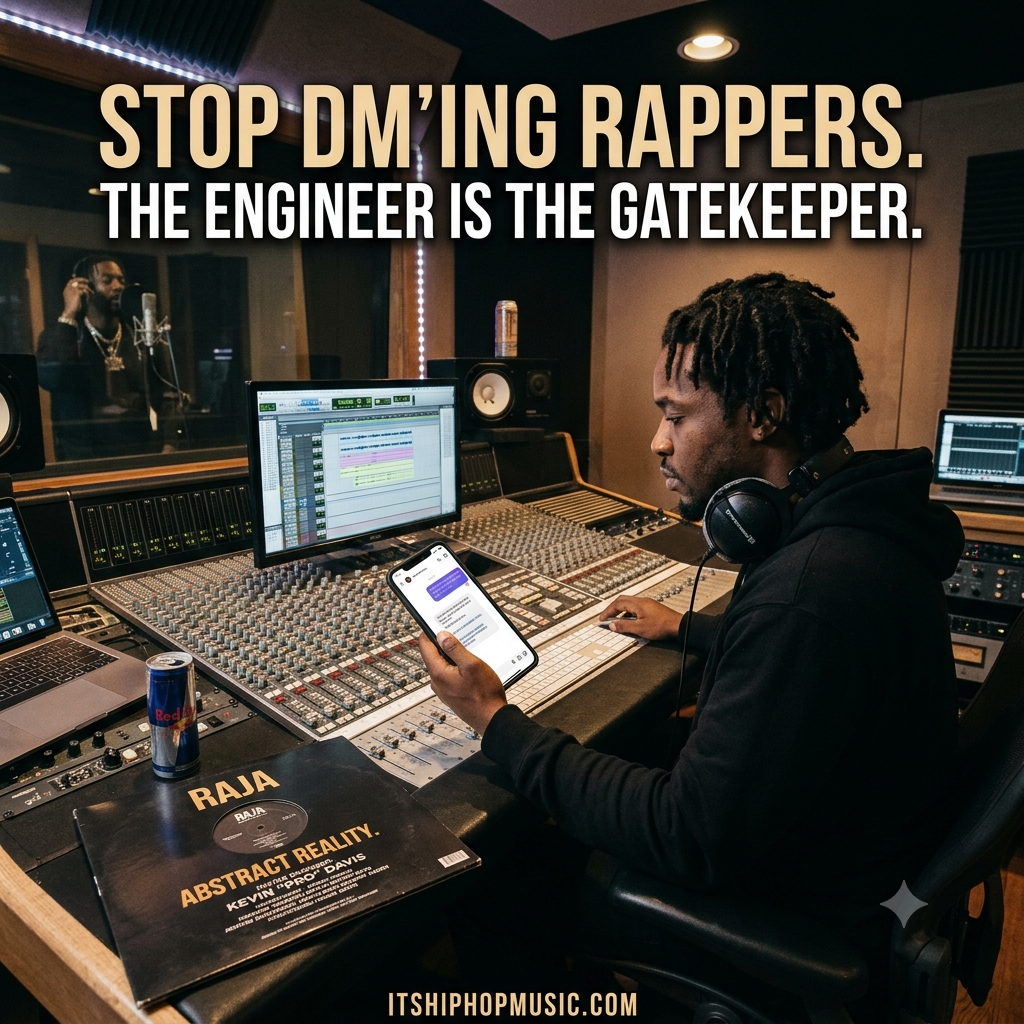
The people who actually control what gets played in the room are sitting behind the mixing console. Learning how to send beats to rappers engineers is easily one of the smartest moves an independent producer can make. Recording and mixing engineers are the ones building the Pro Tools sessions, setting up the mic chain, and pulling up instrumentals at three in the morning while the artist paces around the booth trying to catch a pocket. When a trusted engineer vouches for your sound, your beats bypass the A&R bottleneck completely.
Here is the catch, though: studio engineers are fiercely protective of their time, their hard drives, and their Instagram DMs. One lazy, copy-pasted pitch will get your account restricted or blocked before you even get a second chance. If you want your packs downloaded and played in real sessions, you have to approach them like a working professional, not a fan begging for a placement.
Why Studio Engineers Are the Real Gatekeepers
Think about how a real major-label studio session actually goes down. Nobody is sitting around holding a formal board meeting to pick beats. Usually, an artist shows up late, smokes a bit, gets comfortable, and turns to their main recording engineer and says, “Yo, pull up something dark with some heavy 808s,” or “Play me whatever new bounce you got.”
In that exact ten-second window, the engineer opens a folder on their desktop. That folder is filled with beats from a small circle of producers they trust—producers whose files never crash a session, whose mixes don’t clip the master bus, and who don’t act weird on social media.
Unlike label executives who care about your follower count or who else you have worked with, engineers care about audio quality, speed, and zero headaches. If you send them a beat that knocks cleanly right out of the box and leaves plenty of room for vocals, you just made their late-night shift easier. Do that consistently, and they will keep playing your records.
Step 1: Track Down the Right Engineers Using Liner Notes
Before you start sliding into DMs, make sure you are messaging the right person. Do not rely on random Instagram tags under a snippet video, because half the time those tags are wrong or outdated. Go straight to the verified digital liner notes on streaming platforms:
-
Spotify: Open any recent release from the artist you want to work with, click the three little dots next to the song title, and hit View Credits. Write down the names listed under Recording Engineer, Mixing Engineer, and Assistant Engineer.
-
Apple Music: Tap the three dots on any track and choose View Credits to see the full studio breakdown.
-
Genius & Discogs: Check a few different albums by that same artist on Genius or Discogs. You are looking for patterns—the engineer who has been with the artist across three straight projects is much more valuable to connect with than someone who only mixed a single feature verse.
A quick insider tip: do not sleep on assistant engineers and house engineers at major recording studios like PatchWerk, Jungle City, or Criteria. Lead Grammy-winning mixers get bombarded daily, while the assistant engineer setting up the mics every night is way more approachable—and they are standing right next to the artist for twelve hours a day.
Step 2: Show Real Love Before You Ever Mention a Beat
Once you find the engineer’s Instagram profile, put your beat links away for at least a week or two. Cold-DMing a stranger with a link is the fastest way to land in the hidden spam folder where messages go to die.
Instead, build a tiny bit of normal human familiarity first:
-
Watch their Instagram Stories and reply occasionally when they post something specific—like an outboard compressor, a late-night studio plate, or a monitor setup.
-
Drop a real comment on a post celebrating a recent album placement. Skip the generic fire emojis and say something an actual audio person would notice, like how clean the vocal pocket sits on track six.
-
Never, under any circumstances, write “Check DM” or “Need beats?” in their public comments. That is an instant block for almost every working engineer.
After a couple of weeks of light, genuine interaction, your profile picture won’t look like a spam bot when you finally send a message.
Step 3: Put Together a Tight 3-Beat Private Folder
When you are ready to send music, how you package the files matters just as much as the drums. Never send raw MP3 files directly inside Instagram chat, never send massive fifty-beat Google Drive dumps, and never use WeTransfer links that expire in three days while the engineer is out on tour.
Set up a clean, private Disco or Dropbox link with strictly three beats that actually fit the pocket of the artist they record. Three beats is the sweet spot: it takes less than two minutes for an engineer to skim through on their phone, and it shows you took time to curate your best work instead of dumping your whole hard drive on them.
Make sure every single file follows basic studio etiquette:
-
Clean File Names: Label your tracks like
MidnightRun_144BPM_Fmin_@YourHandle.mp3. Engineers search their hard drives by BPM and key during sessions; if your file is namedfinal_mix_v4_NEW.mp3, it will get lost forever. -
320kbps MP3s First: Send high-quality 320kbps MP3s in your initial pack so they load fast on studio Wi-Fi and phones. Keep your tracked-out WAV stems organized and ready to send the second they ask for them.
-
One Tag, Plenty of Headroom: Put one clean producer tag right at the start of the beat, then let the music breathe. Repeating your tag every eight bars ruins the artist’s writing flow in the booth. Also, pull your master limiter back so the beat sits around -3dB to -6dB of headroom. Engineers hate trying to record loud vocals over a beat that is already squashed to zero.
Step 4: Send a Short, Respectful DM That Gets Opened
Engineers check their phones between vocal takes, usually while someone is rolling up or rewriting a verse. They do not have time to read four paragraphs about your life story or how hard you grind. Keep your message under four short sentences:
“Yo [Name], been loving the vocal clarity you got on [Artist’s Recent Song]. I put together a quick 3-pack of dark, spacious joints tailored for your sessions with [Artist]—all labeled with BPM/key and plenty of headroom. Mind if I drop the private Disco link here or shoot it over to your email?”
Look at why this simple message works so well. First, it shows you actually pay attention to their craft. Second, mentioning BPM tags and headroom tells them immediately that you know how a studio operates. Third—and most importantly—you are asking permission before pasting a URL, which keeps your message out of Instagram’s automated link filter.
Habits That Will Get You Blocked Immediately
Even talented beatmakers ruin good connections by ignoring unwritten studio rules. Steer clear of these common mistakes:
-
Sending follow-up guilt trips: If an engineer sees your message or downloads your pack and doesn’t reply, leave it alone. Sometimes they save beats for a session three months later. Sending “Yo did you listen yet?” two days later guarantees they delete your folder. Wait at least a month before sending a fresh three-pack.
-
Naming files after other rappers: Sending a file titled
Future Type Beatinto a major studio session looks amateurish. Give your records real song titles. -
Neglecting your public presence: Before an engineer downloads anything from a stranger, they are going to tap on your profile to make sure you are legitimate. If your page looks inactive or lacks real releases, they will hesitate to bring your files into a high-profile session. Make sure you build the verified producer credibility that gets your beat packs opened via our complete artist marketing packages.
-
Tagging twenty engineers on a Reel: Mass-tagging studio staff in your beat videos just clogs their notifications and signals that you are desperate for attention.
Networking in hip-hop is a long game built on trust and consistency. Treat studio engineers like busy peers, keep your files organized, and let your sound speak without the spam.
Ready to Get Your Production Heard Worldwide?
Give your production releases global visibility. Apply via our Artist Submission Form.