Drake to Coachella 2027? The Real Cost of Festival Exclusivity and Radius Clauses
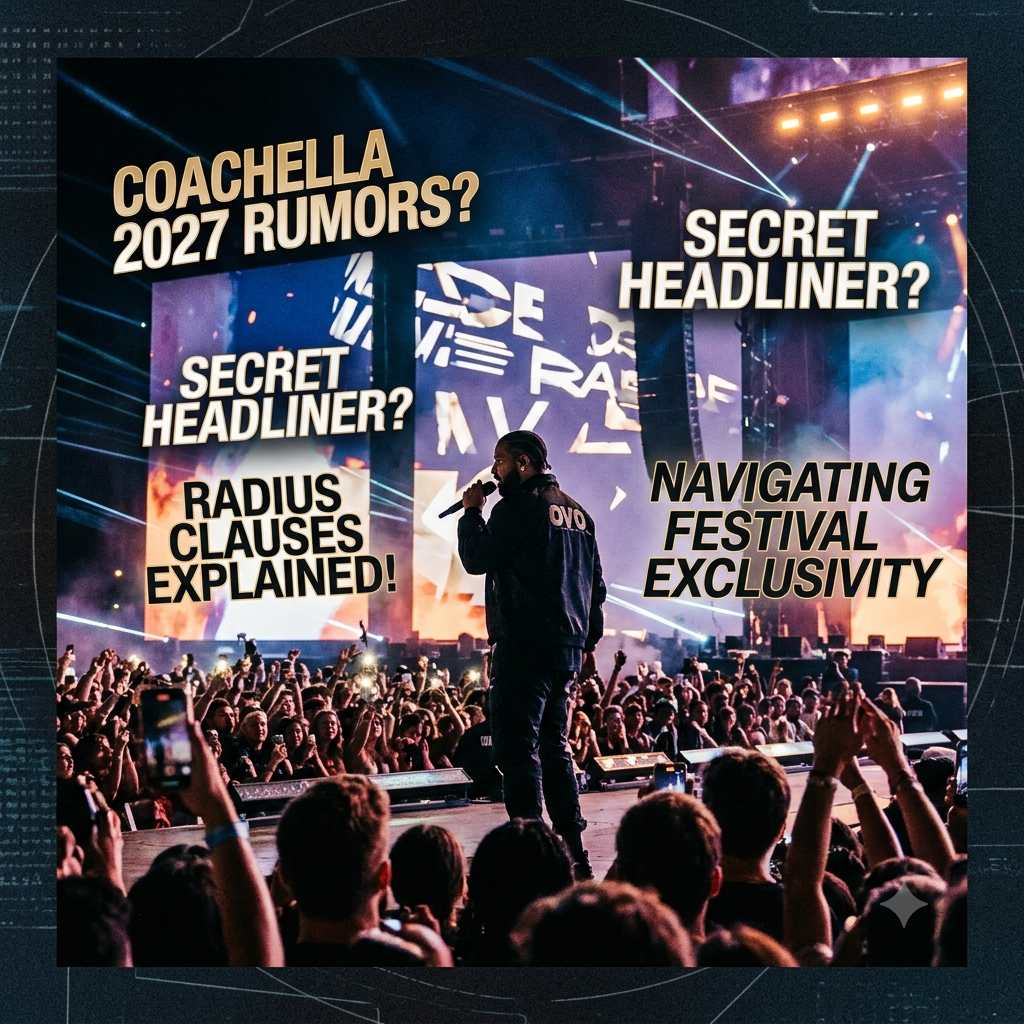
Every couple of months, the live music internet loses its collective mind over a new festival rumor. The latest rumor making the rounds involves Drake, a rumored “secret headliner” slot, and a potential return to the desert for Coachella 2027.
Whether Drake actually steps onto the Sahara or Main Stage in 2027 remains unconfirmed, but the conversation surrounding his potential booking highlights how high-stakes festival bookings operate behind closed doors.
Behind every headliner announcement—or secret guest rumor—lies a complex web of radius clauses, multi-million-dollar performance guarantees, and non-disclosure agreements (NDAs). These contracts govern how live touring operates at the highest level.
Understanding these mechanisms provides valuable insights for indie artists, venue managers, and music marketers aiming to navigate regional performance restrictions and build sustainable touring careers.
1. What Is a Festival Radius Clause and How Does It Work?
At its core, a radius clause is a restrictive covenant built into a performance contract. It prevents an artist from playing, announcing, or promoting another concert within a specified geographical distance of the festival for a set period before and after the event.
                  [ FESTIVAL EXCLUSIVITY WINDOW ]

  Pre-Festival Blackout          Event         Post-Festival Blackout
|------------------------|  [ FESTIVAL ]   |------------------------|
    Dec 15 - April            April 2027           April - May 8
     (No Regional              Indio, CA            (No Unannounced
    Show Announcements)                            Regional Concerts)
Promoters like Goldenvoice (Coachella), Live Nation, or C3 Presents (Lollapalooza, Austin City Limits) use radius clauses to safeguard their box office investments. If a fan living in Los Angeles can see Drake at the Crypto.com Arena in March for a standard ticket price, they are far less likely to spend $600+ on a festival pass in Indio come April.
Key Components of Modern Exclusivity Clauses
-
Geographic Distance: Standard mid-tier festivals often request a 50- to 100-mile blackout radius. Top-tier festivals like Coachella can demand blackout zones spanning 300 to 500 miles—frequently encompassing major touring markets like Los Angeles, San Diego, Las Vegas, and Phoenix.
-
Time Blackouts: Exclusivity windows usually take effect 90 to 180 days before the festival and extend 30 to 60 days after the last set finishes.
-
Announcement Lockouts: Even if an artist plans to play a regional venue after the festival blackout window expires, radius clauses routinely ban them from publicly announcing those future dates until the promoter gives the green light.
2. Guarantees vs. Market Freedom: The Financial Math
When an A-list act considers a major festival slot, their management weighs the upfront guarantee against the opportunity cost of frozen regional markets.
| Metric | Festival Headline Booking | Standalone Arena / Stadium Tour |
| Payout Structure | Lump-sum multi-million-dollar flat fee | Ticket sales split + merch revenue share |
| Market Access | Locked out of surrounding regional markets for months | Flexible routing across adjacent cities |
| Production Costs | Shared festival infrastructure & logistics | Artist team covers 100% of stage production |
| Brand Impact | Mass global streaming reach & cultural splash | High targeted fan engagement per market |
Securing a headlining act under strict exclusivity requires massive financial compensation to offset the revenue lost by bypassing nearby venues during the blackout window.
For smaller, independent touring acts, accepting aggressive radius clauses without securing an adequate performance fee can create financial strain. Signing away rights to perform in major cities surrounding a festival can limit revenue opportunities during a crucial touring run.
3. Secret Headliners, Guest Spots, and Air-Tight NDAs
The persistent rumors surrounding “secret headliners” or unannounced surprise appearances stem from strategic marketing and non-disclosure clauses.
Promoters strategically utilize surprise elements for three specific reasons:
-
Driving Resale and Secondary Hype: Maintaining an element of mystery fuels continuous press coverage, keeping ticket demand high across secondary marketplaces right up to show day.
-
Protecting Artist Tour Timelines: Controlled pop-up appearances allow headliners to deliver a high-profile performance without prematurely disrupting their own standalone arena tour rollouts.
-
Building Festival Lore: Iconic, unannounced guest sets create lasting cultural moments that strengthen the festival’s brand equity long after the weekend ends.
4. Practical Takeaways for Emerging Artists
While multi-million-dollar headliner contracts operate at the peak of the touring economy, the underlying legal and strategic principles apply across every tier of the live music business.
Negotiate Your Radius Limits
Don’t accept a promoter’s default contract template without reading the fine print. If a festival is in Philadelphia, negotiate to ensure your blackout radius doesn’t prevent you from booking profitable shows in New York City or Baltimore.
Secure Written Exemptions
If you host a regular local residency, headline an annual hometown event, or have an existing venue deal within the blackout area, establish explicit, written exemptions in your contract before signing.
Align Live Performance with Distribution Strategy
Use live exclusivity periods to focus on digital growth. When performance restrictions prevent local touring, direct your energy toward music releases, content marketing, and expanding your online reach.
Building a long-term music career requires balancing live performance strategies with digital distribution. You can prepare your live performance business for high-tier festival scrutiny using our complete artist marketing packages (https://itshiphopmusic.com/submit/artist-submission/).
Give Your Releases Global Visibility
Ready to build momentum for your music and expand your reach across major platforms?
Apply via our Artist Submission Form to share your latest tracks directly with our curation and promotional team.