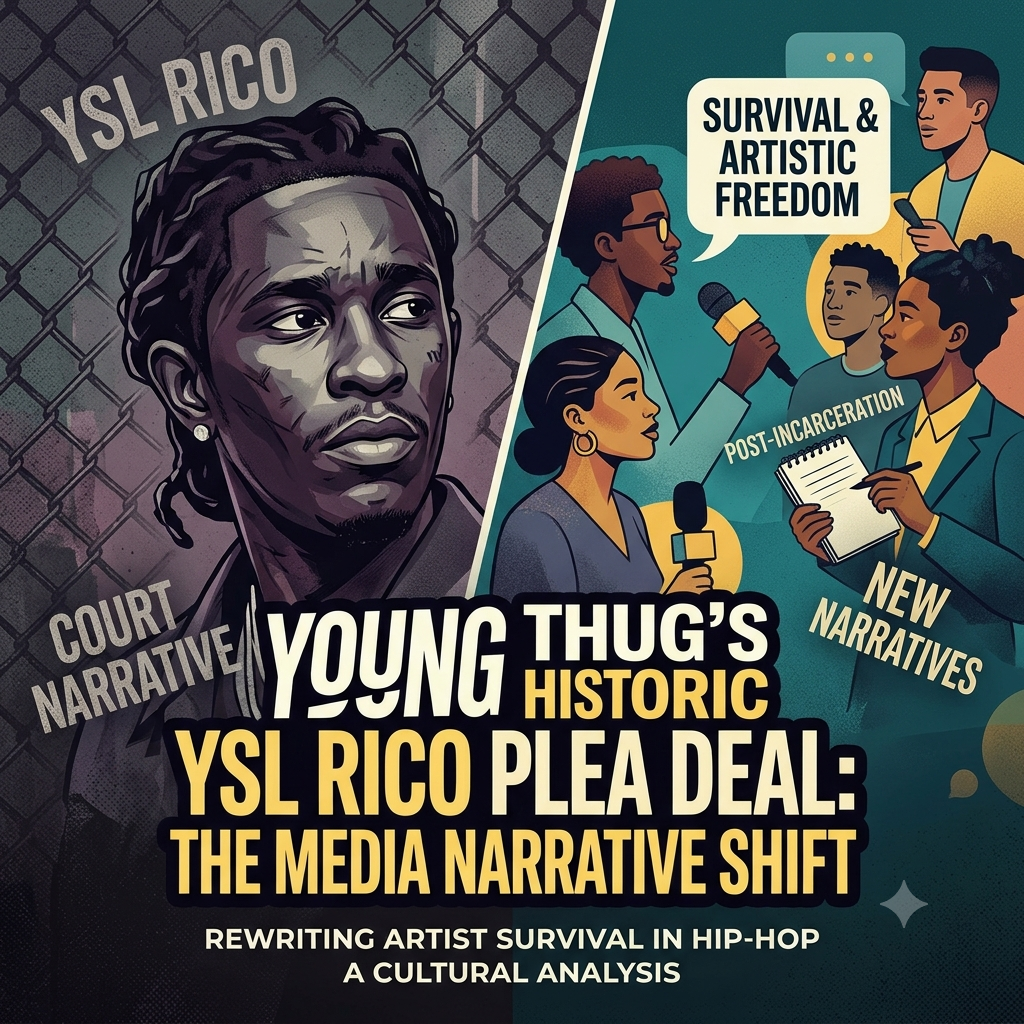
Young Thug’s Historic YSL RICO Plea Deal: The Media Narrative Shift
On October 31, 2024, the longest criminal trial in Georgia state history came to a sudden, dramatic halt. Jeffery Williams, known globally as Young Thug, walked out of a Fulton County courtroom after accepting a non-negotiated “blind” guilty plea. Facing a staggering recommendation from prosecutors of 45 years—25 to be served in prison and 20 on probation—Williams placed his fate entirely in the hands of Judge Paige Reese Whitaker. The result was a sentence of time served and 15 years of probation.
The verdict ignited immediate shockwaves across the music industry. But once the initial social media frenzy settled, a fascinating shift occurred within music journalism and cultural commentary. The reporting didn’t just cover the courtroom logistics; it transformed the conversation around rap culture, artist survival, and creative expression. Analyzing how hip-hop media reframed Young Thug’s plea reveals a broader evolution in how society evaluates legal strategies, rap lyrics as evidence, and what it truly means for an artist to reclaim their narrative post-incarceration.
1. Dismantling the “Snitching” Stigma for Pragmatic Survival
For decades, hip-hop commentary was trapped in an uncompromising binary. According to traditional street ethics, an artist facing state charges had only two choices: fight the government to the bitter end or face permanent career exile for taking a deal. This rigid “code of silence” left little room for nuance, often celebrating martyrdom over personal freedom.
When the YSL RICO indictment first came down in 2022, critics and blog comment sections immediately began speculating about who would “fold” under state pressure. Yet as co-defendants accepted various plea agreements over the 2.5-year trial, the surrounding media commentary underwent a noticeable maturation. Outlets stopped focusing solely on street morality and began looking closely at the legal mechanics of state overreach.
                 TRADITIONAL vs. MODERN MEDIA FRAMING

Traditional Street Binary             Modern Pragmatic Coverage
─────────────────────────             ─────────────────────────
• Rigid "Code of the Street"          • Priority on bodily freedom
• Plea deals framed as betrayal       • Non-negotiated tactics praised
• Sensationalized court drama         • Deconstruction of RICO overreach
Young Thug’s decision to take a non-negotiated plea marked a turning point in this conversation. By entering a blind plea, Williams did not testify against any co-defendants, nor did he cooperate with the state’s prosecution strategy against others. He simply took personal accountability for specific counts to secure his immediate release.
Hip-hop journalism embraced this distinction. Major music publications, podcasts, and video essayists reframed the outcome not as a compromise, but as a tactical victory. The coverage prioritized bodily freedom and survival over outdated street tropes, proving that preserving an artist’s life and voice is far more vital than playing into a self-destructive ideal.
2. Rap Lyrics on Trial: The Battle for Creative Freedom
One of the most alarming aspects of the Fulton County prosecution was the systematic weaponization of artistic expression. The prosecution’s indictment cited rap lyrics, music video visuals, social media posts, and performance imagery as literal evidence of criminal conspiracy.
This tactic put creative freedom itself in the crosshairs. If an actor playing a mobster isn’t charged for their lines in a movie, why should an auteur recording a rap song face criminal charges for their verses?
                           ARTISTIC EXPRESSION IN THE COURTS

       Traditional Prosecution                       Modern Media Response
  ┌───────────────────────────────┐             ┌───────────────────────────────┐
  │  Literalizes rap metaphors    │ ──────────► │  Pushes for legislative acts  │
  │  Uses lyrics as gang evidence │             │  (e.g., RAP Act protection)   │
  │  Criminalizes fiction & art   │             │  Defends studio storytelling  │
  └───────────────────────────────┘             └───────────────────────────────┘
The media coverage surrounding Young Thug’s plea catalyzed a national debate on the criminalization of Black art:
-
Deconstructing Metaphor: Legal analysts and hip-hop writers documented how prosecutors took hyperbole, hyper-local slang, and standard genre tropes, presenting them to a jury as sworn confessions of real-world violence.
-
Legislative Action: Coverage amplified national legislative pushes—including the Restoring Artistic Protection (RAP) Act—aimed at severely limiting the admissibility of creative work in state and federal criminal trials.
-
The Post-Plea Shift: During his sentencing address, Williams spoke directly to the court about how his perspective had grown through two years of incarceration: “I’m older, I’m grown now. I’m smarter. It’s more things to rap about.” Journalists pointed out that his words challenged the prosecution’s reductionist view of his character, asserting that an artist’s past work does not define their future capacity for growth.
3. Walking the 15-Year Probationary Tightrope
While stepping out of jail was a clear win, post-plea journalism quickly turned its lens toward the strict conditions governing Williams’ next 15 years. Probation in high-profile criminal cases is rarely simple, and for a global touring artist, the terms carry massive operational and creative hurdles.
                                PROBATIONARY TERMS

  ┌───────────────────────┐    ┌───────────────────────┐    ┌───────────────────────┐
  │  15-Year Probation    │    │  Atlanta Travel Ban   │    │  Youth Presentations  │
  │  Strict supervision   │ ──►│  Restricted access    │ ──►│  4x yearly community  │
  │  & mandatory testing  │    │  to hometown core     │    │  anti-gang lectures   │
  └───────────────────────┘    └───────────────────────┘    └───────────────────────┘
The conditions of Young Thug’s probation require careful navigation:
-
Travel Bansi: Williams is prohibited from entering the Greater Atlanta area for 10 years, with very narrow exceptions for family events, medical emergencies, or approved anti-gang community work.
-
Community Service Obligations: He must return to the Atlanta area four times a year to deliver live presentations aimed at educating youth about the dangers of gang activity and gun violence.
-
Association Restrictions: He is barred from contacting known gang members or former co-defendants (with exemptions for his brother and musical collaborator Gunna, restricted to professional business only).
Music journalists are actively watching how these boundaries will shape his recording process. Being barred from his hometown—the very epicenter of his creative community—forces a structural pivot in how he creates music, collaborates with producers, and connects with his core audience. Coverage is no longer just tracking court dates; it is evaluating how artists maintain their signature sound and narrative authority under long-term legal scrutiny.
Taking Control of Your Own Narrative as an Artist
The media frenzy surrounding the YSL RICO trial offered a masterclass in why public perception matters. Left unchecked, mainstream coverage can easily reduce an artist’s life and creative output to sensationalized headlines, court transcripts, and tabloid speculation.
To build a career that lasts, independent creators cannot rely on third parties to tell their stories. You have to actively build your own paper trail—one that documents your artistic growth, highlights your resilience, and presents your music on your own terms. Whether you are navigating an unexpected setback, pivoting your sound, or releasing your next project, taking ownership of your narrative is the most powerful move you can make.
Establishing an authentic media presence gives you the platform to set the record straight before others do it for you. Creators can build an authoritative media paper trail that focuses on your artistic resilience on our hip-hop music review blog.
✍️ Build Lasting Media Credibility
Let your music and integrity speak for itself. Submit your release for a Guaranteed Blog Feature & Music Review.