How to Hack Spotify Daylist: Naming Singles & Metadata Strategy for Micro-Mood Search
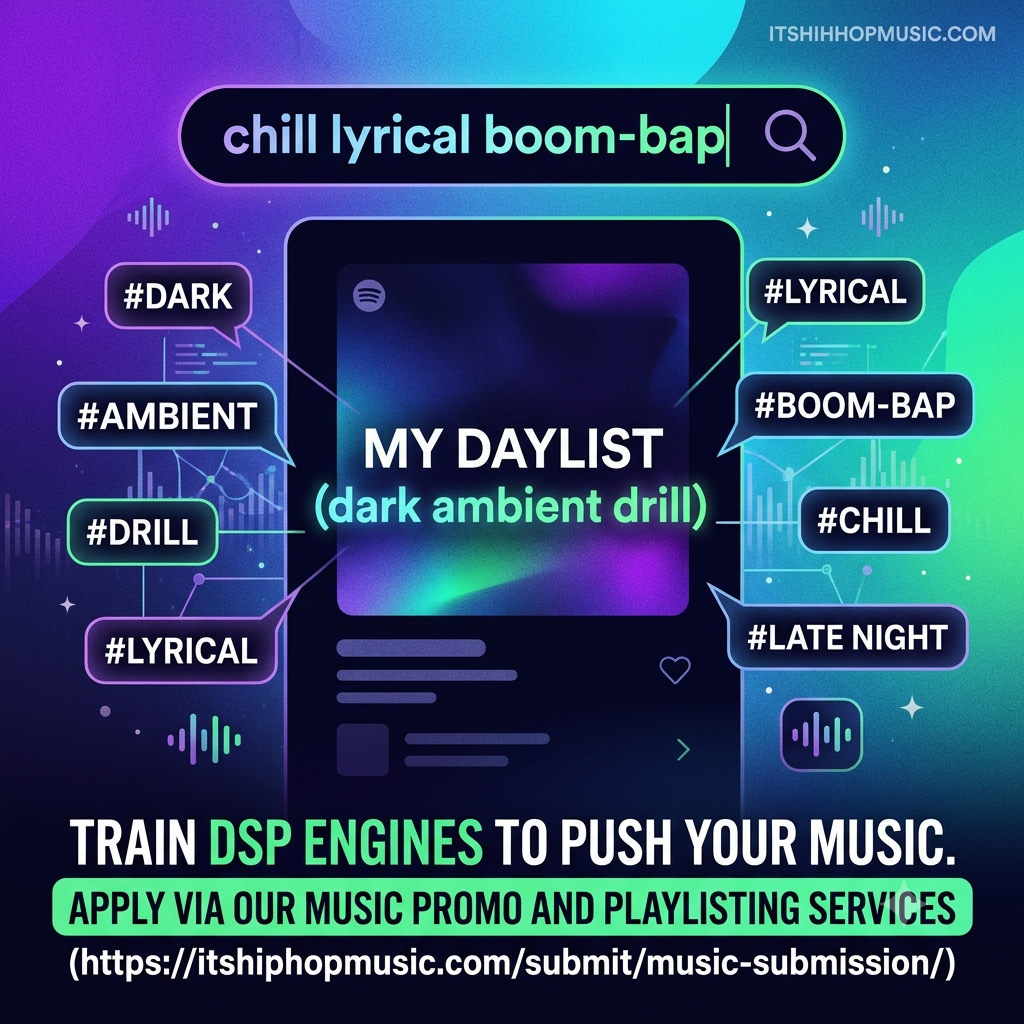
If you’ve opened Spotify anytime recently, you’ve probably noticed your homepage dominated by absurdly specific, hyper-personalized playlist titles: “dark ambient drill early afternoon,” “chill lyrical boom-bap late night,” or “melancholic bedroom pop Monday morning.”
Welcome to Spotify’s Daylist.
Unlike Discover Weekly or Release Radar, which refresh once a week based on broad listening habits, Daylist updates multiple times throughout the day. It adapts dynamically to a user’s exact mood, time of day, and ultra-niche sub-genre preferences.
For independent artists, producers, and label teams, Daylist represents a massive shift in how listeners discover music. Listeners aren’t just searching for generic terms like “hip-hop” or “sad songs” anymore—they are searching for dynamic micro-moods.
If you want Spotify’s recommendation algorithms to push your music into these high-converting Daylist slots, you need to rethink your single titles and metadata strategy. Here is how to format your tracks to tap directly into Spotify’s micro-genre web.
What Actually Drives the Spotify Daylist Algorithm?
To optimize for Daylist, you have to understand how Spotify catalogs audio. Spotify doesn’t just rely on human editorial tags; it uses Natural Language Processing (NLP) and machine learning models to analyze multiple data vectors at once:
-
Acoustic Fingerprinting: Automated analysis of your audio file—measuring valence (positivity/negativity), energy, tempo, danceability, and acousticness.
-
Text Scraping & NLP: Scanning track titles, metadata, artist bio copy, lyrics, web articles, press releases, and user-generated playlist names.
-
Listener Micro-Clustering: Grouping users by their specific listening habits during distinct windows of the day (e.g., late-night studying vs. morning workouts).
When Spotify generates a Daylist title like “chill lyrical boom-bap,” it pulls together tracks that sit at the intersection of those specific acoustic properties and text descriptors. If your metadata lacks these precise micro-tags, your music gets left out of the rotation.
Strategy 1: Smart Title Formatting & Sub-Titles
Your primary track title is your main artistic statement, but adding subtle context via parentheses or subtitle formatting gives automated scrapers and real listeners instant context without ruining your aesthetic.
Spotify’s search engine operates much like Google: exact-match and semantic text queries play a huge role in what surfaces first.
Practical Naming Conventions
-
The Micro-Genre Descriptor:
Song Title (Lyrical Boom-Bap Version) -
The Atmospheric Tag:
Song Title (Dark Ambient Remix) -
The Functional Cue:
Song Title (Chill Lo-Fi Instrumental)
By including these functional tags in your official metadata, you significantly increase the likelihood of indexing when users type non-traditional, mood-based queries directly into the search bar. To maximize your reach and ensure your tracks get placed in front of active listeners, you can align your track’s metadata with listener habits through our specialized Spotify playlist submission services.
Strategy 2: Mastering the Spotify for Artists Editorial Pitch
The pitch form inside Spotify for Artists isn’t just for human editors reviewing songs for official playlists. Every piece of data you select in that form acts as foundational metadata for the algorithmic recommendation engine.
When pitching your release (at least two weeks before drop date), follow these guidelines:
1. Avoid Broad Parent Genres
Selecting “Hip-Hop” or “Electronic” is too vague. Drill down into specific sub-genres whenever possible—such as East Coast Boom-Bap, Underground Rap, or Trip-Hop. The narrower your initial tag, the easier it is for the algorithm to categorize your sound profile accurately.
2. Match Moods Authentically
You can pick up to two moods in the pitch portal. Choose moods that genuinely reflect the sonic wave of the track. Tagging a track as both “Chill” and “Energetic” confuses the algorithm, leading to lower confidence scores and fewer algorithmic pushes.
3. Write NLP-Friendly Pitch Copy
Use your 500-character description box strategically. Instead of writing general PR fluff like “This is my best single yet,” include specific sound-alike artists, production descriptors, and micro-genres:
“An atmospheric boom-bap track featuring dark ambient pads, crisp low-pass filtered drums, and introspective, lyrical storytelling. FFO: Joey Bada$$, Earl Sweatshirt, and Loyle Carner.”
Strategy 3: Cross-Platform Metadata Alignment
Spotify doesn’t evaluate your music in a vacuum. Its web scrapers continuously cross-reference third-party platforms to verify genre classifications and build higher algorithmic trust.
If your track is tagged as “Boom-Bap” on Spotify but listed as generic “Pop” on Apple Music or described as “Trap” in your press releases, the algorithm loses confidence in its tagging.
-
Distribution Data: Keep metadata entries identical across your distributor (DistroKid, TuneCore, CD Baby, etc.), including sub-genres and contributor roles.
-
Music Databases: Add your releases to open databases like MusicBrainz and Genius with precise sub-genre annotations.
-
Social & Web Copy: Use targeted micro-genre tags in your YouTube descriptions, TikTok captions, and blog write-ups (
#DarkAmbientDrill,#ChillBoomBap). Consistent text associations across the web validate your track’s niche in Spotify’s graph.
Daylist Metadata Blueprint
Here is a quick breakdown comparing traditional single metadata against a Daylist-optimized approach:
| Asset / Metadata Field | Generic Approach | Daylist-Optimized Strategy | Target Micro-Tags |
| Track Title | Night Drive | Night Drive (Dark Lyrical Boom-Bap) | dark, lyrical, boom-bap |
| Distributor Sub-Genre | Hip-Hop / Rap | Alternative Rap / Underground | alt-rap, underground |
| Spotify Pitch Description | “New rap single out now!” | “Introspective lyrical rap featuring dark ambient synth pads and lo-fi boom-bap drums.” | ambient, lo-fi, introspective |
| Sound-Alike References | Drake, Kendrick Lamar | Earl Sweatshirt, Mavi, Mach-Hommy | underground, lyrical, chill |
Building Long-Tail Streams with Micro-Mood Optimization
Streaming discovery has moved past static catalog searches. Today’s listeners rely on dynamic, contextual feeds that adapt to what they are doing right now—whether working out, studying, or winding down at 2 AM.
By aligning your single titles, editorial pitches, and digital footprint with specific micro-genre tags, you stop waiting for random viral spikes and start building a steady stream of high-intent listeners delivered directly by Spotify’s Daylist engine.
Train DSP recommendation engines to push your music. Apply via our Music Promo and Playlisting Services.