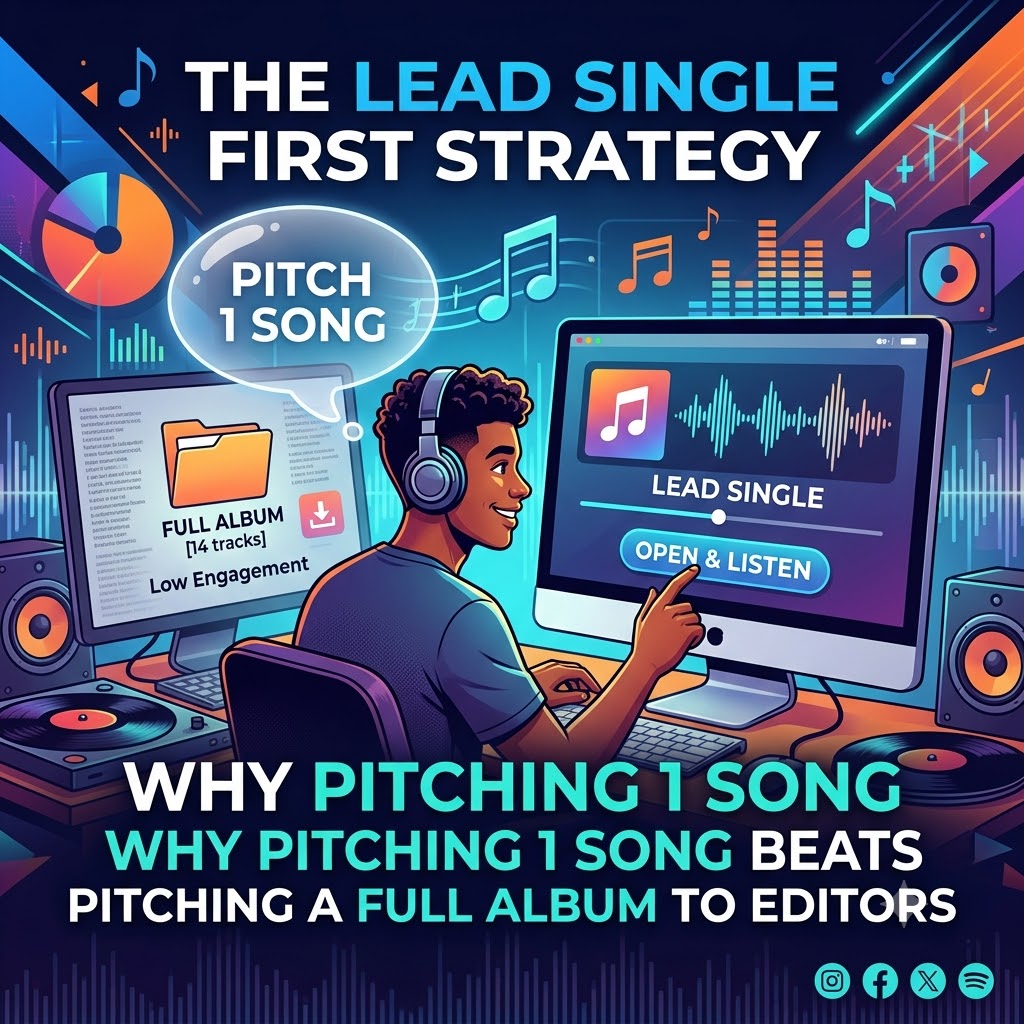
The Lead Single First Strategy: Why Pitching 1 Song Beats Pitching a Full Album to Editors
Ask almost any independent artist what their dream release looks like, and they’ll tell you the same thing: dropping a massive 14-track project into the world. You spent months in the studio, poured your life into every verse, balanced the mix, and finalized the master. When the project is finally done, your natural instinct is to package up the entire album ZIP link and blast it out to every music blogger, playlist curator, and tastemaker you can find.
It feels like the right move. You want them to hear the full scope of your artistry.
However, if you look at actual press pitch response rates, this strategy almost always backfires.
If your primary goal is landing consistent blog coverage, building organic industry buzz, and actually getting writers to press play, pitching single vs album to music blogs isn’t just a minor marketing choice—it is the single biggest factor determining whether your email gets read or thrown straight into the trash.
In this breakdown, we’re unpacking why editors ignore full-length album submissions, the behavioral data behind pitch friction, and how you can use the “Lead Single First” strategy to build a rollout plan that actually converts.
The Reality of a Music Editor’s Inbox
To understand why sending a full album hurts your chances of getting covered, you have to step into the shoes of a music site editor or senior staff writer.
On any given weekday, a prominent music blog receives anywhere from 50 to over 200 email pitches. That is a staggering wall of text, download links, and press releases to wade through daily—usually managed by a small editorial team or even a single site owner who is writing, editing, and publishing on tight deadlines.
When a writer opens your email, they are instantly running a mental calculation: How much time and effort is required to evaluate this release?
Full Album Pitch Friction:
[Download 100MB ZIP] ➔ [Unzip Files] ➔ [Sort 14 Tracks] ➔ [45+ Min Commitment] ➔ High Dropout Rate

Lead Single Pitch Friction:
[Click Stream Link] ➔ [Hit Play] ➔ [3 Min Commitment] ➔ High Engagement Rate
1. The 3x Engagement Advantage of Single-Track Pitches
Data tracked across music publicists and digital editorial outlets shows a clear, consistent trend: editors open, stream, and respond to single-track pitches roughly 3x more often than full album or mixtape links.
Think about the time investment. Asking a busy editor to listen to a 14-track album requires a 45-to-60-minute window of focused attention just to figure out what your style sounds like. On the flip side, asking them to check out a single track requires less than 4 minutes. By lowering the cognitive barrier to entry, you instantly make it easier for the writer to say “yes” right then and there.
2. Choice Paralysis Destroys Unsigned Album Submissions
When you send an editor a full LP without prior established relationship, you are placing the heavy burden of curation on their shoulders.
-
Which track is the centerpiece?
-
Which song represents your current sound?
-
Which track would appeal most to their specific readership?
Unless you are already an established headliner, most writers will not take the time to hunt through 14 tracks to find your hidden gems. Pitching a clear lead single eliminates choice paralysis entirely. It points the writer directly to your sharpest material, ensuring they hear your best work on the very first take.
How to Execute the “Lead Single First” Strategy
Rather than dropping a 12-track project cold, smart indie campaigns use a staged rollout to build press momentum long before the full project lands. Here is the step-by-step blueprint to seed your album cycle effectively.
                  ┌──────────────────────────────┐
                  │ Phase 1: The Hook            │
                  │ Pitch 1 Standout Lead Single │
                  └──────────────┬───────────────┘
                                 │
                                 ▼
                  ┌──────────────────────────────┐
                  │ Phase 2: The Proof           │
                  │ Lock in Reviews & Quotes     │
                  └──────────────┬───────────────┘
                                 │
                                 ▼
                  ┌──────────────────────────────┐
                  │ Phase 3: The Payoff          │
                  │ Pitch Album with Social Proof│
                  └──────────────────────────────┘
Phase 1: Select and Pitch Your “Hook Track”
Look at your upcoming body of work and identify the single track that possesses the highest energy, strongest melody, or most captivating narrative. This is your lead single.
When drafting your email pitch, treat this track as the main event:
-
Keep streaming simple: Send a single, direct link (a private SoundCloud link, DISCO file, or unlisted YouTube video) rather than attached files or heavy ZIPs.
-
Keep the hook concise: Write a 2-to-3 sentence intro explaining the track’s vibe, production style, and story.
-
Set expectations: Clearly state that this single is the lead track teasing a larger project slated for release in the coming months.
Phase 2: Secure Editorial Proof and Co-Signs
Your main objective during the single rollout phase is gathering published reviews, editorial quote snippets, and social proof.
When trusted outlets write about your single, it creates an immediate layer of credibility. For instance, independent artists often …get your lead single evaluated by senior editorial writers through our rap blog review service to secure early editorial momentum before pitching broader media outlets.
Having concrete write-ups established early proves to other writers that your project is already generating real noise within the blogosphere.
Phase 3: Pitch the Full Album with Built-In Momentum
When your full album release date finally approaches, your follow-up pitch to writers changes completely. Instead of reaching out as an unknown artist pitching a long tracklist, you are reaching out as a proven act carrying momentum:
“Following up on our lead single ‘[Track Name]’, which was recently highlighted by [Blog Name] as ‘one of the sharpest records coming out of the underground this season,’ we’re excited to share the complete 10-track LP…”
Now, the editor isn’t staring at a risky 45-minute commitment from a stranger. They are reviewing an anticipated project backed by published reviews and validated interest.
Breakdown: Lead Single vs. Full Album Pitch Performance
To put it into perspective, here is how both approaches compare across critical pitch metrics:
| Pitch Metric | Pitching a Lead Single | Pitching a Full Album |
| Open & Listen Rate | 3x Higher Conversion | Low / Often Ignored |
| Time Needed from Editor | 3 to 4 minutes | 45 to 60 minutes |
| Submission Friction | Ultra-Low (Single stream link) | High (ZIP downloads, file sorting) |
| Core Campaign Goal | Fast adoption, quick write-ups | Deep narrative, broad context |
| Ideal Timing | 3 to 6 weeks before project drop | At or after release date |
The Bottom Line
Releasing a full album is a major achievement, but asking busy editors to dig through a massive tracklist right off the bat is a losing game. By focusing your initial outreach on one standout lead single, you respect the editor’s time, remove friction, and build the critical social proof required to make your full album release a success.
Focus on the hook first—and let the momentum carry the rest of your project.
📢 Ready to Build Real Momentum for Your Next Release?
Stop letting your best tracks get buried in an unread inbox. Get your single or upcoming project reviewed directly by our senior editorial staff.
👉 Submit your project via our Music Review Submission Portal