How to Get a Google Knowledge Panel for Rapper: The Ultimate Indie Artist Guide
You drop a new single, run your ads, push your TikToks, and finally decide to check your own progress. You type your rap moniker into Google. What pops up? Maybe an old SoundCloud link from three mixtapes ago, a random Twitter page, or worse—another artist entirely who happens to share your stage name.
If you don’t see that clean, official information box sitting proudly on the right side of your desktop search results (or top on mobile), you’re missing out on a massive trust signal. That box is a Google Knowledge Panel. It is essentially the digital industry handshake telling fans, booking agents, and record labels that you are a legitimate, verifiable force in hip-hop.
For independent artists, figuring out how to get google knowledge panel for rapper verification can feel like trying to crack a vault without the combination. Google doesn’t just hand these out because you uploaded a track to DistroKid. You have to prove your existence through a tightly woven web of digital authority.
Let’s pull back the curtain and walk through the real, step-by-step roadmap to getting your rap career officially recognized by the world’s biggest search engine.
What Actually Is a Google Knowledge Panel (And Why Should You Care)?
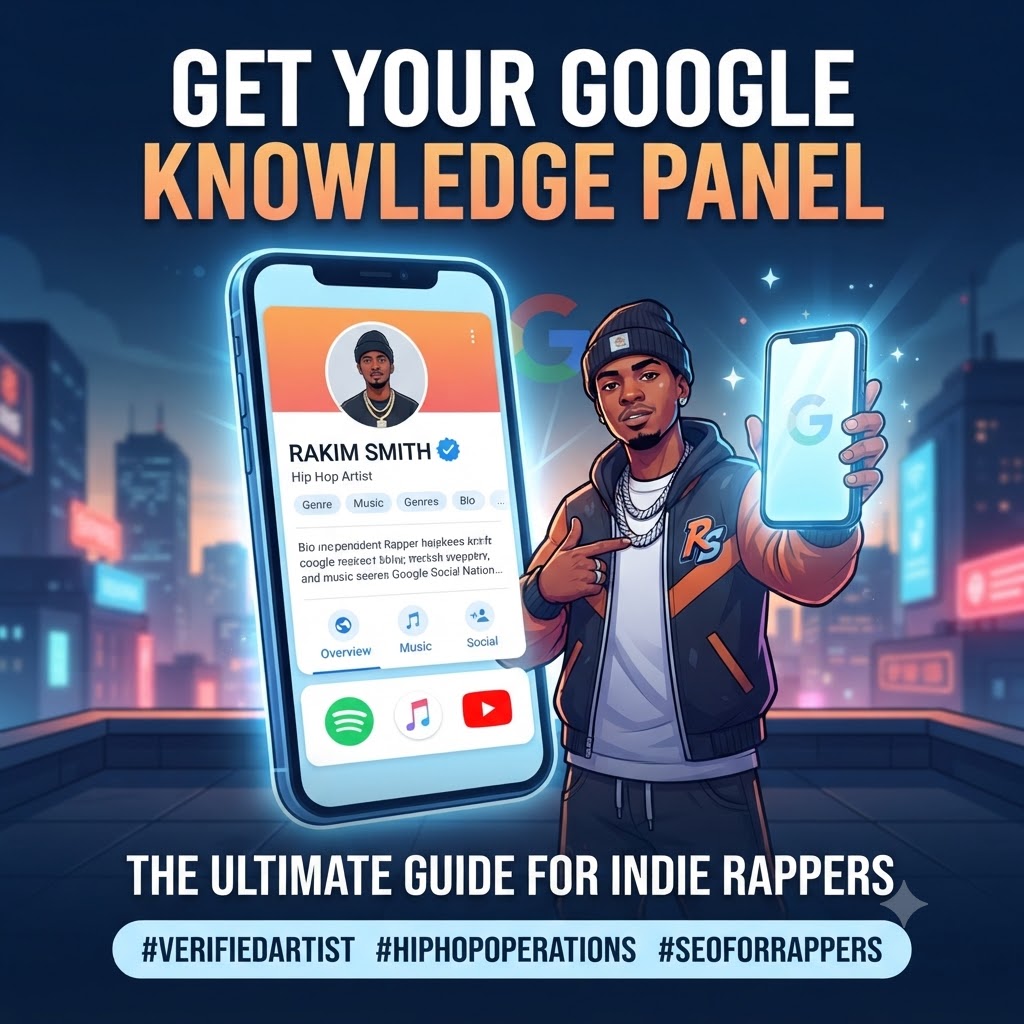
Before we dive into the execution, let’s talk about what this panel actually does for your brand. A Knowledge Panel is an automated information box powered by Google’s Knowledge Graph. It aggregates data about you—your genre, social links, bio summary, albums, and streaming profiles—into one clean widget.
For an independent rapper trying to stand out in a saturated market, having one changes the game:
-
Instant Street Cred: When a playlist curator or festival booker Googles your name and sees an official Google panel, your perceived value instantly multiplies.
-
Seamless Fan Discovery: Listeners don’t have to hunt for your links. Your Spotify, Apple Music, YouTube, and socials are right there on the search page ready for a tap.
-
Name Protection: If your rap name is similar to someone else’s, a Knowledge Panel anchors your digital identity so you stop losing streams to lookalikes.
Step 1: Lock Down Your Digital Ecosystem
Google’s algorithm doesn’t guess who you are; it reads data. If your online presence is messy, fragmented, or missing core pieces, the algorithm simply won’t connect the dots. Before you even think about requesting a panel, your foundation has to be airtight.
Claim Your Official Streaming Hubs
You need verified profiles across the heavy hitters. Make sure you have claim access to:
-
Spotify for Artists
-
Apple Music for Artists
-
YouTube Official Artist Channel (OAC)
-
Amazon Music for Artists
Clean Up Your Metadata
Are you using three different spellings of your artist name across platforms? Stop that immediately. Consistency is everything. Your artist name, high-resolution press photos, short bio, and release titles need to match across every single digital storefront.
Build a Wikidata Profile
While getting a full-blown Wikipedia page as an indie artist is notoriously difficult (and often rejected by strict Wikipedia editors), a Wikidata entry is much more attainable. Wikidata acts as a massive backend database that Google directly pulls from to populate its Knowledge Graph. Get your entry set up with clean, verifiable references.
Step 2: Secure Verifiable Third-Party Media Citations
Here is the secret most artists miss: Google doesn’t care what you say about yourself.
You can write the best bio on your Instagram, put up a gorgeous Linktree, and launch a slick website, but Google’s algorithm views self-published content with a grain of salt. To trigger a Knowledge Panel, you need external validation. You need credible third-party sources talking about your music.
This is why search engine indexing requires third-party media citations provided by published write-ups on our indie hip-hop press reviews (https://itshiphopmusic.com/submit/music-review/) hub.
When respected music blogs, culture sites, and hip-hop curators publish a review of your latest project or drop an interview with you, they create a digital paper trail. Google’s web crawlers index these articles, linking your name to real-world journalistic entities. The more reputable write-ups you stack up, the louder the signal is to Google that you are a public figure worth indexing in the Knowledge Graph.
Step 3: Optimize Your Website with Structured Data (Schema Markup)
If you have an official artist website (which you definitely should), you need to speak Google’s native language: code.
Implementing Schema Markup (specifically MusicGroup or Person schema) onto your site tells search engine crawlers explicitly who you are, what genre you make, where you’re based, and where your official social links live. It removes all guesswork for the algorithm, making it infinitely easier for Google to map out your digital footprint and eventually spin up your Knowledge Panel.
Step 4: Claim Your Panel Directly Through Google
Once your digital footprint is clean, your streaming profiles are locked down, and you’ve stacked up legitimate press write-ups, it’s time to knock on Google’s door.
-
Search Your Name: Go to Google and search your rap moniker. If a partial or stub panel already exists (sometimes Google auto-generates a basic one from random web data), look at the bottom or side for a button that says “Claim this knowledge panel” or “Feedback.”
-
Submit Your Proof: If you are claiming an existing panel or submitting feedback to trigger one, Google will ask you to verify your identity. You will need to log into a Google account and provide links to your official social channels, your streaming pages, and—most importantly—those verifiable media publications and press features we talked about earlier.
-
Be Patient: Google doesn’t move overnight. Reviewing verification requests can take anywhere from a few days to a couple of weeks. If you get rejected the first time, don’t sweat it. It usually means your third-party authority footprint just needs a bit more reinforcement. Go secure a few more press features, update your metadata, and try again.
Level Up Your Rap Career Today
Getting a Google Knowledge Panel as an independent rapper isn’t an automated cheat code—it’s a byproduct of treating your music career like a legitimate business. By tightening up your metadata, feeding the algorithm structured data, and backing up your brand with real journalism, you can transform your artist name from a hidden search query into a verified industry staple.
Stop letting your brand get lost in the noise of the internet. Build your digital authority, get your name out there, and claim your spot in the search results.