Festival Lineup Fatigue: Why Hip-Hop Fans Are Over Repetitive Rosters
Open up Instagram or TikTok during festival season announcements, and you’ll see the exact same thing across the comments: a collective sigh.
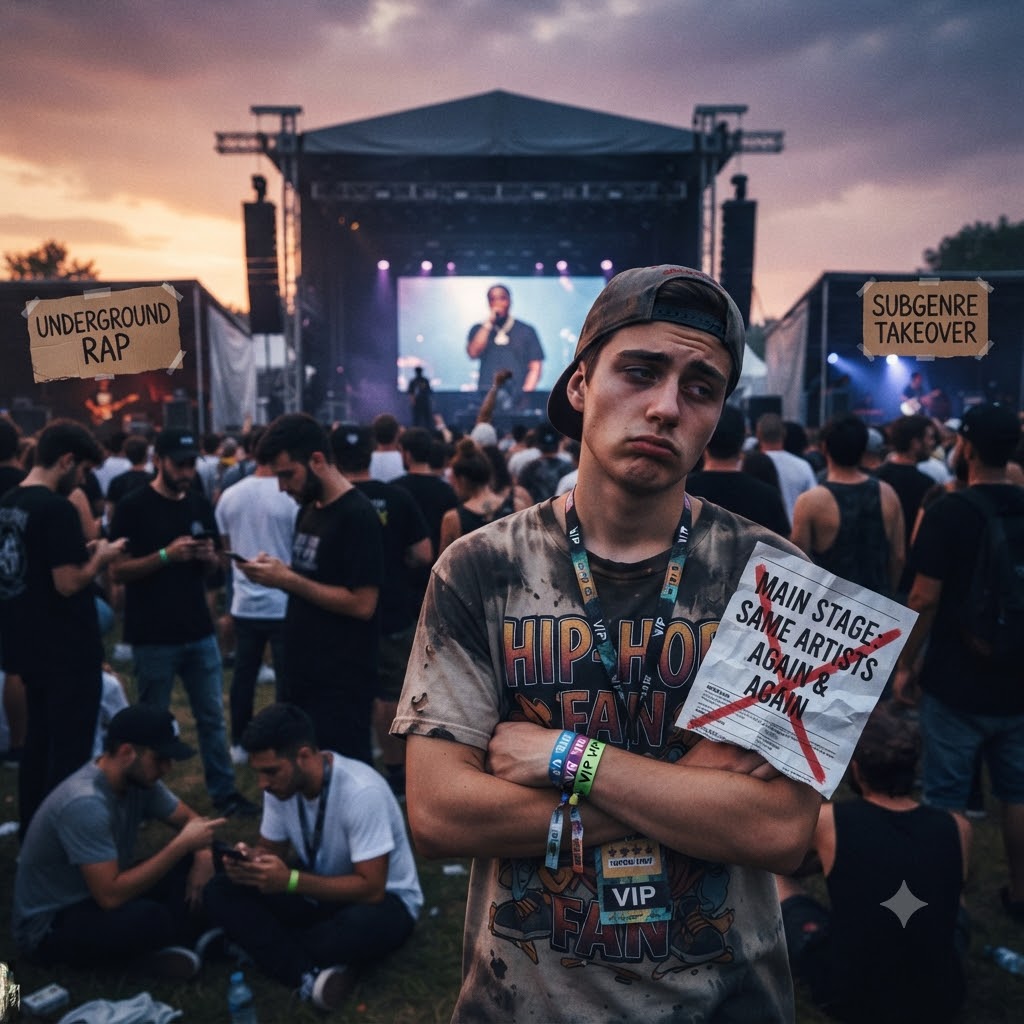
Music lovers are hitting a wall with festival lineup fatigue. While it’s happening across the board, it hits the hip-hop community especially hard. You look at a major festival poster, and it feels like a copy-paste job from last year—the same headliners, the same rotation of mainstream trap acts, and zero imagination in the curation. Hip-hop is one of the most sonically diverse cultures out there, running the gamut from gritty underground boom-bap and hyperpop-infused rage to alternative R&B and West Coast sounds. So why are festivals still treating it like a monolith?
Let’s break down why hip-hop fans are calling out repetitive festival lineups and why carving out dedicated subgenre stage slots is long overdue.
The Problem: The Copy-Paste Festival Playbook
For years, festival bookers have stuck to a lazy formula: lock down three or four massive streaming giants, fill the undercard with standard touring acts, and call it a day.
For fans who live and breathe hip-hop, this cookie-cutter approach gets old fast. When the exact same headliners bounce from festival to festival all summer long, the excitement evaporates.
-
The Headliner Monopoly: Promoters lean on the safest commercial bets, leaving zero breathing room for real innovation or up-and-coming talent.
-
Erasing Regional Flavor: Mainstream bills completely miss the underground movements bubbling up—whether that’s Detroit punchline rap, experimental east coast grit, or regional club-rap fusions.
-
Major Fan Burnout: Multi-day passes aren’t cheap. Fans are realizing they’re dropping hundreds of dollars just to watch the exact same 45-minute set list they could catch on a regular arena tour.
Why Hip-Hop Needs More Than Just a “Rap Stage”
Hip-hop isn’t a single vibe. Lumping every rap act onto one stage is like grouping heavy metal, smooth jazz, and EDM under a single umbrella and calling it a day.
Fans are speaking up because subgenre representation actually matters. A great festival should reflect how people listen to music in real life—fluidly moving between different styles and moods.
“Hip-hop culture thrives on contrast. Putting a lyricist who cares about every single bar right next to a melodic trap star or an experimental alternative artist creates actual energy. Sticking to one rigid formula just waters the whole thing down.”
Subgenres That Deserve Their Own Space:
-
Underground & Lyrical Rap: For the heads who want intricate penmanship, storytelling, and classic production rather than heavy backing tracks.
-
Rage & Hyperpop Rap: High-energy, mosh-pit-heavy sounds that need proper sound design, staging, and crowd management—things standard main stages often mess up.
-
Alternative & Jazz-Rap Fusion: Acts blending live instruments, neo-soul, and conscious lyricism need an intentional space where their musicianship can actually be heard.
How Festivals Can Fix It
If promoters want to stop the slide in ticket sales and win back cynical fans, they have to throw out the old playbook. It’s really not that complicated—they just need to pay attention to what the community is actually listening to.
-
Curated Takeover Stages: Let independent underground labels, collectives, and tastemaker platforms curate entire stages or days.
-
Show Love to the Undercard: Stop blowing the entire budget on the same recycled headliners. Spread the wealth so mid-tier, boundary-pushing artists get longer sets and better time slots.
-
Listen to the Audience: Look at actual streaming data and grassroots popularity instead of relying on safe corporate booking habits.
Where Live Hip-Hop Goes From Here
Lineup fatigue is what happens when an industry plays it way too safe. Hip-hop fans know their stuff, and they’re completely over being served the exact same musical fast food year after year. By making room for dedicated subgenre stages, festivals can stop feeling like corporate cash grabs and start feeling like actual celebrations of culture again.