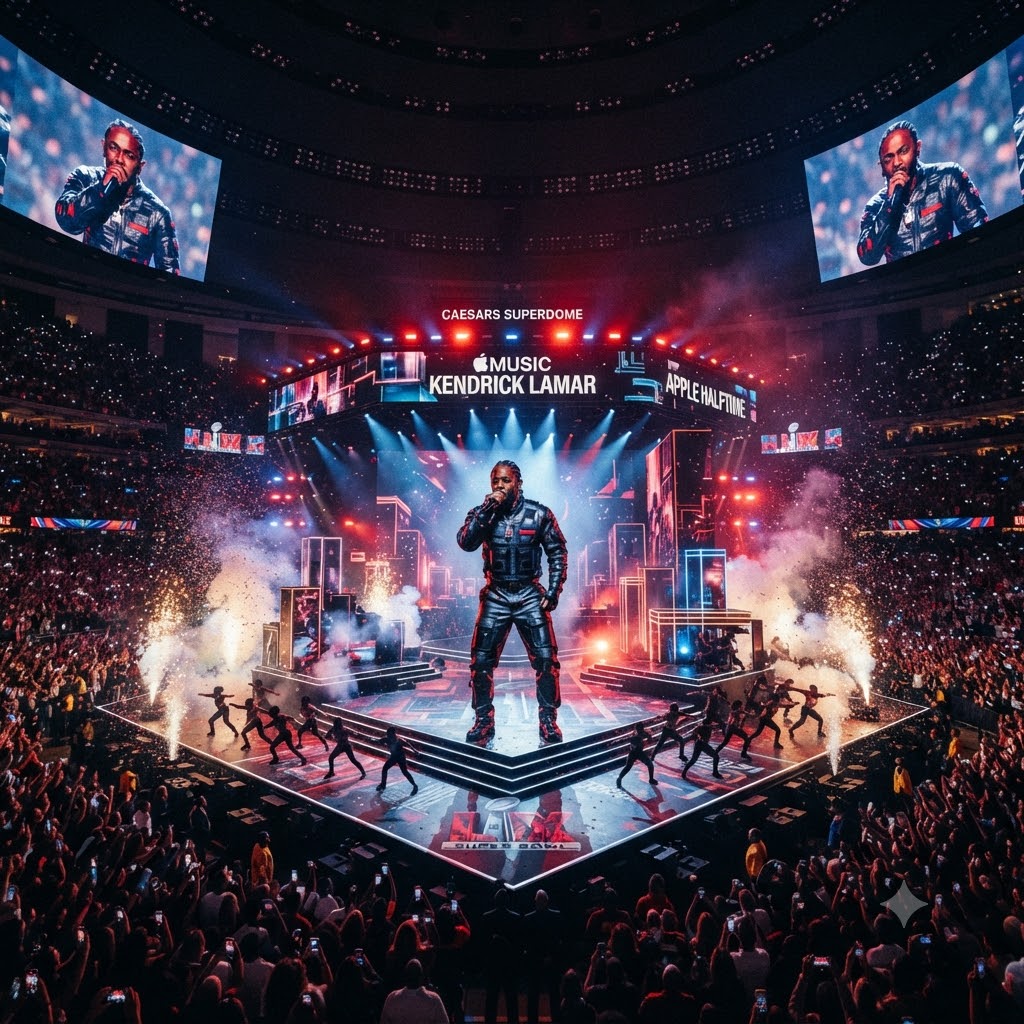
How Kendrick Lamar’s Super Bowl LIX Halftime Show Completely Changed the Game
Let’s be honest: Super Bowl halftime shows can sometimes feel a bit formulaic. You get the flying rigs, the massive pop medleys, a wall of pyrotechnics, and a fleeting celebrity cameo. It’s fun, sure, but it rarely feels dangerous, groundbreaking, or deeply personal.
Then came Kendrick Lamar at Super Bowl LIX.
Backed by Apple Music, Roc Nation, and pgLang, Kendrick didn’t just play a concert—he dropped a 13-minute piece of high-concept performance art. Stepping out onto a stage that doubled as a giant interactive set piece, he delivered a masterclass in how to scale hip-hop for a stadium of 60,000 people and over 100 million at-home viewers without losing an ounce of its edge.
If you’re into live production, digital marketing, or just love music history, this set was a turning point. Here is why Kendrick’s LIX performance set a brand-new standard for what a live hip-hop production can achieve.
1. Zero Dilution: Bringing Real Hip-Hop Culture to the Main Stage
For years, there was an unwritten rule that hip-hop acts had to “pop-ify” their sets to appeal to the grandma-and-grandpa demographic tuning into the big game. Kendrick threw that rulebook out the window.
Instead of watering down his catalog, he leaned hard into West Coast heritage, unapologetic lyricism, and razor-sharp socio-political commentary (complete with Samuel L. Jackson stepping in as Uncle Sam). Bringing out guests like SZA and Mustard kept the energy deeply rooted in authentic culture.
The takeaway for live producers? Authenticity scales. When you respect your audience and your own art, people tune in—and the numbers prove it, with the broadcast pulling in staggering, record-breaking viewership.
2. Cinematic Storytelling That Actually Makes Sense
Most halftime shows move at a dizzying pace to squeeze in as many hits as possible. Kendrick treated his set like a cohesive film.
-
The Visuals: Every transition from anthem to anthem—whether rolling through “HUMBLE.”, “DNA.”, or dropping into “Not Like Us”—felt purposeful.
-
The Metaphor: The staging wasn’t just there to look cool; it reinforced the themes of his music, turning the field into a living, breathing commentary on fame, culture, and power.
It proved that stadium crowds and streaming audiences don’t need sensory overload if the narrative and pacing are locked in.
3. The Apple Music Ecosystem Play
As the primary sponsor, Apple Music didn’t just slap their logo on the broadcast; they built a masterclass in modern digital integration.
Translating dense, heavy West Coast bass and lightning-fast bars into a massive stadium acoustic environment is a nightmare for audio engineers. Yet, the live broadcast delivered pristine vocal clarity.
More importantly, Apple tied the live moment straight into their digital ecosystem. The second the set ended, fans could pull up the official setlist, dive into exclusive artist interviews, and stream the whole performance in Spatial Audio. It’s a textbook example of how live events need to function today: the broadcast isn’t the end of the campaign; it’s the launchpad.
What Live Producers Can Learn from Super Bowl LIX
Kendrick’s performance raised the bar for everyone in the live entertainment space. If you’re building a brand event, a tour, or a digital experience, keep these three rules in mind:
Concept First: Don’t just buy expensive props. Make sure your physical design serves a real narrative.
Think Beyond the Live Stream: Plan the post-event digital footprint (playlists, social clips, immersive audio) before the show even starts.
Never Sanitize the Message: Audiences can smell corporate compromise a mile away. Real, raw art always cuts through the noise best.
Kendrick Lamar proved that hip-hop isn’t just a guest on the biggest stage in the world—it can completely own it.