Streaming fatigue is real, and it’s changing how we collect music.
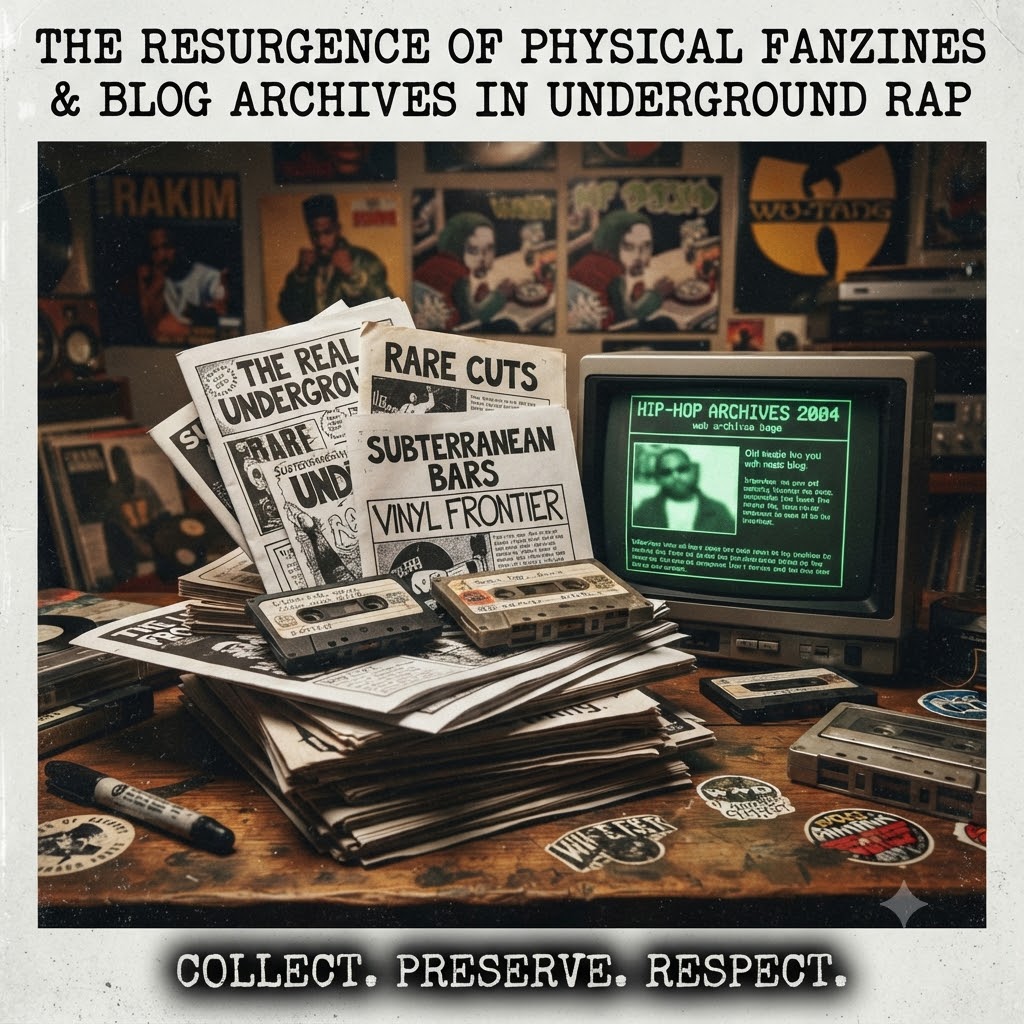
While algorithms feed us infinite, frictionless playlists, a massive counter-movement is brewing in the underground rap scene. Walk into a basement show in Brooklyn, London, or Atlanta, and you won’t just see flash drives or vinyl—you’ll find a thriving black market of hand-stapled zines, risograph-printed booklets, and photocopied interview inserts. At the same time, online diggers are resurrecting long-dead blog spots, building digital time capsules to rescue 2010s underground hip-hop history from link-rot.
Print fanzines and dedicated blog archives are no longer just nostalgic throwbacks. They’ve become the ultimate cultural collectibles for underground hip-hop heads who are tired of disposable streaming culture.
The Death of the Ephemeral Stream
For the past decade, convenience won. We traded heavy crates of 12-inch singles and CD liner notes for cloud storage and compressed audio files. But infinite convenience made music feel entirely disposable.
Underground rap has always survived on its deep, obsessive lore—the regional cassette tape runs, the abstract lyric breakdowns, and the raw commentary that didn’t make mainstream press. When an album is just a tiny digital tile on an app, that context disappears.
Enter the modern indie fanzine. Writers, designers, and hardcore fans are reviving print because digital files can’t replicate a physical object. These zines give underground boom-bap, experimental trap, and lo-fi hip-hop the tangible weight it deserves, turning album rollouts into physical artifacts you can actually put on a shelf.
Digital Archeology: Why Blog Archives Matter Again
Physical print isn’t the only medium getting a second wind. The internet’s graveyard of old-school music blogs is getting a heavy second look.
Think back to the mid-2000s and early 2010s. Independent music blogs were the raw nerve of the underground. They broke artists before major labels even knew what search terms to use. When those platforms went under or let their domains expire, a massive chunk of hip-hop history nearly went down with them.
Today, archivists are scraping, mirroring, and rebuilding those digital blog archives. For independent artists, being featured on these platforms isn’t just about a one-day spike in plays. It’s about building a permanent digital footprint. It proves to future collectors that you weren’t just a blip on an algorithmic radar, but part of a documented, historical timeline.
Securing Your Place in the Culture
If you’re an underground artist dropping music today, it’s easy to get tunnel vision. Everyone tells you to chase short-form video trends and playlist placements. But playlists turn over every Monday. Algorithms change their minds.
Collectors don’t just want audio files; they want the story. They want to know where you fit in the lineage. That means getting your work critically reviewed, written about, and permanently cataloged where the purists are actually looking.
If you want to document your catalog’s place within modern hip-hop culture, you can secure an editorial spot through our artist review services. Getting real, thoughtful writing attached to your release gives collectors and future fans the context they need to take your project seriously.
The Human Element Can’t Be Automated
The return of fanzines and indie blog archives proves that underground rap is fundamentally human. It relies on sweat, ink, late-night writing sessions, and genuine obsession.
As long as artists keep pushing boundaries in the shadows, there will be writers and designers ready to document the movement. Whether it’s a 30-page zine passed hand-to-hand at a gig or an archived review living on a permanent web page, these artifacts keep the underground alive.