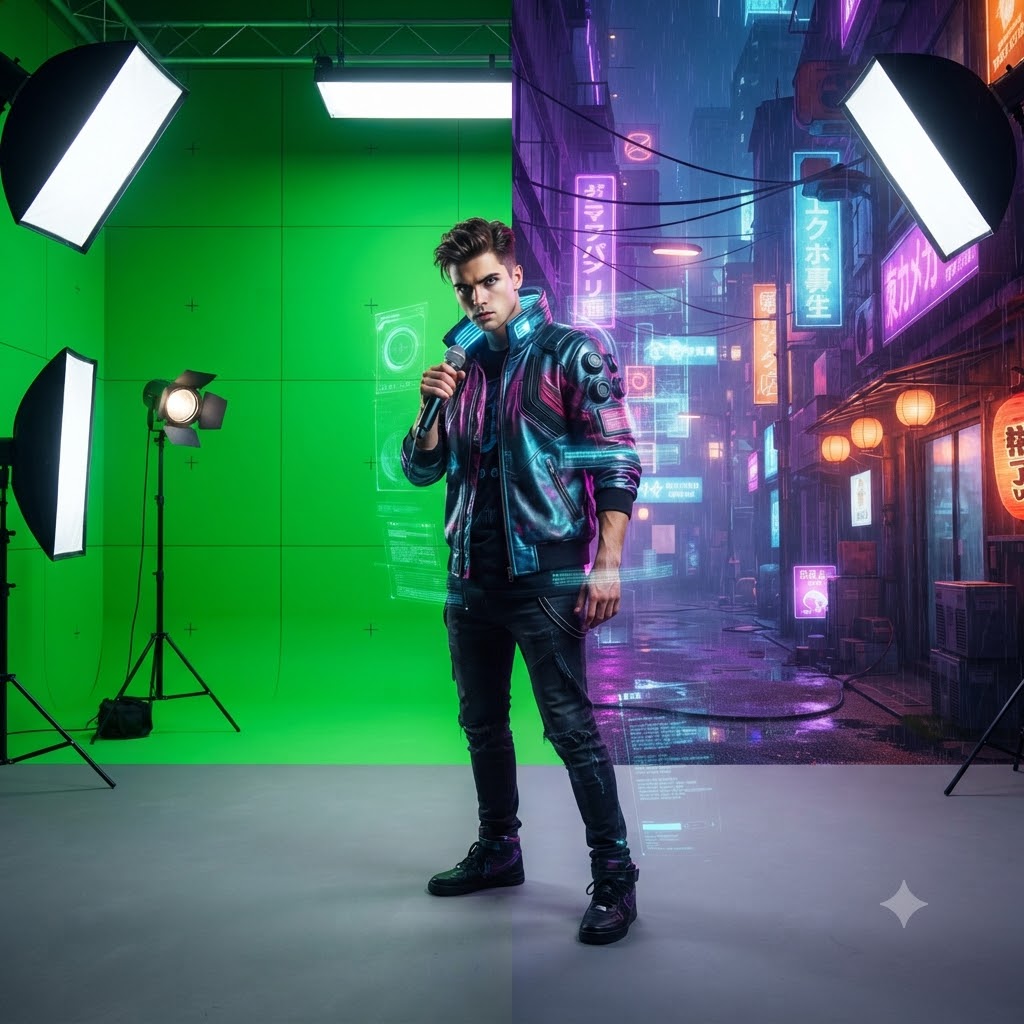
Green Screen vs. Real Locations: How to Make Low-Budget Visuals Look Expensive
When you’re working with a tight budget, the eternal dilemma is deciding where to spend your cash. Do you lock down an expensive physical location for a few hours, or do you shoot against a green screen and build the world later?
The truth is, both approaches can look messy if you don’t know the hidden traps of post-production. A bad real-world location screams “indie shoot in a random parking lot,” while a sloppy green screen composite instantly triggers that dreaded “floating head on a stock photo” effect.
If you want your visuals to punch way above their weight class and rival major label productions, the secret isn’t just having better gear—it’s mastering the tactical art of mixing 3D backgrounds with real-world performance footage.
1. Ditch the Flat Green Screen Lighting
The number one giveaway of a low-budget green screen isn’t your keying software; it’s the lighting. If your subject has harsh shadows, mismatched color temperatures, or green light bouncing onto their clothes, no amount of masking in post is going to save it.
-
Match Your Source Lighting: Before you even touch the composite, study the lighting direction of your 3D background. If the virtual sun is coming from the top right, your key light on set has to match that exact angle and diffusion.
-
Create Separation: Keep your talent at least 6 to 8 feet away from the green screen. This cuts out harsh shadows on the backdrop and stops that neon green tint from bouncing back onto your artist’s hair and wardrobe.
-
Control the Spill: Use a garbage matte early in your node tree to chop away unnecessary green areas before applying your keyer, and drop a spill suppressor on there to neutralize any remaining tint on skin tones.
2. Anchor Your Subject with Practical Interaction
Nothing breaks the illusion of a virtual set faster than a human being floating in a digital void. Even if your entire background is rendered in Unreal or Blender, your artist needs to interact with something tangible.
-
Rent One Practical Element: You don’t need a full set build. Renting a single vintage chair, a concrete pillar, or a flight case that matches the aesthetic of your 3D world gives your actor something to lean on, touch, or sit behind.
-
Match the Focal Length: Make sure the camera lens you use on set matches the simulated focal length of your 3D camera. Shooting an artist on a wide 24mm lens and dropping them into a telephoto 85mm digital background creates a weird, warped perspective that instantly looks cheap.
3. Master the Magic of Atmospheric Depth
A pristine, hyper-detailed 3D background often fails because it looks too sharp compared to standard camera footage, which always carries a natural layer of sensor noise, grain, and atmospheric haze.
-
Add Fake Depth of Field (DoF): Real cameras create a natural bokeh blur between the subject and the background based on your aperture. In post, apply a camera lens blur or depth map to your 3D background. Keep your artist tack-sharp, but let the background fall into a soft, cinematic blur.
-
Layer Atmospheric Elements: Real locations have air, dust, smoke, and moisture. Composite subtle foreground elements over your entire frame—like floating dust motes, gentle smoke wisps, or light leaks. These elements pass in front of both your actor and the digital background, tricking the brain into reading the two disparate layers as a single cohesive space.
-
Grade the Composite Together: Never color grade your footage and your 3D background separately at the end. Toss an adjustment layer over the final composite to tie the color palette together, add a matching film grain, and crush the blacks slightly so the lighting values actually bleed together.
Conclusion
Making low-budget visuals look expensive isn’t about hiding the fact that you didn’t spend millions—it’s about executing the details so cleanly that the viewer never even questions the reality of the frame. By thoughtfully blending physical performance with digital environments, you can turn low-budget creative concepts into viral successes.