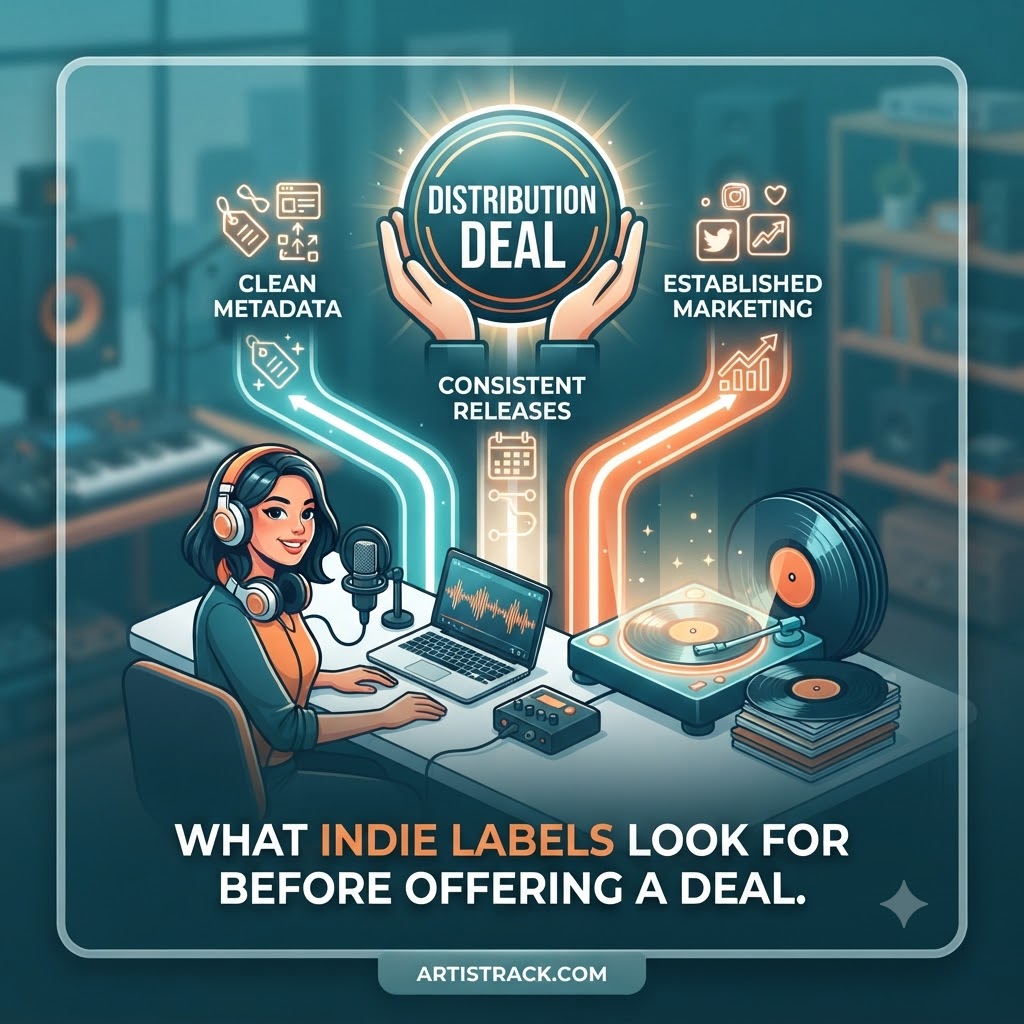
How to Approach Independent Record Labels for Distribution Deals: What A&Rs Really Want to See
Landing a distribution deal with an independent record label is a huge step up. Moving past self-distribution platforms to partner with an established indie team can open doors to global retail reach, dedicated marketing push, and industry connections that actually move the needle.
The catch? Boutique indie labels and distribution imprints get flooded with submissions every single day. Dropping an unmastered link in an A&R’s DM or sending a half-baked EP isn’t going to cut it. If you want to stand out in a packed inbox, you need to prove you aren’t just a talented artist, but a professional partner ready to scale.
Before a label executive even listens to your music, here is what they are actually looking at.
1. Impeccable, Clean Metadata
In today’s digital distribution landscape, metadata is everything. Independent labels run lean teams—they simply don’t have the bandwidth to spend hours fixing sloppy track titles, missing International Standard Recording Codes (ISRCs), or messy songwriting credits.
Clean metadata shows you take your business seriously. It keeps your tracks from getting lost in distribution limbo, ensures accurate royalty collection, and helps you land cleanly on algorithmic playlists.
-
Keep it consistent: Ensure your track titles, featured artists, and primary credits match identically across all documents and audio files.
-
Have your codes ready: Know your ISRC and UPC codes before you start reaching out.
-
Sort out your publishing: Clearly list your songwriters, producers, and exact split percentages from the jump to avoid legal headaches later.
2. A Consistent Release Schedule
Dropping a random single every six months and hoping something goes viral won’t catch an indie label’s eye. A sporadic release history signals a lack of planning, which makes it tough for a label to build any real marketing momentum behind your project.
Labels want artists who understand how a modern rollout works. Whether you’re dropping a string of singles leading up to a summer project or running a disciplined quarterly release schedule, consistency proves you have a deep vault of music and the discipline to execute long-term strategies.
-
Build a pipeline: Have at least three to four finished tracks locked and loaded before you start pitching.
-
Give yourself a runway: Give your team a solid four to six weeks between pitching the label and your actual distribution date to allow for playlist pitching and press outreach.
3. Real, Moving Marketing Channels
The days of a label signing an artist purely on potential and developing them from zero are pretty much gone. Today, independent labels expect you to bring a proof of concept to the table. They want to see that you’ve already built a tangible audience and know how to drive traffic yourself.
Showing organic growth across your socials, active community engagement, and a solid baseline of streaming data will show label executives that your brand is already scaling. Secure an all-in-one promotional campaign through our Artist Promo Services to build undeniable momentum before you pitch.
When an A&R sees that your fanbase is already streaming, sharing, and engaging with your work, signing you stops being a risky gamble and becomes a smart business move.